

Vintage Glass Oil Burner
A vintage glass oil burner brings the warm, atmospheric glow of the nineteenth century into a modern interior.
Vintage Glass Oil Burner
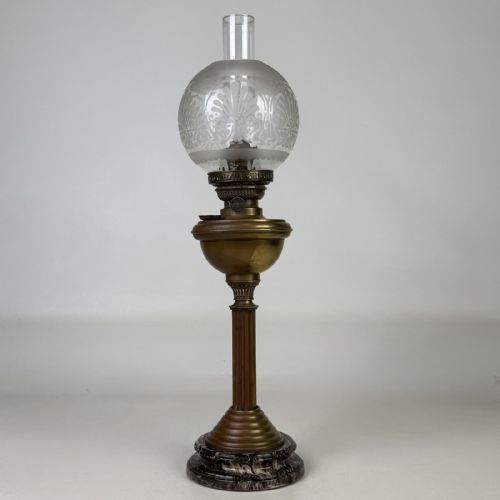
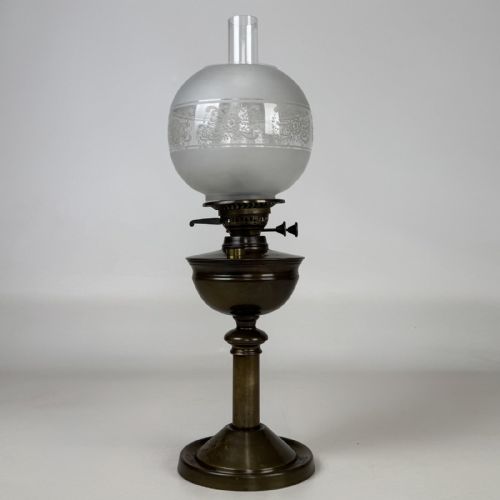
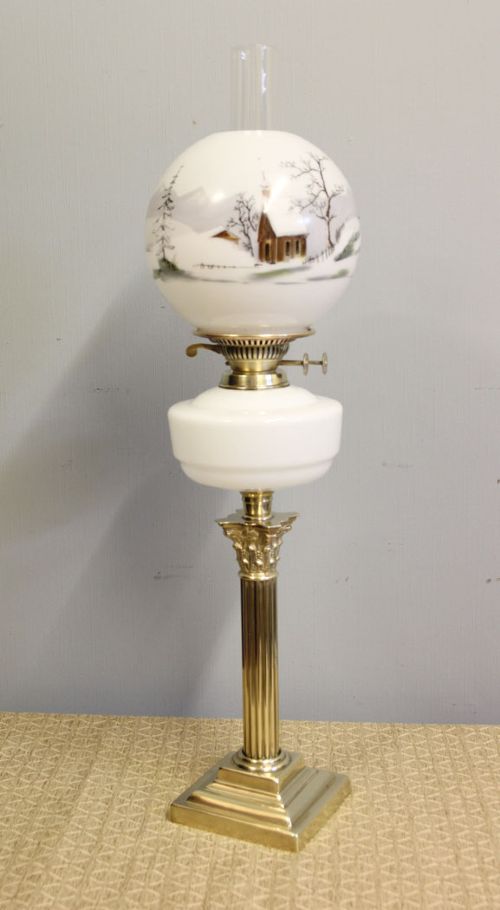
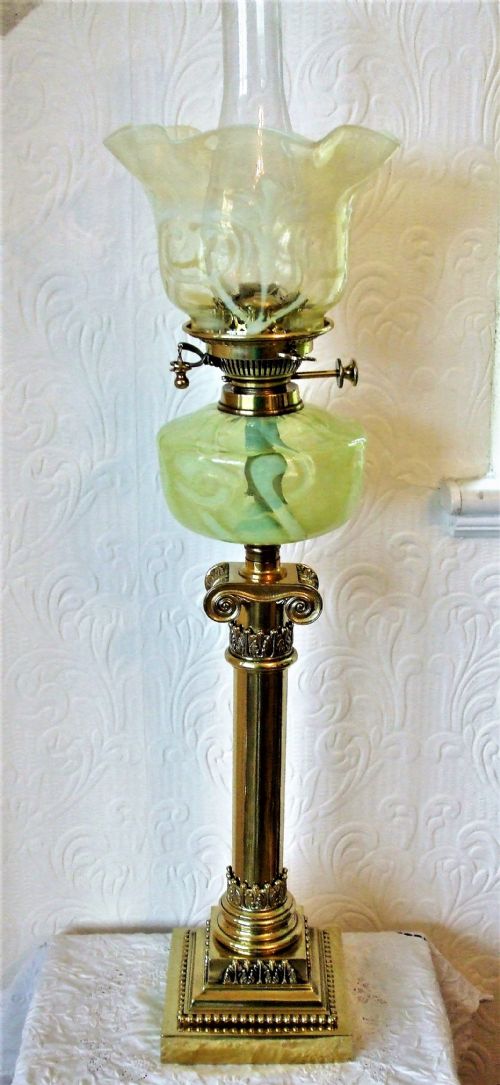
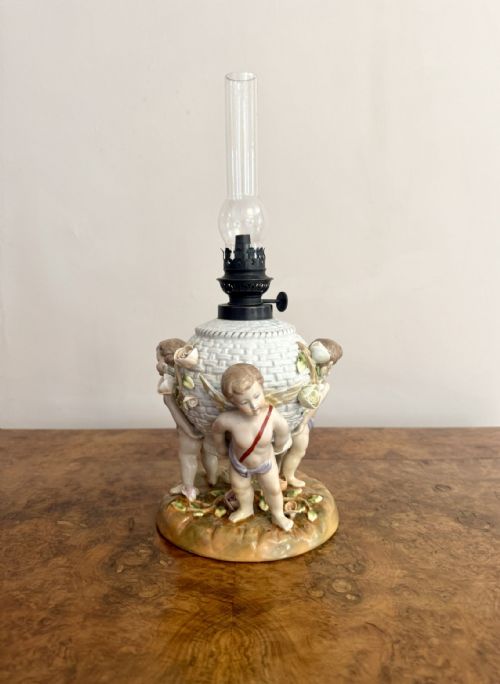
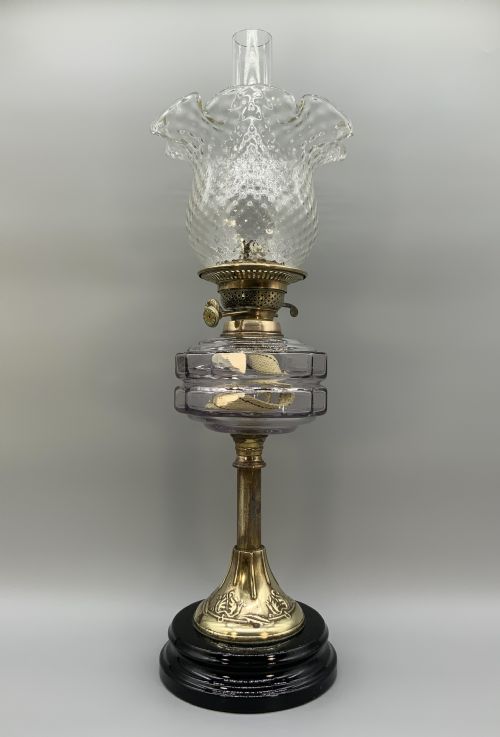
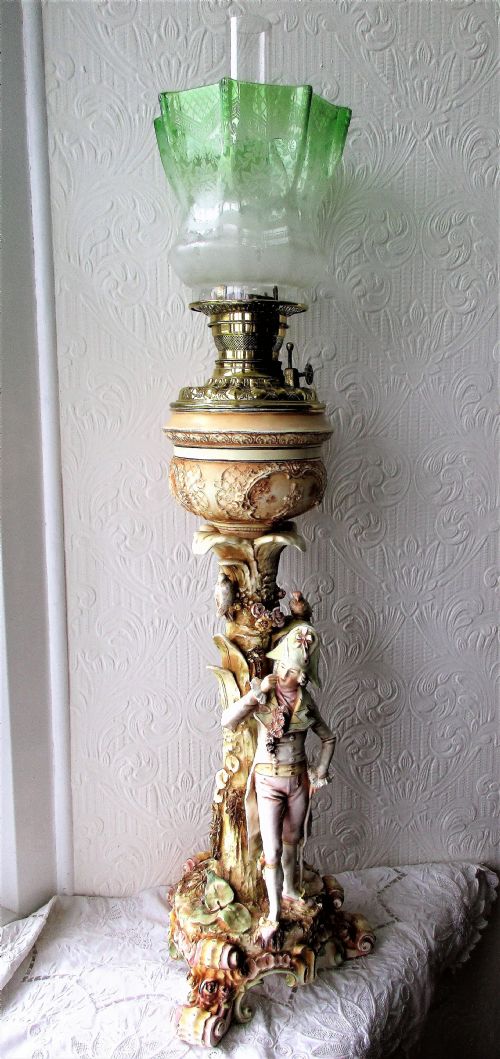
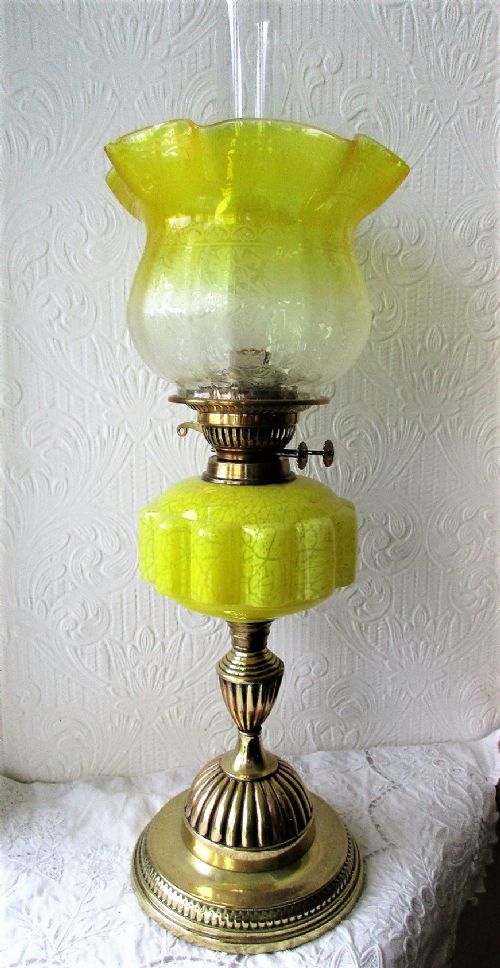
A vintage glass oil burner combines a sturdy base with a glass font designed to hold paraffin or lamp oil for illumination. These pieces frequently feature prominent columns, figural ceramics, or metal reservoirs paired with decorative glass elements.
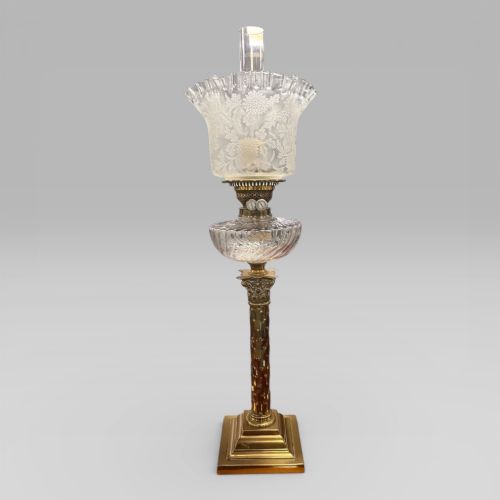
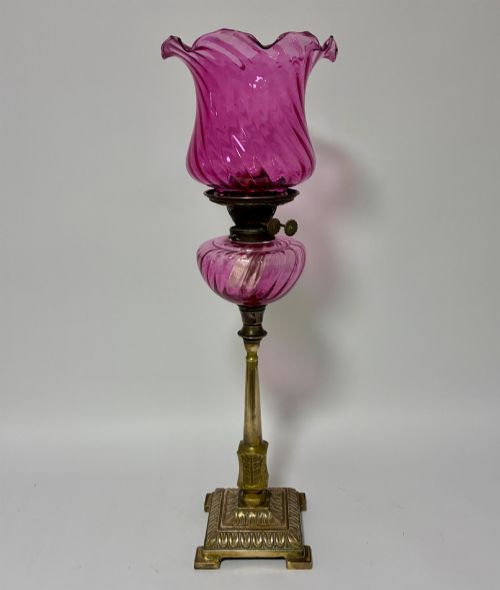
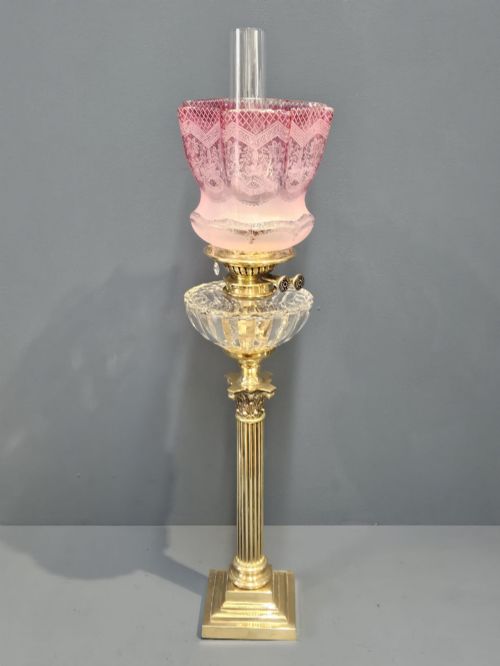
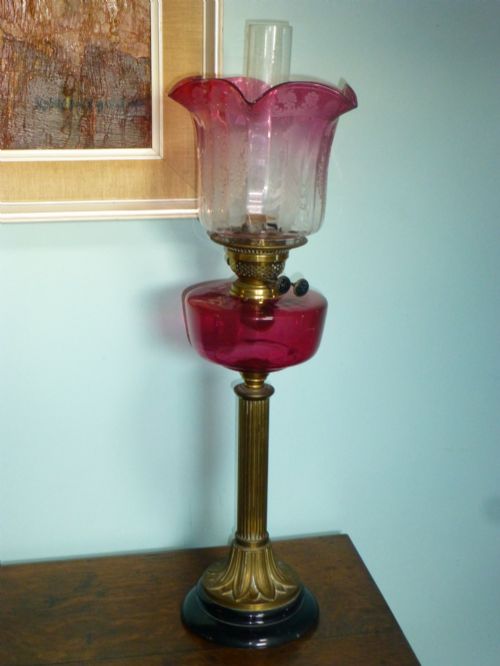
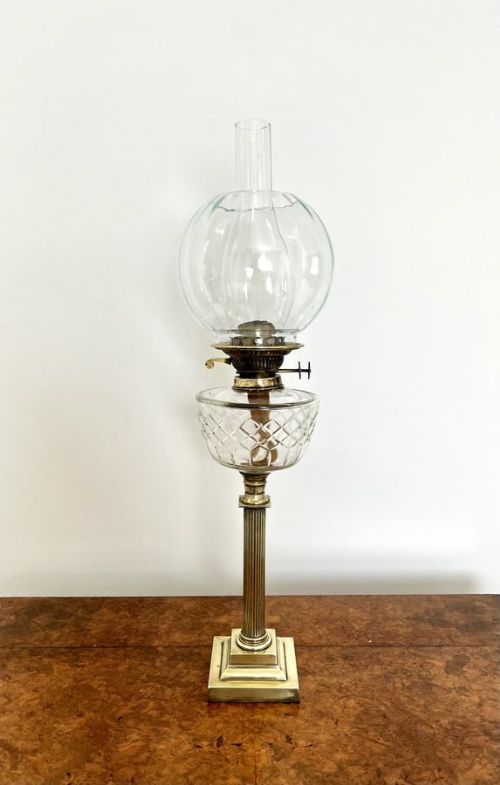
The most common examples encountered on this page date from the Victorian and Edwardian periods, often combining brass columns with coloured or clear glass fonts. They stand as robust functional objects rather than delicate cabinet ornaments.
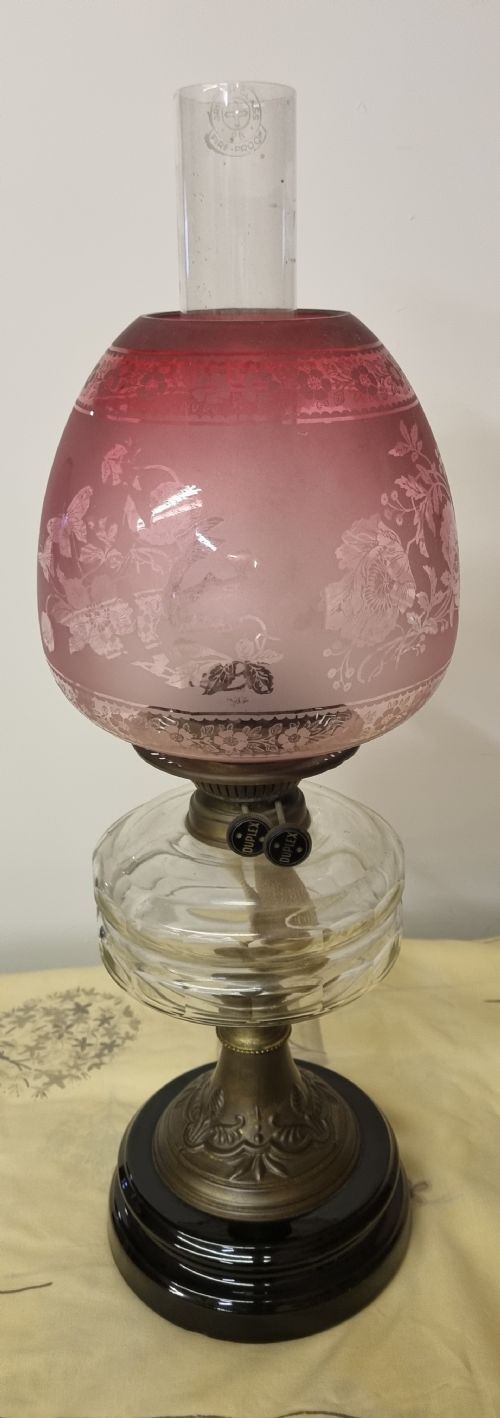
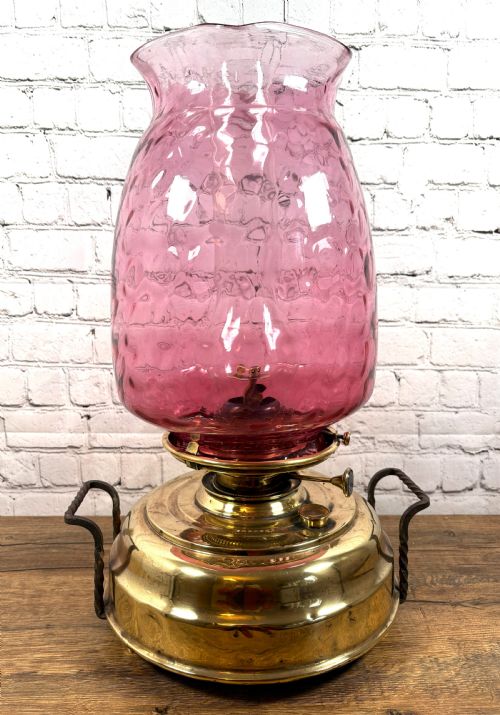
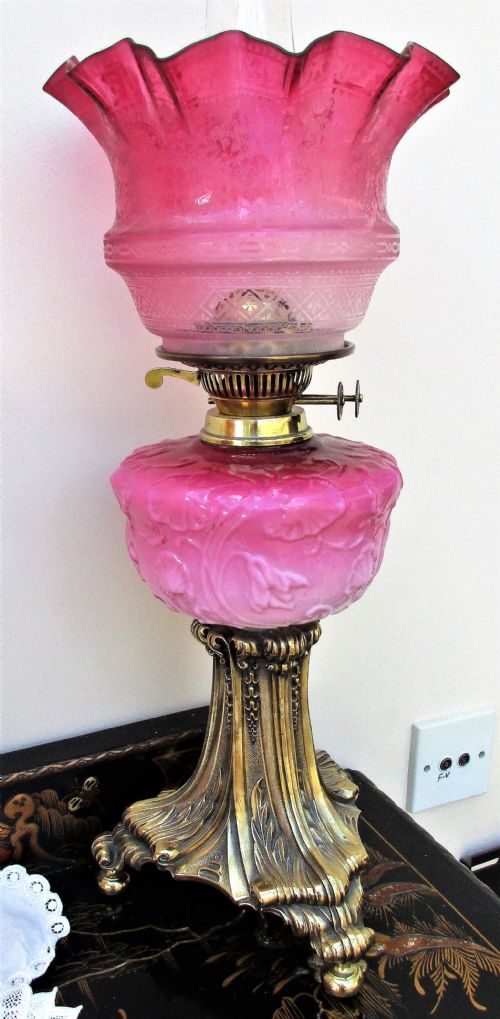
Many survivors include matching or associated shades, ranging from hand-blown cranberry glass to etched tulip designs. Collectors also find occasional hanging paraffin lamps and table lamps spanning the eighteenth to the early twentieth centuries.
Materials and construction methods
Makers combined heavy metals such as brass and copper with blown, moulded, or cut glass to achieve both stability and visual contrast. The heavy metal bases ensured the tall lamps remained balanced while the glass reservoirs displayed the fuel level.
Specialised glass techniques created distinct finishes, including opaline glass, satin glass, and flashed cranberry colourways. Components such as brass columns and ceramic bodies were frequently assembled using threaded internal metal rods.
Vintage Glass Oil Burner Retail Price Guide 2026
Typical asking prices for vintage glass oil burner among the pieces listed under this phrase on Sellingantiques today, from the lower quarter to the upper quarter. They describe what is for sale here now, not the wider market.
The listings span multiple centuries, incorporating Georgian incised twists alongside Victorian brass columns and Edwardian opaline shades.
Distinctions in quality
Quality rests upon the crispness of the casting in the brass components and the weight and clarity of the glass font or shade. Pieces with intricate cut glass or hand-etched floral patterns demonstrate superior craftsmanship compared to plain moulded versions.
Proportion and the integrity of the pairing between shade, font, and base define the finer examples. Well-preserved mechanisms and original burner galleries by recognised makers elevate the standing of an individual piece.
Hinks·Sitzendorf
The Vintage Glass Oil Burner Glossary
- Font
- The oil reservoir of the lamp, typically formed from coloured, clear, cut, or satin glass.
- Duplex burner
- A double-wick burner mechanism designed to produce a brighter flame than standard single-wick variants.
- Corinthian column
- A classical architectural column style frequently utilised for the tall stems of Victorian brass and glass lamps.
- Opaline glass
- An opaque, milky-white glass often tinted in soft pastel shades used for shades and bodies.
- Peg lamp
- A small oil lamp fitted with a tapered lower metal or glass peg designed to drop directly into a candlestick socket.
Vintage Glass Oil Burner: Frequently Asked Questions
Can I still burn oil in these lamps?
Many of these pieces retain their original mechanical burners and can be used with modern liquid paraffin if the wick and collar are in sound condition.
Buyers who prefer safety often choose to convert them for electrical use without altering the exterior brass and glass components.
How do I identify a Victorian oil lamp?
Victorian examples typically display heavy brass Corinthian or ionic columns, combined with Cranberry glass fonts and substantial ceramic or cast iron bases.
Construction methods from this era often involve threaded brass components and hand-etched glass shades rather than twentieth-century pressed glass.
What is a duplex burner?
A duplex burner uses two flat wicks operated simultaneously by a pair of winding knobs to generate a significantly larger flame and increased light output.
This mechanism became standard on larger nineteenth-century lamps intended for primary domestic illumination.
Are the glass shades original to the bases?
Finding a lamp with its factory-matched shade is common, but many surviving pieces have been paired with period-correct replacement shades over decades of use.
Matching the collar size, glass colour, and etching style helps determine whether a shade belongs correctly to a specific base.