
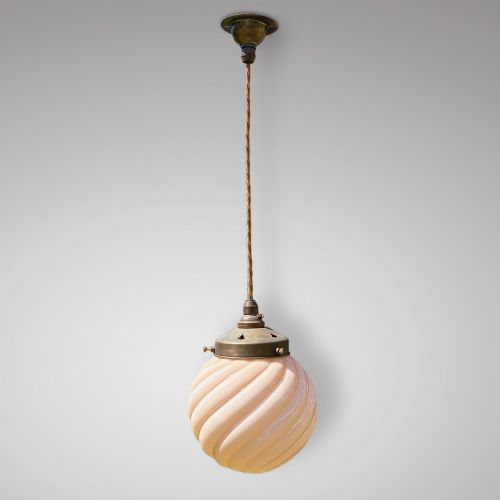


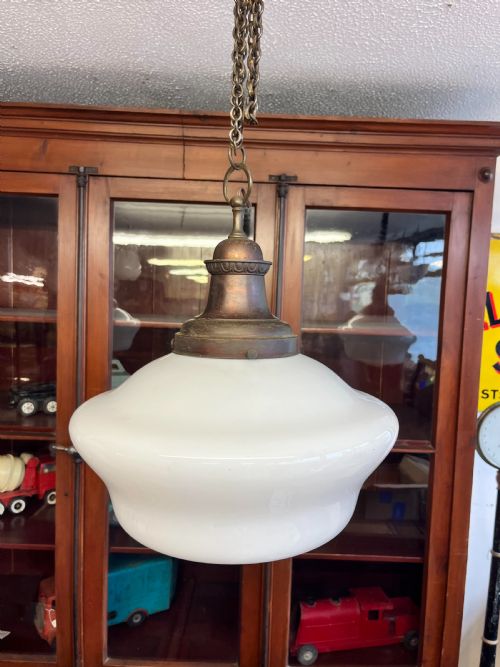


Vintage Glass Globe Pendant
These vintage glass globe pendant fixtures bring a warm, diffused light and period character to any room.
Vintage Glass Globe Pendant
A vintage glass globe pendant is a suspended ceiling light featuring a spherical or domed shade, designed to hang centrally in a room or hallway. When searching for a vintage glass globe pendant, buyers encounter pieces spanning the Edwardian period, 1900, 1920, and 1930.
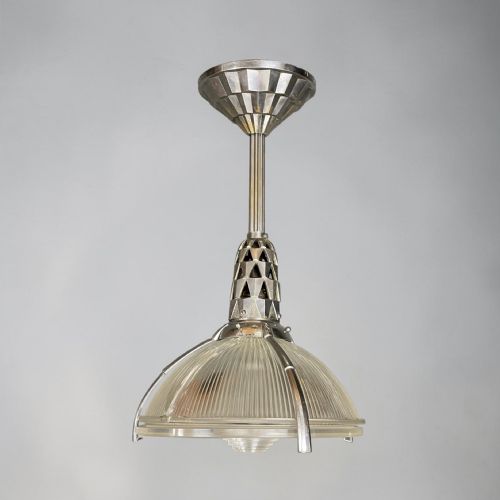
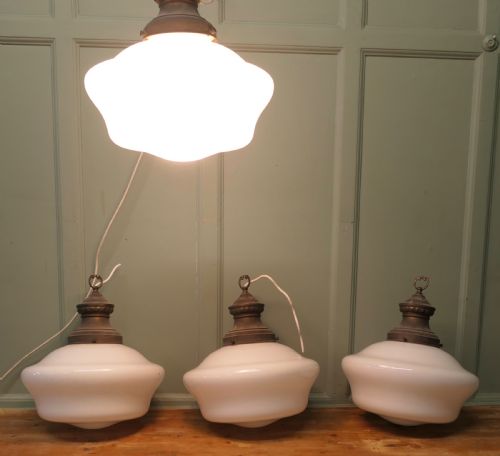
The selections available range from French Art Deco designs and industrial ceiling lights to nautical copper fixtures and Gothic revival brass chandeliers. Common forms include opaline hall pendants, chapel lights, and prismatic shades that distribute light evenly.
Originating from English, French, and other European workshops, these pendant lights reflect distinct stylistic movements such as Art Nouveau, Art Deco, and industrial utilitarianism. They serve both functional illumination and decorative focal points in domestic and commercial interiors.
Materials and construction methods
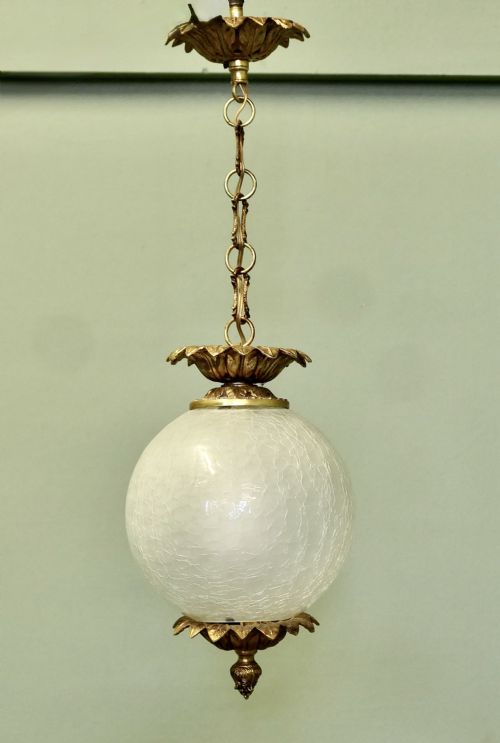
The primary material for the shades is glass, appearing as opaline, moonstone, frosted, smoked, green, purple, and etched crystal variants. These glass globes were blown or moulded to create smooth, ribbed, or scaled surface textures.
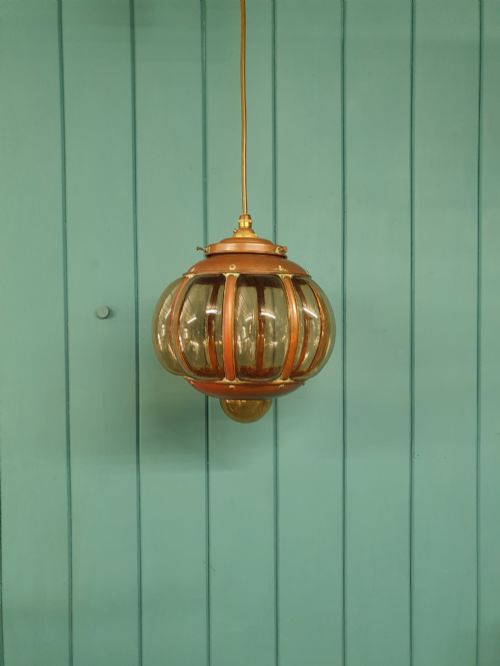
Metal components such as brass, copper, chrome, nickel plated metal, bronze, and general metalwork form the suspension galleries, chains, and frames. These structural elements provide durability and contrast with the translucent glass bodies.
Materials combine opaline, frosted, smoked, and moonstone glass with brass, chrome, copper, and nickel plated metal.
What determines quality in these pendants
Quality rests in the weight and clarity of the glass, whether an opaline surface possesses an even, milky density or a crystal globe displays crisp etching. The heft and finish of the supporting metalwork, from heavy cast brass to nickel plating, also dictate the calibre of the piece.
Design integrity separates standard utility fixtures from masterworks, evident in pieces attributed to specific makers like Émile-Jacques Ruhlmann or distinctive regional styles such as French Art Deco and Murano glasswork. Proportion, original matching components, and surface preservation further elevate an individual light.
Émile-Jacques Ruhlmann
The Vintage Glass Globe Pendant Glossary
- Opaline Glass
- A milky, semi-translucent glass that softens and diffuses light uniformly. It was widely utilised across Edwardian and Art Deco lighting.
- Prismatic Glass
- Glass moulded with intricate geometric ribs or prisms designed to refract light and reduce glare. Holophane was a notable producer of this material.
- Pendant Light
- A single light fixture suspended from the ceiling by a cord, chain, or metal rod. These fixtures are commonly hung in hallways, kitchens, and living spaces.
- Art Deco
- A design style from the 1920s and 1930s characterised by sleek geometric lines and stylised motifs. Pieces from this era often combine frosted glass with chrome or bronze.
- Gothic Revival
- An architectural and decorative style drawing inspiration from medieval forms. In lighting, this translates to heavy brass frames and structured glass globes.
Vintage Glass Globe Pendant: Frequently Asked Questions
How do I hang a pendant light?
Pendant lights suspend from the ceiling via a metal rod, chain, or flex attached to a secure ceiling rose.
Ensure the weight of the glass globe and metal gallery is supported safely by joists or appropriate fixings.
What rooms suit a glass globe pendant?
These fixtures suit hallways, kitchens, and living rooms where focused or diffused overhead illumination is required.
Smaller diminutive shades work well in compact spaces, while large opaline or chapel lights suit high ceilings.
How do I date a vintage pendant light?
Dating relies on stylistic markers such as Edwardian brass detailing or 1930s chrome and frosted glass combinations.
Materials like opaline glass and industrial forms also point towards specific manufacturing eras from 1900 through the interwar years.
Are these lights suitable for low ceilings?
Diminutive shades and flush-hanging ceiling lights provide adequate clearance in rooms with restricted headroom.
Adjusting the suspension chain or rod length helps achieve the correct drop for the space.