


Vintage Glass Font Lamp
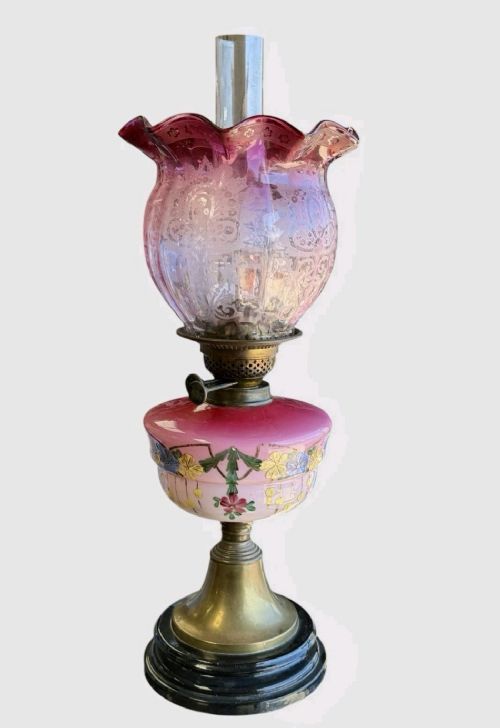
A vintage glass font lamp is a period lighting piece that brings character and warm reflection to a room, and collectors prize them for their coloured vessels and decorative bases.
Vintage Glass Font Lamp
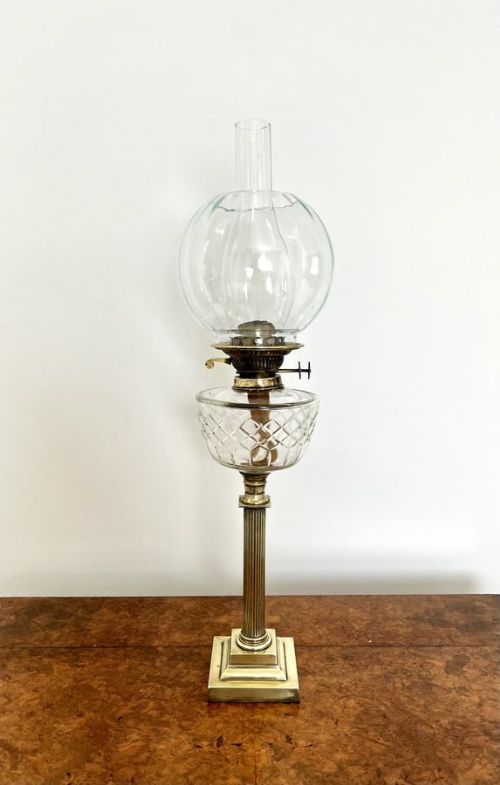
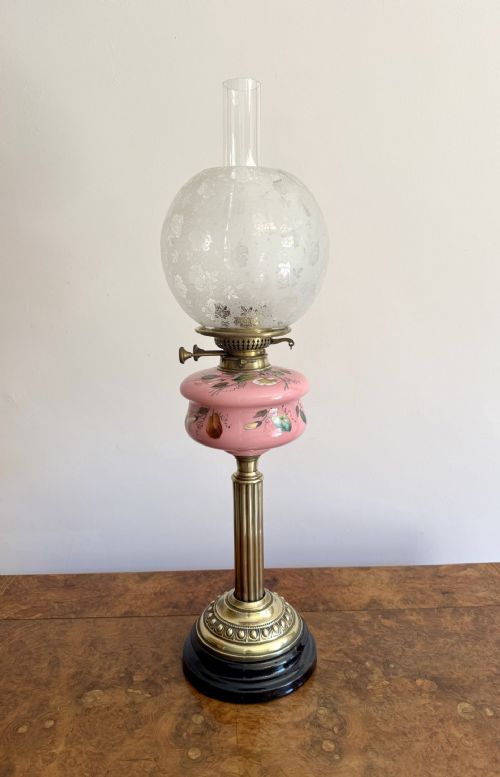
When you search for a vintage glass font lamp, you are looking at nineteenth- and early twentieth-century lighting fixtures designed to burn oil or paraffin. The most common version you will meet on this page combines a heavy metal base with a brightly coloured glass oil reservoir, often paired with a matching glass shade.
The pieces listed here span the Victorian and Edwardian eras, with dates ranging across the late nineteenth century and into the early twentieth century. These lamps served as domestic table lighting before electricity reached every room, which explains their sturdy construction and generous fuel capacity.
Most examples rely on a brass column or a slate support to anchor the delicate glass reservoir above the tabletop. You will encounter straightforward cottage table models alongside taller telescopic designs and formal Corinthian column stands.
How they were made
Makers combined cast brass and heavy ceramic elements to form stable foundations that could safely support an elevated fuel reservoir. These metal components frequently feature detailed casting and classical architectural motifs like fluted columns.
The defining feature of these lamps is the glass font, which appears in vibrant hues including cranberry, milk glass, and rich blue or green tones. Artisans shaped these vessels through blowing and pressing techniques, sometimes adding hand-painted enamel details or etched patterns to the surface.
Materials seen across these listings include brass, glass, ceramic, cranberry glass, milk glass, hand-painted glass, slate, and enamel.
What varies in quality
The distinction between standard domestic lighting and finer parlour pieces rests on the weight of the metal mountings and the depth of the glass colour. Superior examples feature heavier brass castings, substantial cut glass details, and crisper hand-painted decoration on the font or shade.
Proportion and complexity also set the better pieces apart from everyday alternatives. Telescopic columns and architectural supports like Corinthian capitals demand greater skill in manufacture than simple cottage table lamps.
The Vintage Glass Font Lamp Glossary
- Font
- The removable or fixed reservoir that holds the lamp oil or paraffin. It is typically made of coloured or cut glass.
- Corinthian Column
- A classical architectural column style featuring ornate acanthus leaves at the top, often utilised in the brass stands of these lamps.
- Cranberry Glass
- A rich pinkish-red glass produced by adding gold chloride to the molten batch. It is a signature material for Victorian lighting vessels.
- Milk Glass
- An opaque white glass used for both fonts and shades. It became immensely popular during the Victorian period for domestic decorative objects.
- Telescopic Lamp
- A lighting stand featuring an adjustable central shaft that allows the overall height of the lamp to be raised or lowered.
Vintage Glass Font Lamp: Frequently Asked Questions
How do I date a glass font lamp?
You can date these lamps by looking at the materials, construction methods, and stylistic cues present in the base and burner assembly. Victorian examples often incorporate heavy brass columns and coloured glass fonts from the late nineteenth century.
Later pieces extending into the twentieth century show shifts in decorative painting styles and simpler metal fabrication. Comparing the collar and burner mechanism against known period patterns also helps narrow down the decade of manufacture.
Were these lamps meant for dining tables?
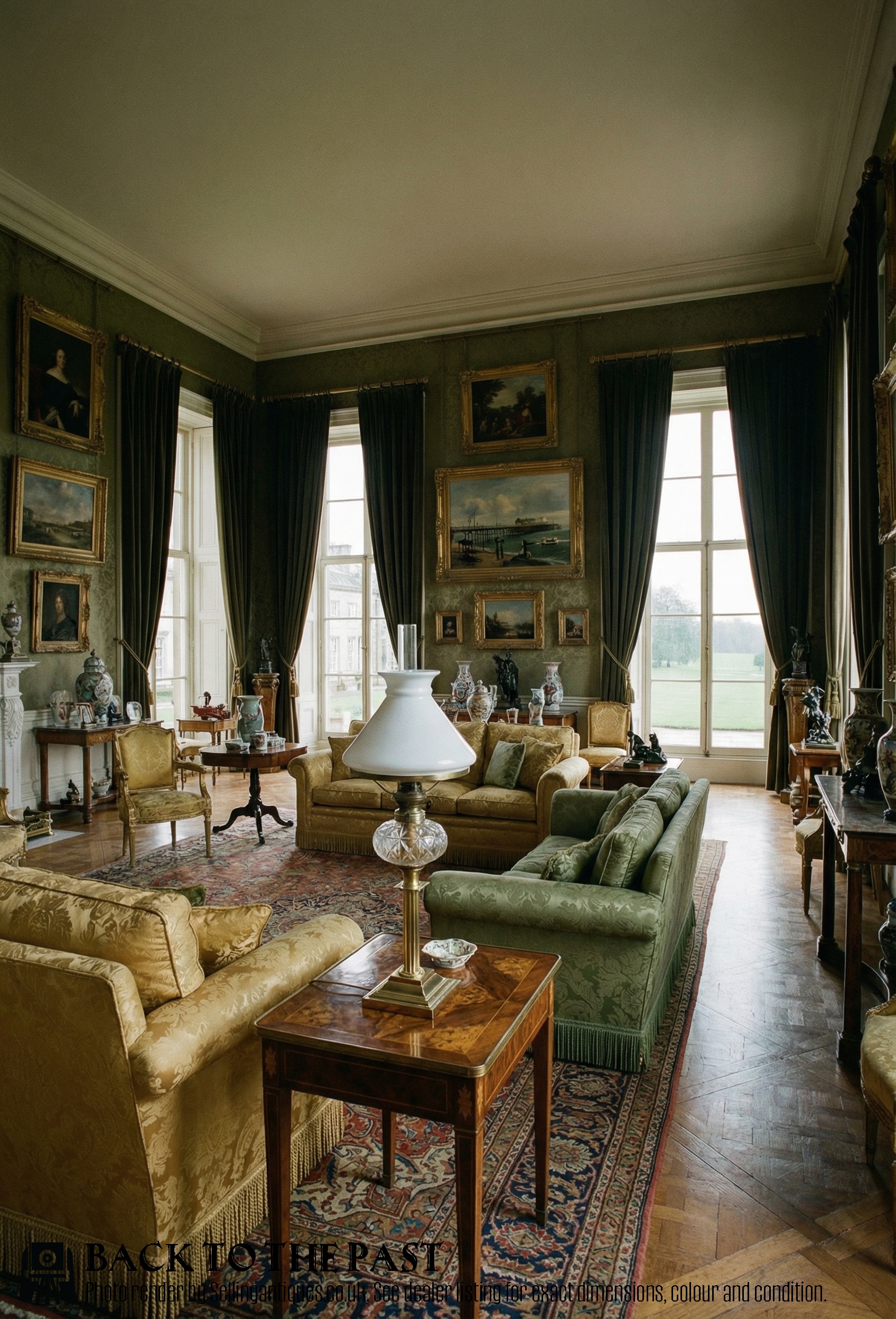
These lamps served as principal sources of domestic illumination for parlours, sitting rooms, and dining areas before electricity became widespread. Their decorative glass fonts and painted shades were designed to be displayed openly in living spaces.
Sturdier cottage models provided reliable light for smaller rooms, while taller telescopic or Corinthian column lamps stood upon larger tables to cast light across a wider area.
How should I clean a painted glass font?
Cleaning requires great care to preserve any hand-painted enamel decoration or delicate etching on the surface of the glass. You should use a soft, damp cloth with mild soapy water, avoiding harsh abrasives or soaking the painted areas.
Metal components like brass bases respond well to gentle dusting, but moisture should be kept away from vintage finishes and painted motifs to prevent accidental damage.
What is the difference between milk glass and cranberry glass?
Milk glass is an opaque white material that creates a solid, porcelain-like appearance on lamp fonts and shades. It diffuses light with a soft, milky glow when the lamp is lit.
Cranberry glass is a translucent, richly coloured red-pink material created through specific metallic oxide recipes in the glass furnace. Both were favoured during the Victorian era for their striking visual contrast against brass bases.