




Vintage Glass Display Box
A vintage glass display box brings together clear panelling and enclosed framing to keep small treasures visible and protected.
Vintage Glass Display Box
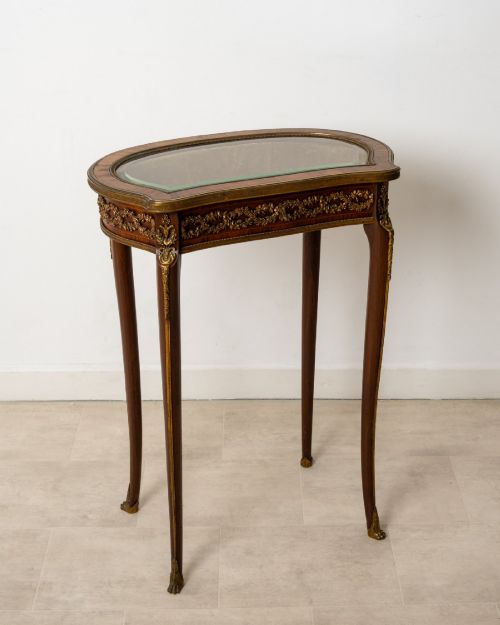
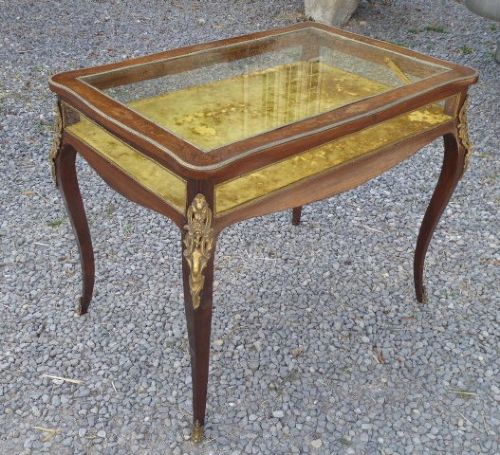
When searching for a vintage glass display box, buyers encounter an array of countertop cabinets, bijouterie tables, and tabletop vitrines designed to showcase precious items. These pieces span the Victorian and Edwardian eras through to the 1930s, encompassing domestic jewellery holders and commercial shop counters alike.
The most common examples on this page are Edwardian mahogany bijouterie tables and countertop display cases from the early twentieth century. These domestic and retail containers utilise glazed panels to present contents clearly while keeping dust at bay.
How they were made
The construction of these pieces relies on frames of mahogany, oak, kingwood, or satinwood holding transparent glass panels in place. Metal elements such as brass and ormolu often provide structural edging, hinges, and secure locks.
Interiors are frequently lined with fabrics like velvet to cushion delicate contents such as jewellery, trinkets, or pocket watches. Surface decoration ranges from simple wood inlays and marquetry to painted signage on commercial shop cabinets.
Vintage Glass Display Box Retail Price Guide 2026
Typical asking prices for vintage glass display box among the pieces listed under this phrase on Sellingantiques today, from the lower quarter to the upper quarter. They describe what is for sale here now, not the wider market.
A night porter's key cupboard stands ready for duty among the glittering jewellery boxes and sweet shop counters.
What varies in quality
Quality in these glazed containers rests on the crispness of the timber joinery and the clarity of the original glass panelling. Finer pieces display refined proportions, precise marquetry inlay, and substantial brass or ormolu mounts rather than plain or heavy framing.
The distinction between domestic items and commercial shop counters also influences character, as well-preserved domestic bijouterie tables often retain delicate silk or velvet linings. Retail cabinets show their quality through robust hardwood frames built to withstand heavy daily use in sweet shops and pharmacies.
Ermen and Roby·Cadbury's
The Vintage Glass Display Box Glossary
- Bijouterie table
- A glass-topped display table specifically designed for showing small valuable items like jewellery and trinkets. They typically feature hinged or lifting glass lids.
- Ormolu
- Gilded bronze or brass mounts applied to furniture and decorative boxes. This technique adds ornate metallic detail to the corners and frames of French-style pieces.
- Diorama
- A three-dimensional scene enclosed within a cased box, commonly featuring model ships or maritime folk art under glass. These narrative displays protect detailed miniature models from dust.
- Countertop cabinet
- A glazed shop display unit built for placement on a sales counter to tempt customers. Many feature original branding or sign-writing related to past goods.
Vintage Glass Display Box: Frequently Asked Questions
What fits inside a bijouterie table?
These glass-topped tables are traditionally used for arranging small personal items such as rings, brooches, pocket watches, and medals.
Their shallow, lined compartments keep delicate objects from shifting when the hinged lid is lifted.
How do I clean the glass panels?
Use a gentle glass cleaner applied to a soft cloth rather than directly onto the surface, preventing moisture from seeping into old timber frames or fabric linings.
Take care around delicate brass fittings, painted shop lettering, and aged ormolu mounts.
Where were countertop cabinets used?
Shopkeepers placed these glazed wooden cases on retail counters to display confectioneries, sewing cottons, and stationery directly to customers.
They allowed buyers to inspect goods closely while keeping stock clean and secure behind locked glass doors.
How do I date an Edwardian display case?
Edwardian pieces generally date from the opening years of the twentieth century up to the First World War, identifiable by lighter timbers like satinwood and inlaid mahogany.
They often share the refined proportions of late Victorian furniture but lean towards brighter, simpler Edwardian aesthetics.