
Vintage Glass Decanter Bottle
A vintage glass decanter bottle brings weight and sparkle to a sideboard, holding spirits or scent with traditional craft.
Vintage Glass Decanter Bottle
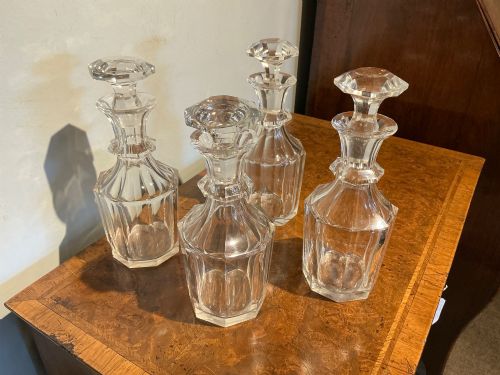
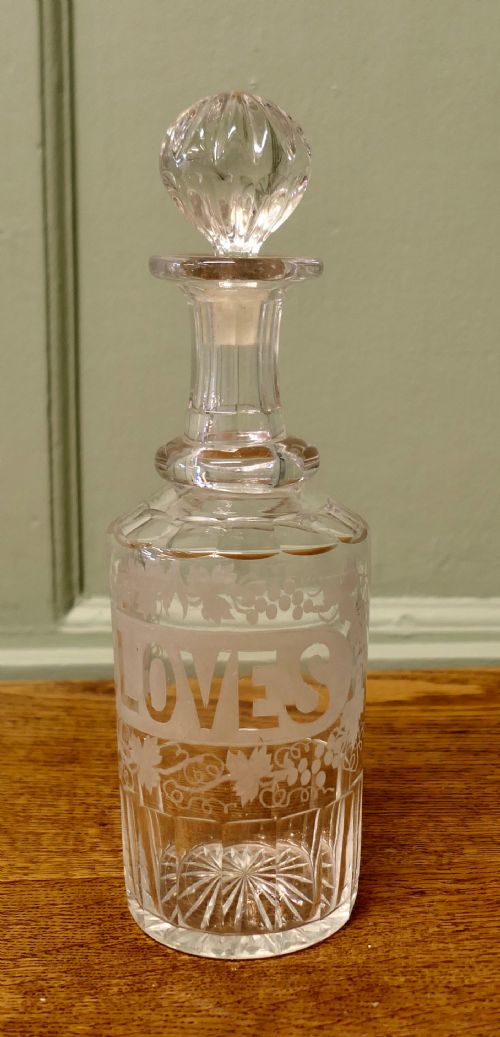
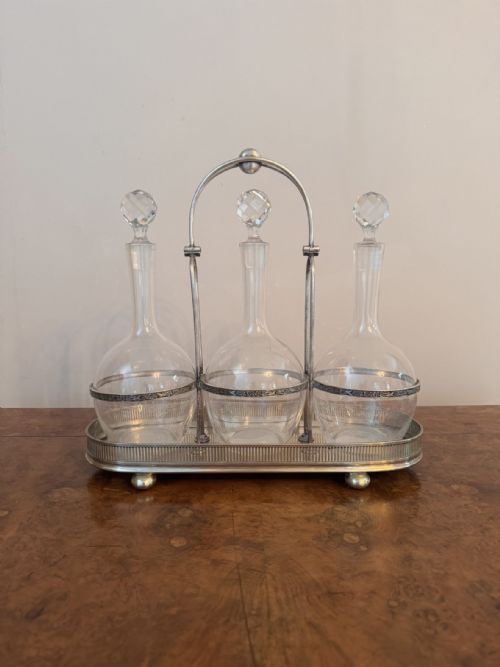
A vintage glass decanter bottle encompasses practical vessels designed for serving wine, spirits, or holding scent, spanning from the Victorian and Edwardian eras into the early twentieth century. Buyers encounter standard table decanters, matching sets, perfume bottles, and fitted tantalus frames housing multiple crystal vessels.
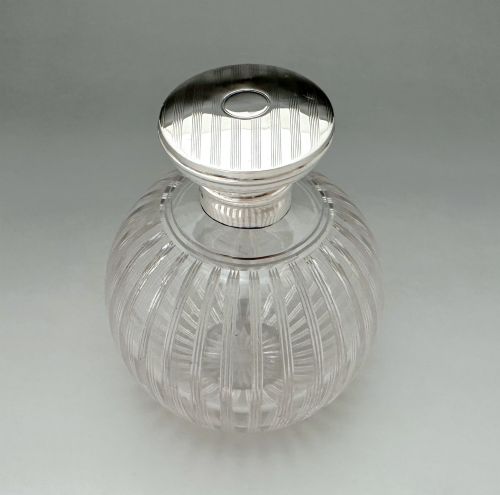
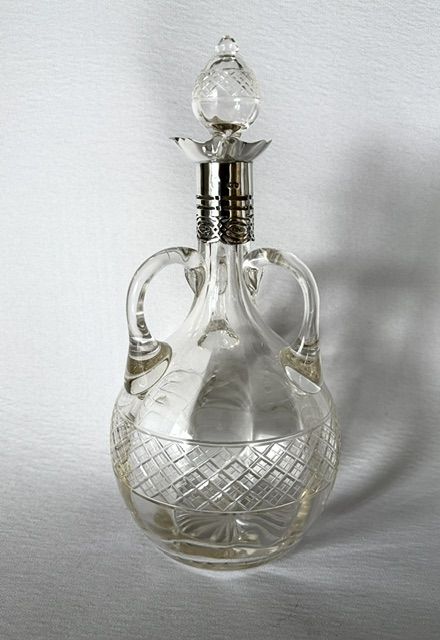
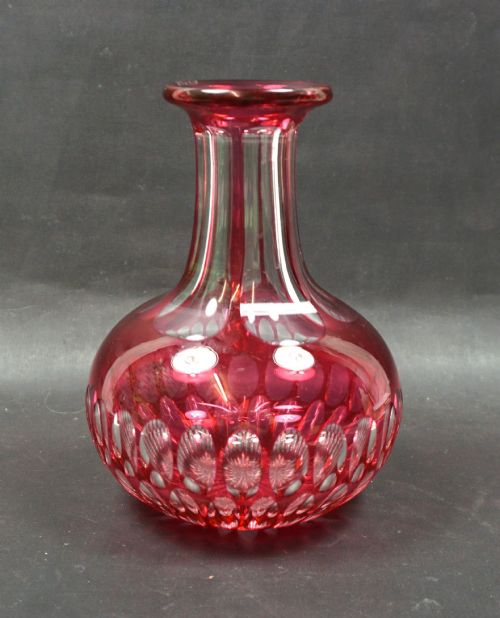
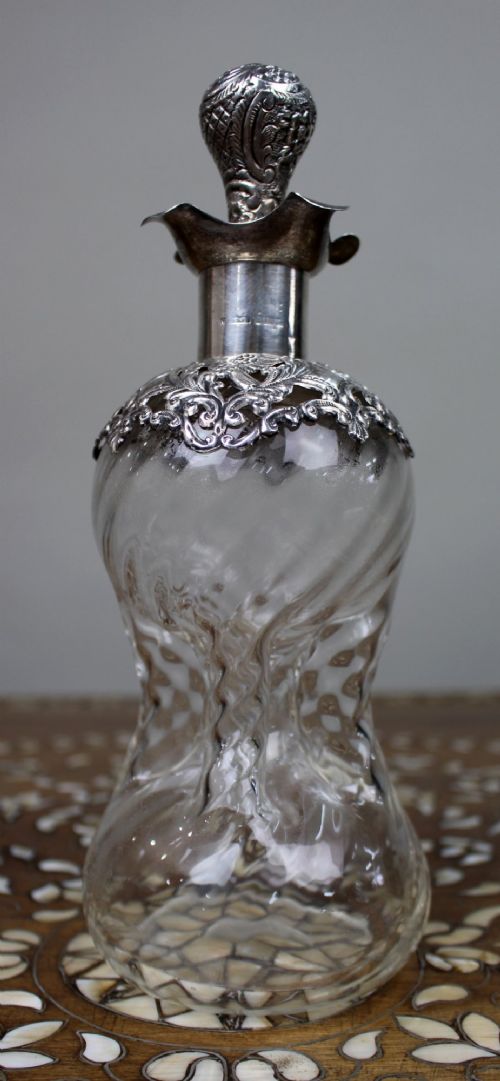
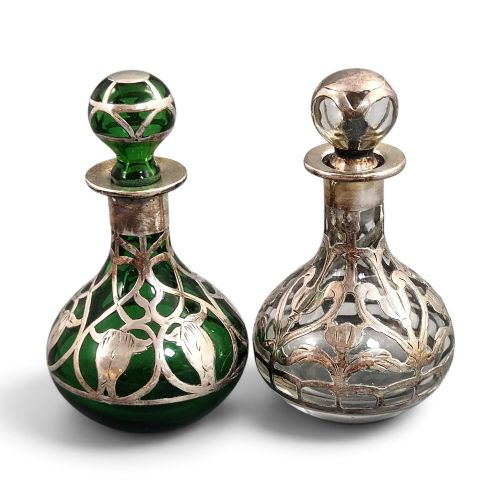
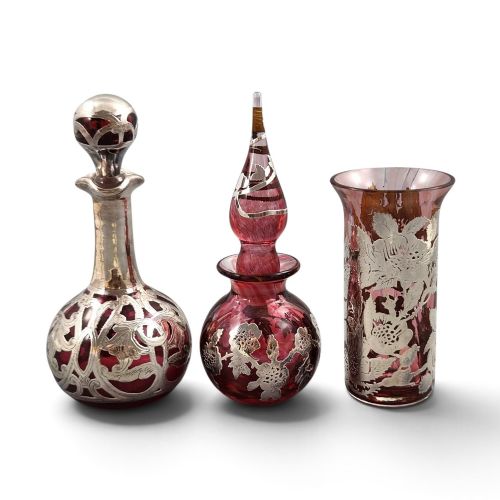
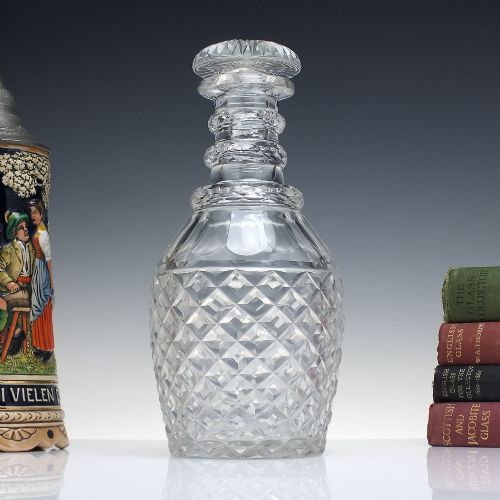
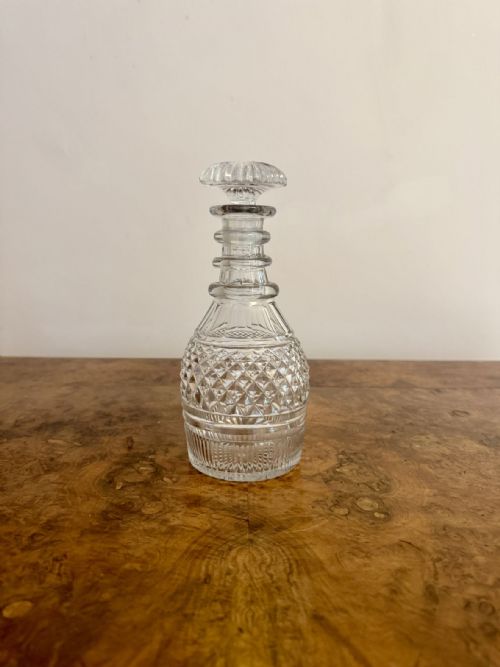
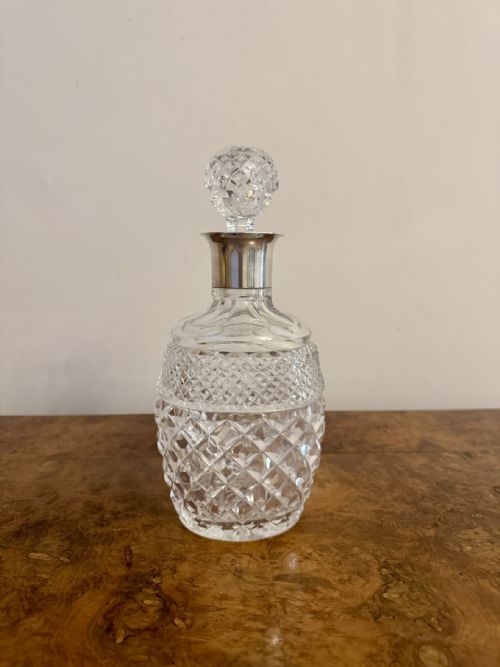
The selections on this page run from heavily cut lead crystal spirit bottles with silver collars to coloured glass carafes and silver-mounted cologne flasks. Edwardian and Victorian examples dominate the listings, alongside George V and Art Deco pieces featuring clean lines or coloured overlays.
Materials and construction
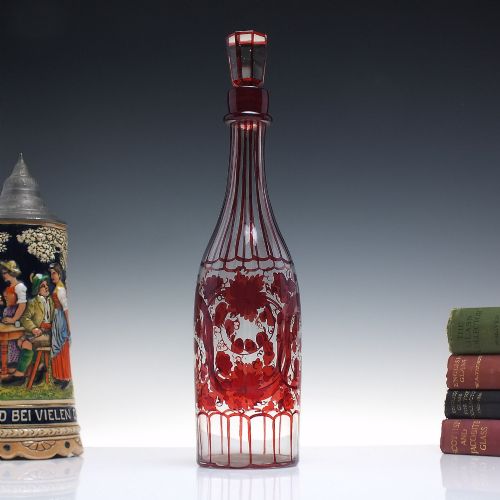
Makers shaped these vintage glass decanter bottle pieces using clear and coloured glass, lead crystal, and cut crystal, frequently mounting them with sterling silver collars, silver plate, or overlay. Coloured varieties include ruby, cranberry, cobalt, and green glass, sometimes enhanced by hand painting or enamelling.
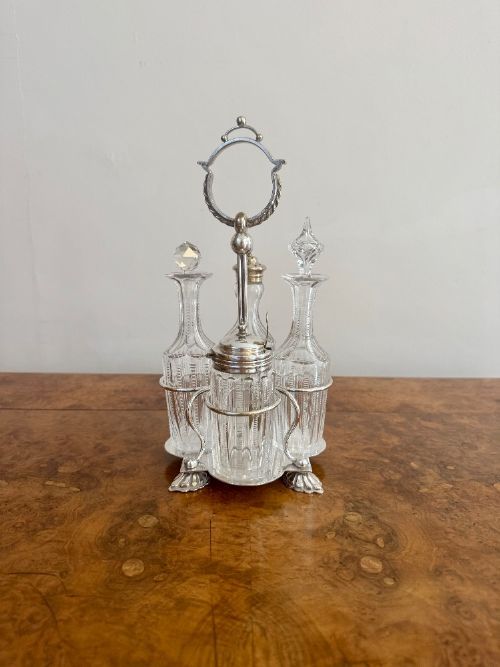
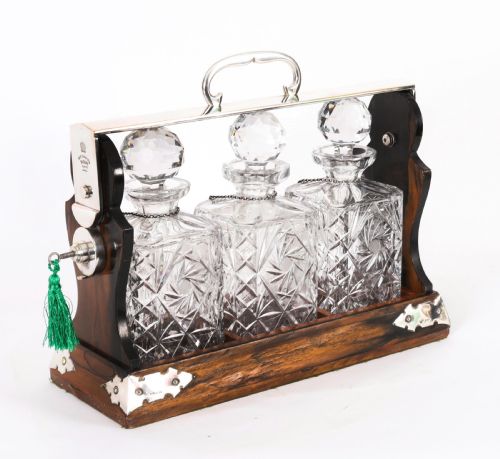
Many items incorporate fitted wooden frames such as oak, coromandel, or satin wood for tantalus sets and cruet stands, combining structural woodwork with secure metal locking mechanisms and fitted stoppers.
Travellers once carried entire leather cases packed with silver-topped flasks to ensure proper refreshment on the move.
Quality factors
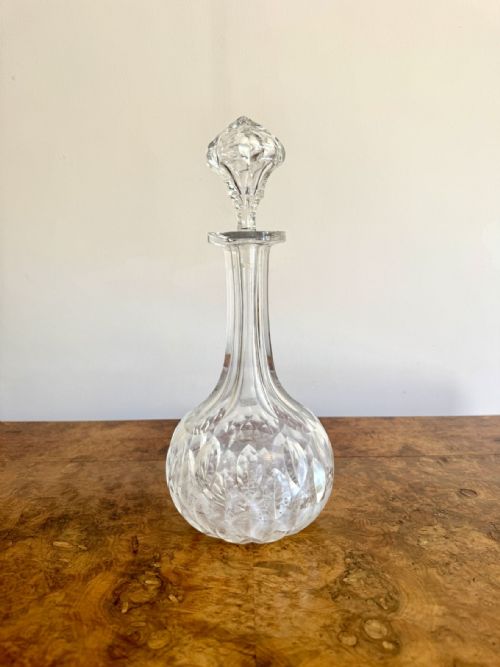
The standard of a vintage glass decanter bottle rests on the clarity and depth of the glass cutting, the weight of the crystal, and the substance of any silver mounts. Finely articulated facets and heavy lead crystal create a distinct refraction of light that lighter moulded glass lacks.
The integration of materials also defines the tier of the piece, where hallmarked sterling silver collars, secure fitted stoppers, and substantial wood or silver-plated frames elevate utilitarian vessels into luxury tableware.
Betjemann·Gorham·Laugharne·Rene Lalique
The Vintage Glass Decanter Bottle Glossary
- Tantalus
- A locked wooden frame holding crystal decanters securely while allowing the contents to be seen. This clever device prevented unauthorised access to spirits in the home.
- Lead crystal
- Glass containing metallic oxide that increases weight, brilliance, and workability for deep cutting. It forms the heavy, sparkling body of finer decanters.
- Cruet set
- A matched collection of small bottles or jars for oils, vinegars, and condiments mounted on a stand. These were a fixture of formal dining tables.
- Overlay
- A layer of coloured glass fused over a clear glass body before being cut away to create contrasting patterns. It produces a striking two-tone decorative effect.
- Silver collar
- A band of sterling silver or silver plate fitted around the neck of a bottle to strengthen the rim and anchor a stopper.
Vintage Glass Decanter Bottle: Frequently Asked Questions
How do I clean a cloudy decanter?
Residue builds up inside old bottles over decades of holding port or whisky. Gentle washing with warm water and specialised cleaning beads usually clears the haze without scratching the interior.
Harsh detergents and boiling water should be avoided to protect antique glass and fitted silver collars from thermal shock and chemical damage.
Are these bottles safe for daily use?
Most sturdy crystal and glass vessels remain entirely functional for serving wine or spirits today. Checking that stoppers fit snugly ensures liquids keep properly.
Pieces with delicate enamelling or fragile silver overlay require careful handling and hand washing rather than dishwasher cycles.
What is a tantalus used for?
A tantalus secures spirit bottles behind a locking bar while displaying the cut glass through the frame. Householders used them in the nineteenth and twentieth centuries to safeguard valuable drinks.
Unlocking the mechanism requires a key, keeping the bottles safely out of reach of servants or guests.
How do I date an antique decanter?
Silver hallmarks provide the most precise dating by indicating the assay office and year of manufacture. Stylistic clues such as heavy cutting, silver plate mounts, and wooden frames also narrow down the era.
Victorian and Edwardian pieces often display distinct proportions and decorative motifs compared to later Art Deco designs.