


Vintage Glass Compote
These vintage glass compote pieces combine pedestal height with decorative bowl forms, offering striking display options for fruit and centrepiece service.
Vintage Glass Compote
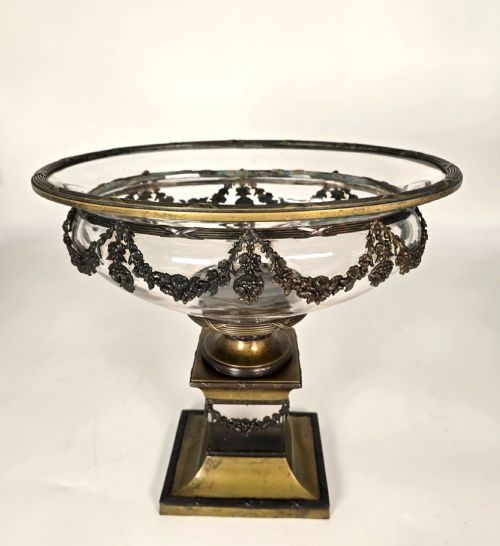
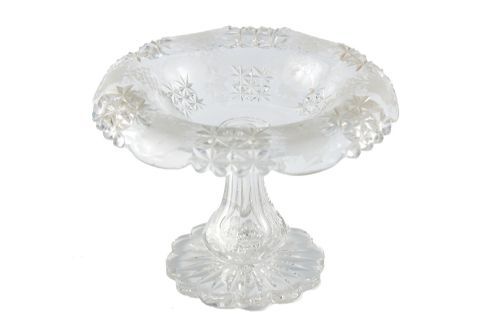
A vintage glass compote functions primarily as a decorative bowl or fruit bowl raised on a pedestal foot, often designated in listings as a tazza or centrepiece. You will frequently encounter Victorian and Edwardian examples alongside later Art Deco designs.
The material range spans clear and coloured glass, lead crystal and carnival glass, sometimes mounted in brass, silver plate, gilt bronze or pewter. These objects serve as table centrepieces and decorative bowls originating from English, French, Bohemian and Irish makers.
How they were made
Many of these pieces rely on hand blowing and hobnail pattern cutting to shape the heavy crystal and coloured glass bodies. Metal mounts in bronze, brass and silver plate provide structural support and decorative rims for the elevated bowls.
Surface decoration involves etching, gilding with gold leaf, and cameo glass techniques applied during the Victorian, Art Nouveau and Art Deco periods.
Materials recorded across the inventory include cut glass, lead crystal, silver plate and gilt bronze.
What varies in quality
Quality rests in the crispness of the cut glass facets, the depth of the etching and the weight of the lead crystal. Metal mounts featuring detailed bronze or silver plate work indicate higher production standards.
Signatures from notable designers and established potteries or glasshouses distinguish standard table wares from superior sculptural centrepieces.
Elizabeth Graydon Stannus·W M F·Etling·Orivit·Waterford
The Vintage Glass Compote Glossary
- Compote
- A raised bowl on a stem or pedestal used for serving fruit or sweets. It forms the primary category for these elevated serving pieces.
- Tazza
- A shallow saucer-like dish mounted on a stem and foot. This term frequently appears interchangeably with compote and centrepiece.
- Hobnail
- A decorative glass pattern featuring raised pyramidal or rounded points across the surface. It provides tactile texture to nineteenth-century bowls.
- Cameo glass
- An art glass technique involving layers of different colours carved down to create contrast. It is seen on Art Nouveau pieces.
- Vaseline glass
- A transparent yellowish-green glass coloured with uranium oxide. It glows under ultraviolet light and appears in Art Deco designs.
Vintage Glass Compote: Frequently Asked Questions
What is a glass compote used for?
These pieces function primarily as centrepieces and fruit bowls, elevating displays on dining tables and sideboards. Their pedestal design gives height and prominence to whatever they hold.
Historically, they served compotes, fruits and sweetmeats during formal meals. Today, they remain decorative display items in their own right.
How do I date a glass compote?
Dating relies on stylistic clues, such as the heavy ornamentation of Victorian pieces versus the geometric lines of Art Deco items. Material combinations like silver plate or gilt bronze mounts also point to specific manufacturing eras.
Maker signatures or particular glass colours, such as Vaseline glass, help narrow down the decade of production.
Are these compotes made of lead crystal?
Many of the listed pieces utilise heavy lead crystal or cut glass, particularly those originating from Victorian England and Ireland. Others consist of standard blown glass or specialised art glass.
Weight and clarity often indicate lead content, alongside the sharp definition of the cut facets.
Can I use a vintage compote daily?
While sturdy enough for occasional service of fruit or dry items, these pieces benefit from careful handling due to their age and delicate metal mounts. Hand washing protects the gilding and etched surfaces.
Most owners choose to place them in secure locations as permanent decorative centrepieces.