
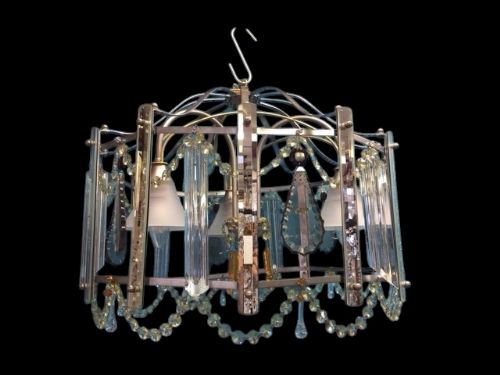
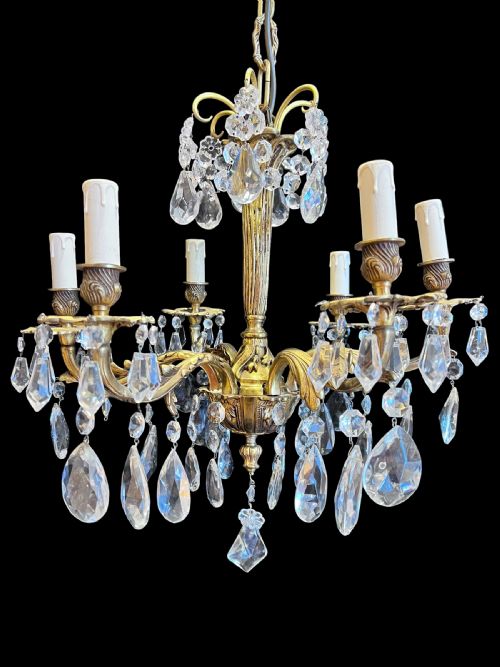
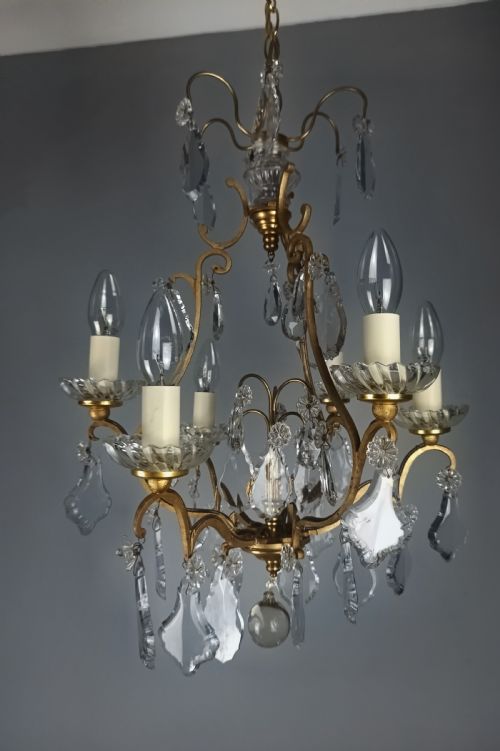
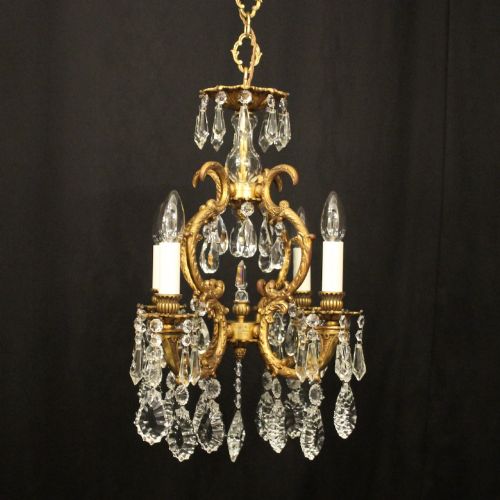


Vintage Glass Ceiling Chandelier
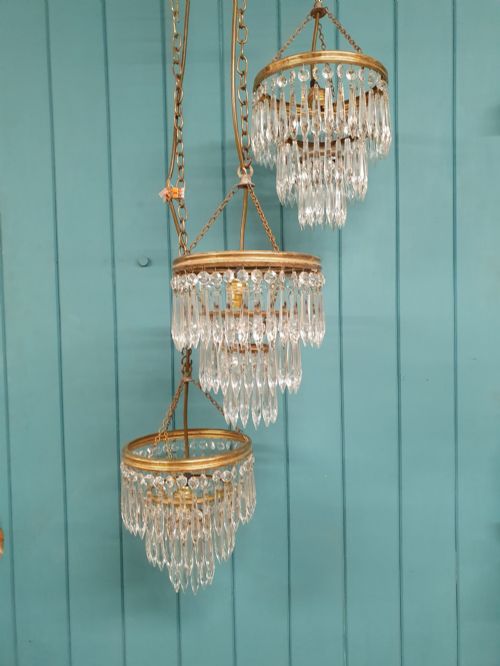
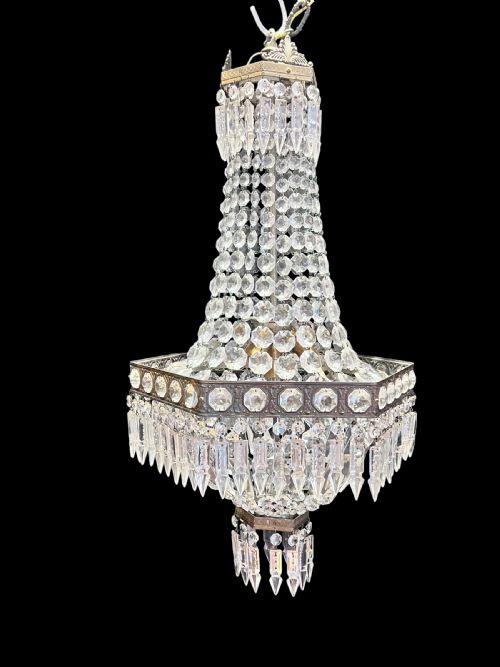
These vintage glass ceiling chandeliers provide layered illumination through crystal drops and brass or gilt frames spanning the nineteenth and twentieth centuries.
Vintage Glass Ceiling Chandelier
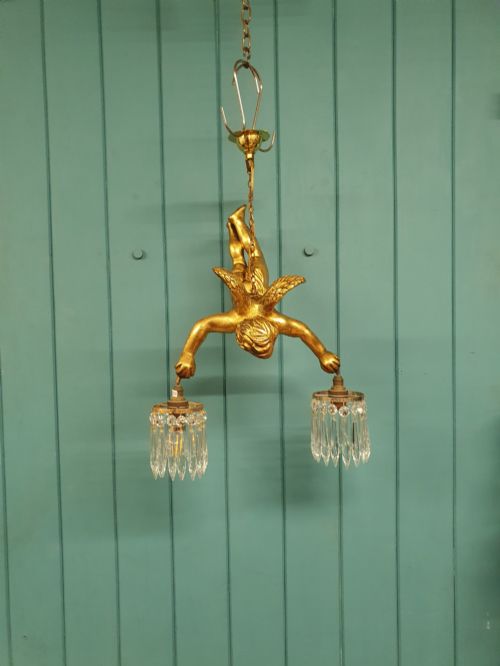
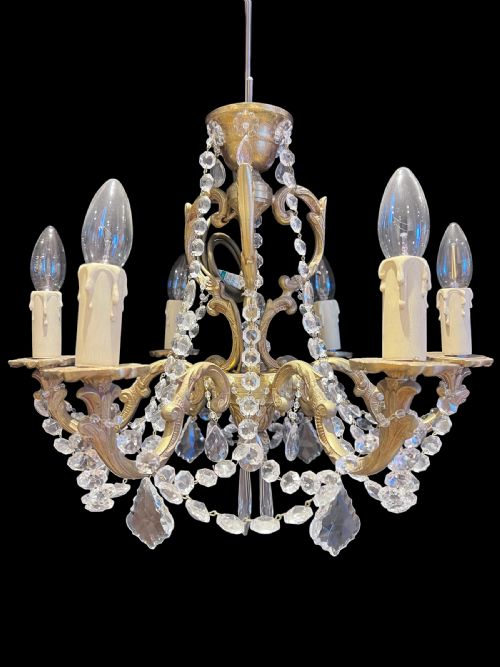
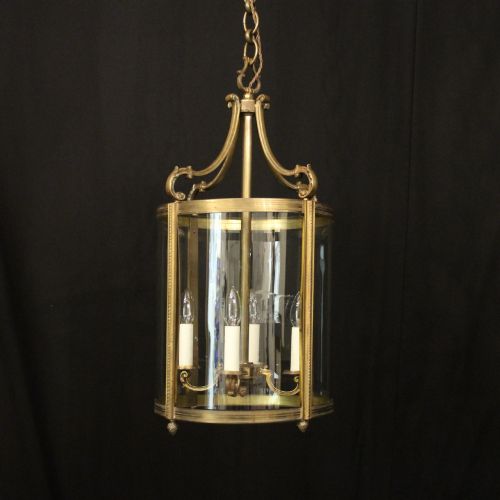
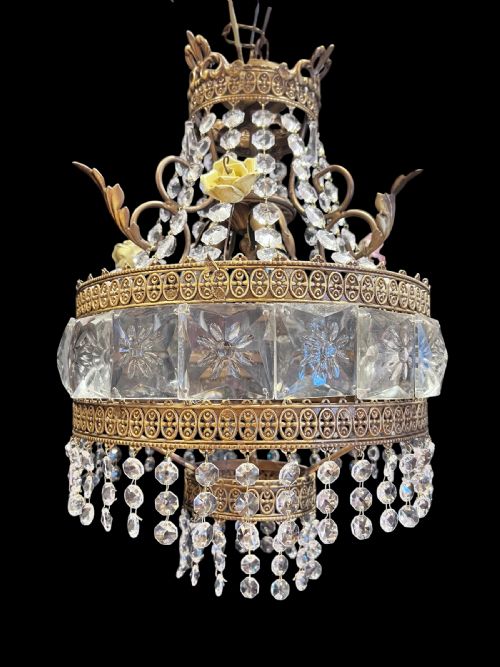
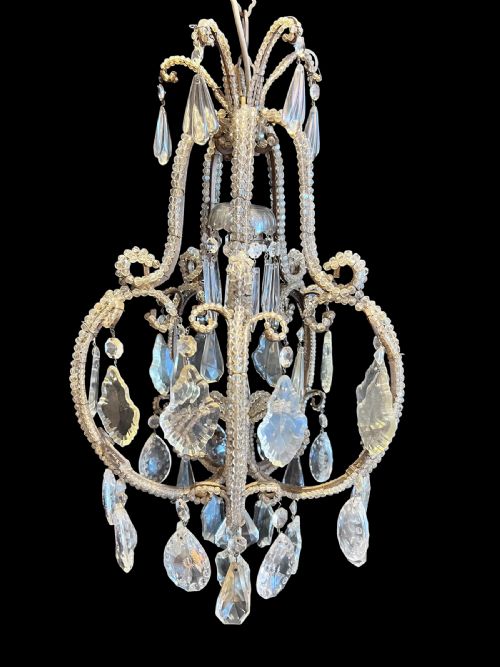
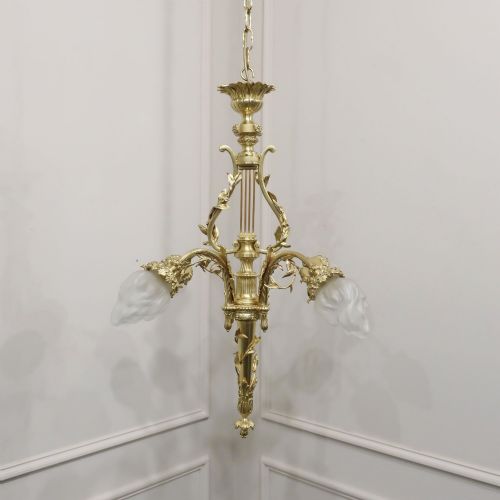
A vintage glass ceiling chandelier hangs from domestic and public interiors, taking forms such as multi-branch chandeliers, hall lanterns, basket fixtures, and tent and waterfall designs. The examples found here originate primarily from the nineteenth century through to the 1930s.
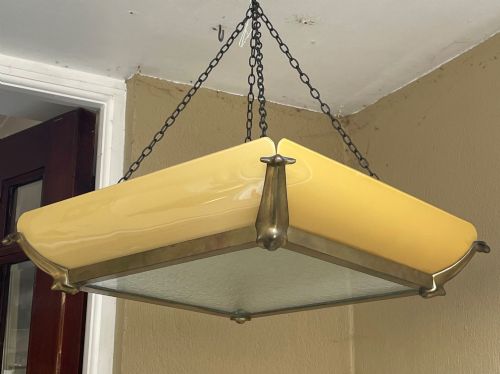
French chateau, Empire, and Rococo styles appear frequently alongside Edwardian, Arts and Crafts, and Art Deco pieces. Buyers will encounter brass and crystal configurations, porcelain floral accents, and geometric slip shade pendants.
The selection ranges from small spike chandeliers to large fourteen-light ballroom fixtures, offering options for diverse ceiling heights and room proportions.
How they were made
Frames rely on brass, gilt bronze, spelter, and gilded metal to support the weight of glass and crystal components. Metalwork is cast, framed, or spun to form lanterns, baskets, and multi-light branches.
Glass elements utilise cutting, moulding, and etching techniques. Crystal drops, lustres, beads, and bevelled glass panels are suspended from the metal armature to refract light.
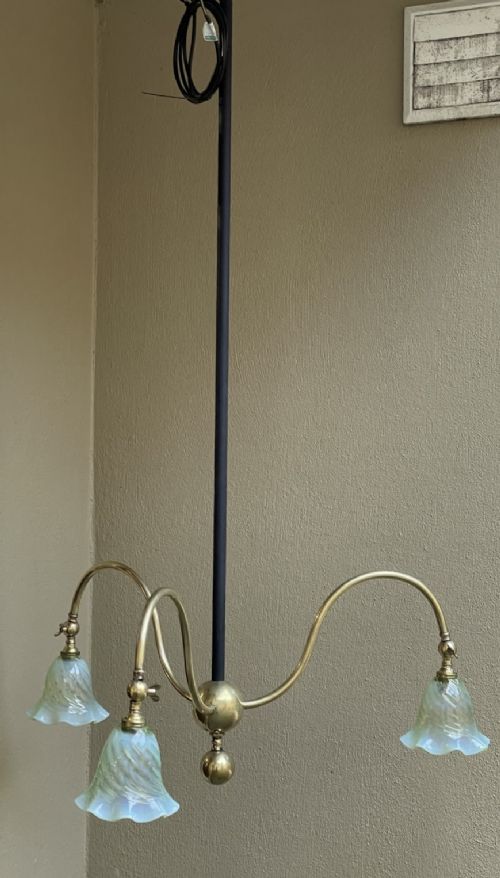
Selected pieces incorporate opalescent glass shades, porcelain flowers, and leaded bevels, reflecting the handcraft methods of periods from the Victorian era to the Art Deco movement.
Listings feature periods spanning the Victorian era, Edwardian period, and the 1920s and 1930s.
What varies in quality
Quality rests on the depth of hand-cutting in the crystal, the weight and finish of the cast bronze or brass framework, and the integrity of the suspended drops. Superior pieces display crisp facet cutting and substantial metal casting.
The refinement of period detailing, such as finely chased gilt bronze mounts or hand-etched glass panels, separates standard production from exceptional examples. The completeness of original crystal lustres and matching components also defines the tier of a piece.
Émile-Jacques Ruhlmann
The Vintage Glass Ceiling Chandelier Glossary
- Tent and waterfall
- A chandelier style featuring an upper conical section of strung crystal beads falling to a wider tiered array below. This design maximises light refraction across large reception spaces.
- Plafonnier
- A ceiling light fixture mounted flush or close to the ceiling surface. These often utilise glass bowls or bevelled panels held in metal frames.
- Gilt bronze
- Copper alloy metal coated with a layer of gold. It provides a durable, warm metallic finish seen on French period frames.
- Spelter
- A zinc alloy used as a substitute for bronze in decorative castings. It permits intricate figural work on lighter fixtures.
- Hall lantern
- An enclosed hanging light designed for corridors and entrance spaces. These fixtures frequently employ glazed brass or bronze frames.
Vintage Glass Ceiling Chandelier: Frequently Asked Questions
How do I hang a heavy antique chandelier safely?
Suspension requires fixing directly into ceiling joists or installing a dedicated metal support brace capable of bearing the combined weight of the metal frame and glass components. Professional wiring and installation ensure the fixture hangs securely at the correct height for the room.
Ceiling height dictates the drop length, particularly with tent and waterfall designs or large lanterns that require adequate clearance beneath them. Consult an electrician experienced with vintage lighting fixtures to verify internal wiring meets current standards.
What is a tent and waterfall chandelier?
A tent and waterfall chandelier incorporates an upper conical tent of strung crystal beads attached to a crown, dropping down into a wider tier of cascading crystal lustres. This construction creates layered illumination through dense arrangements of cut glass.
Such fixtures became popular in grand interiors during the nineteenth and early twentieth centuries. The design allows light to pass through multiple tiers of glass for maximum refraction.
How do I clean an antique glass chandelier?
Cleaning involves wiping individual crystal drops and glass panels with a mild solution of warm water and professional glass cleaner using a soft cloth. Leaving components attached while cleaning prevents damage to aged wire loops and brass frames.
Harsh chemical agents and abrasive pads must be avoided to protect gilt finishes and delicate glass surfaces. Regular dusting maintains the clarity of the crystal without requiring complete dismantling of the fixture.
How do I tell an Edwardian chandelier from an Art Deco one?
Edwardian chandeliers typically draw on traditional motifs like brass framing, floral elements, and neoclassical or French revival styles. They emphasise ornate casting, crystal drops, and classical proportions dating around the turn of the twentieth century.
Art Deco chandeliers from the 1930s favour geometric lines, slip shades, and streamlined forms associated with modernism. Materials like chromium, frosted glass, and moulded shades replace the earlier reliance on crystal lustres and gilt bronze.