


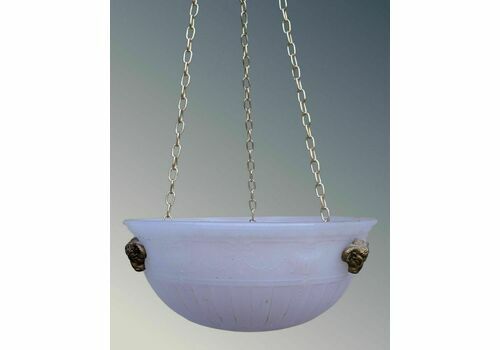
Vintage Glass Bowl Shade
A vintage glass bowl shade brings a warm, diffused glow to a ceiling, combining decorative illumination with period craftsmanship.
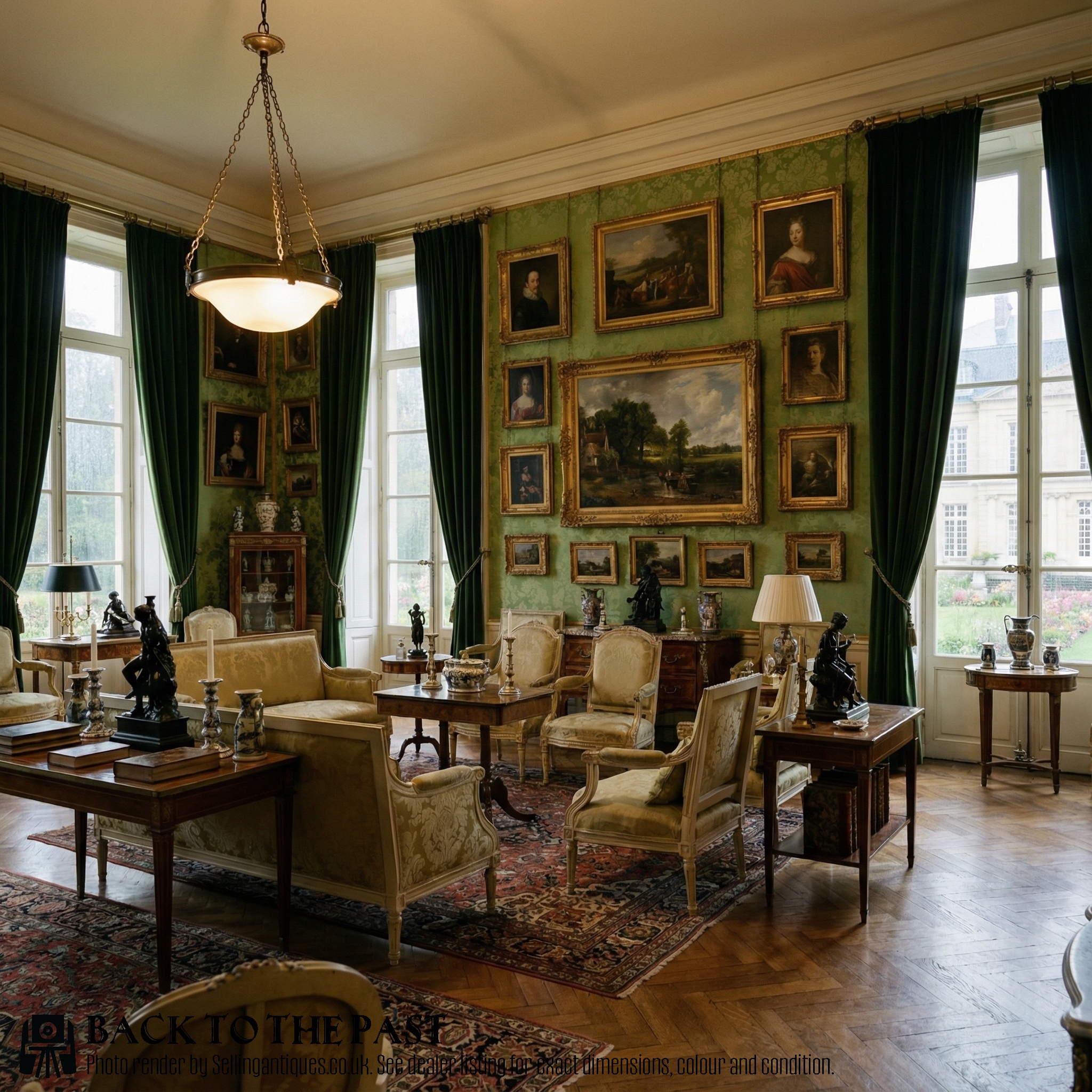
Vintage Glass Bowl Shade
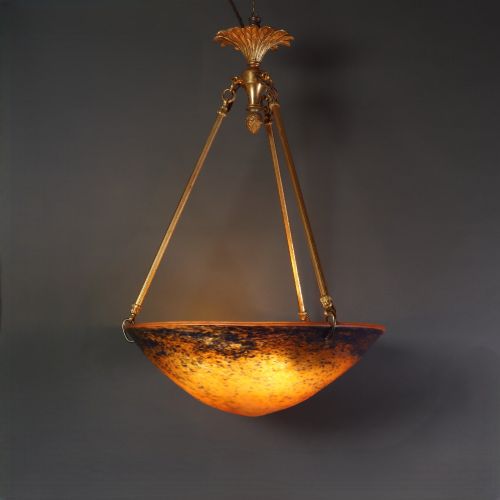
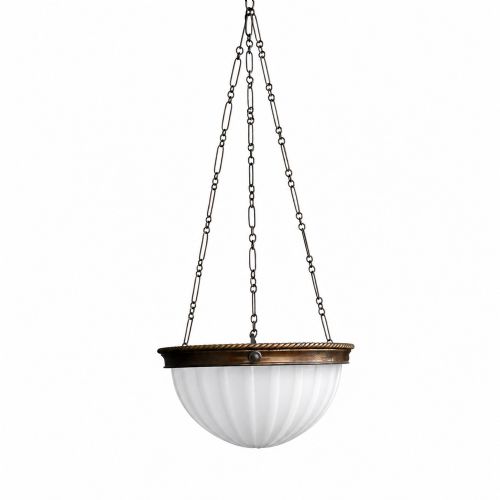
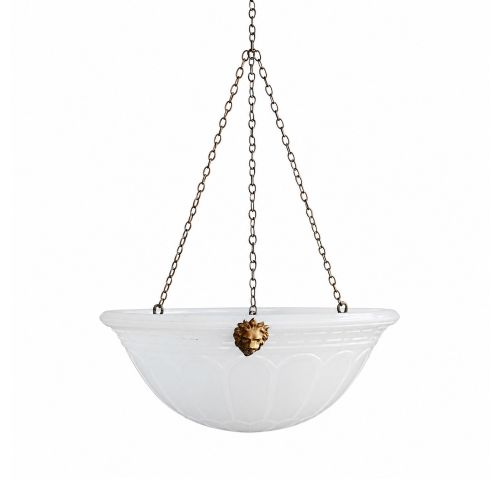
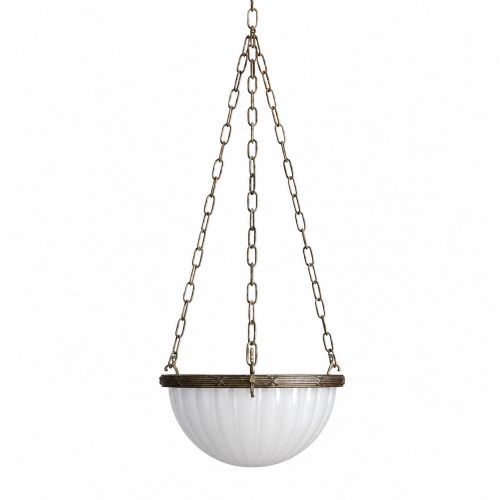
A vintage glass bowl shade is a ceiling-suspended lighting fixture, taking the form of a pendant, plafonnier or chandelier component. These bowls distribute light evenly across a room while serving as a distinct decorative centrepiece.
The versions most commonly met on this page span the Edwardian era through to the 1930s. Buyers frequently encounter styles ranging from plain opaline and frosted glass to geometric Art Deco pressed satin glass and intricate Edwardian cut crystal.
Originating as practical interior lighting, these bowls utilise suspension hardware made from brass, bronze, copper or silver-plated metal. They are encountered both as single pendant lights and as components belonging to larger multi-light chandeliers.
How they were made
Makers shaped the glass bowls using moulding, pressing, or free-blowing techniques, frequently employing moonstone, opalescent, or frosted finishes to soften the glare of early electric bulbs. Cut glass examples display precise wheel-cut facets that catch and refract the light.
Metal mounts, galleries and suspension chains were fabricated from brass, bronze, copper or silver-plated metal. These structural elements often feature cast decorative details such as rams heads or neoclassical motifs to secure the heavy glass bowls safely.
Some bowls feature sculpted rams heads peering out from the metal mounts, keeping a watchful eye on the room below.
What varies in quality
Quality in these lighting fixtures rests primarily on the depth and clarity of the glasswork, alongside the substantial weight of the metal mounts. Thickly moulded pressed glass and deeply hand-cut crystal represent the superior end of the manufacturing range.
The refinement of the supporting metalwork also dictates overall grade, with cast bronze or detailed brass components showing greater artistic ambition than simple spun metal collars. Integrated decorative treatments such as enamel painting, gilding or opalescent flutings elevate certain pieces above standard utility wares.
René Lalique
The Vintage Glass Bowl Shade Glossary
- Plafonnier
- A ceiling-mounted lighting fixture where the bowl sits flush or close to the ceiling rather than hanging on a long drop. This French term translates literally to ceiling light.
- Moonstone glass
- A semi-translucent milky white glass that diffuses light with a soft, ethereal appearance resembling the gemstone. It was widely utilised during the early twentieth century for atmospheric interior illumination.
- Opalescent glass
- Glass exhibiting a milky or bluish iridescence when lit, shifting in tone depending on the angle of the light source. It is characteristic of decorative lighting from the Art Nouveau and Art Deco periods.
- Cut glass
- Glass decorated by grinding and polishing facets onto the surface using rotating wheels. This technique creates sharp geometric patterns that enhance the sparkle of the fixture.
- Chandelier component
- An individual bowl or dish designed to fit within a larger multi-light hanging frame. These elements are often salvaged or traded separately as replacement pieces.
Vintage Glass Bowl Shade: Frequently Asked Questions
How do I hang a bowl shade?
Most vintage bowl shades require three or four suspension chains attached to a ceiling rose, holding the rim of the glass bowl securely in metal claws. An electrician should check the internal wiring and ensure the ceiling hook can support the combined weight of glass and metal.
Because these bowls can be heavy, especially when formed from thick cut crystal or pressed glass, proper weight distribution across the suspension hardware is essential for safe installation.
What bulb should I use?
Low-wattage LED bulbs that emit a warm white colour temperature work best inside translucent or frosted glass bowls. They prevent excessive heat buildup while maintaining the soft, diffused illumination intended by the original makers.
Clear bulbs will project sharp shadows through patterned cut glass, whereas frosted or opal bulbs complement moonstone and opalescent finishes by smoothing out the light distribution.
How do I clean vintage glass?
Remove the bowl from its suspension hardware and wash it gently in lukewarm water using a mild, non-abrasive detergent. Avoid submerging metal mounts or painted surfaces, as moisture can damage aged finishes and patination.
Dry the glass thoroughly with a lint-free cloth before reassembling the fixture, taking care not to over-tighten the metal thumb screws that secure the rim.
How do I date a glass shade?
Stylistic clues within the glass and metalwork help narrow down the period of production. Geometric forms and pressed satin textures typically point towards the 1930s Art Deco era, while heavy cut crystal and bright brass mounts often indicate Edwardian or Victorian manufacture.
Examining the mounting rim for tool marks, screw types, and the composition of the metal gallery provides additional context regarding the decade of assembly.