


Vintage Gilt Wall Fixtures
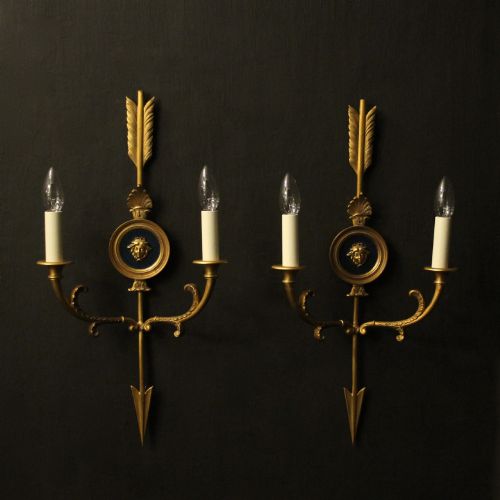
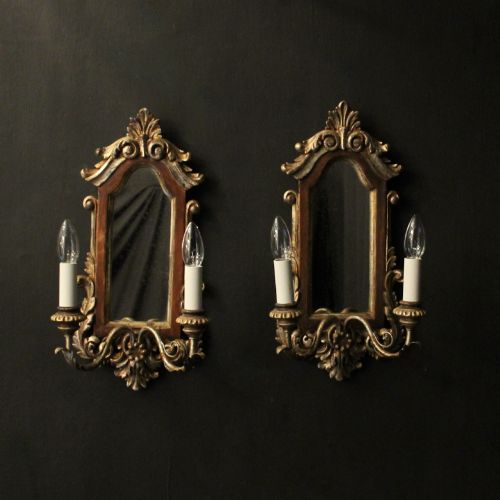
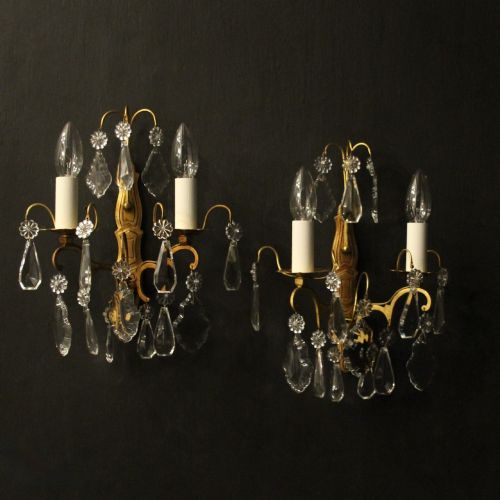
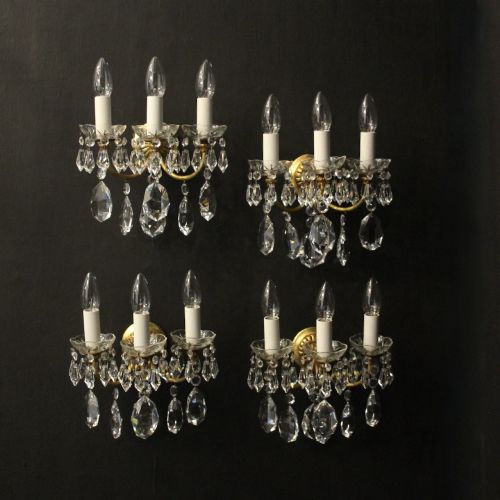
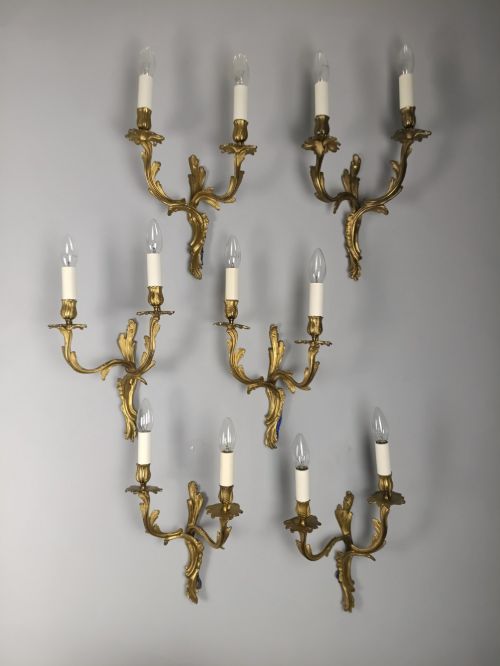
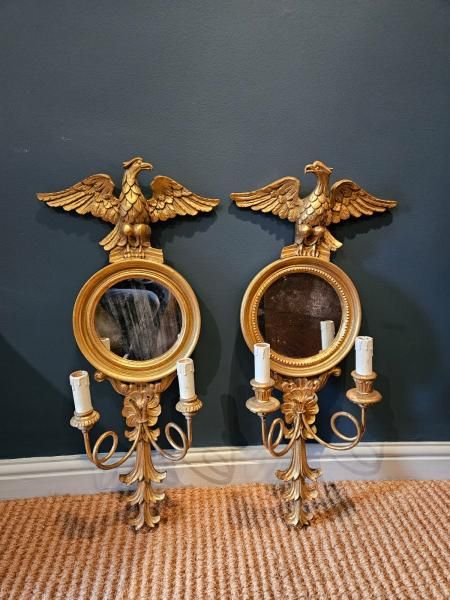
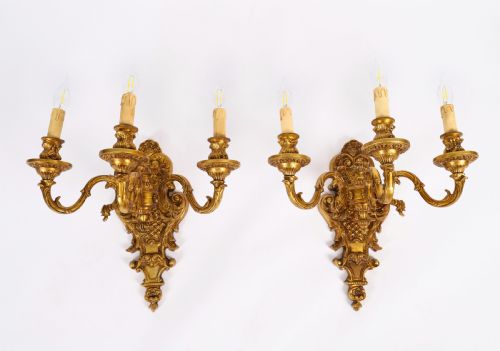
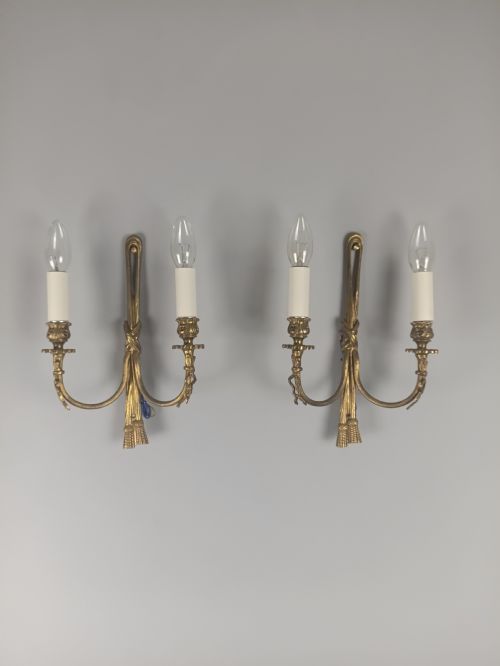
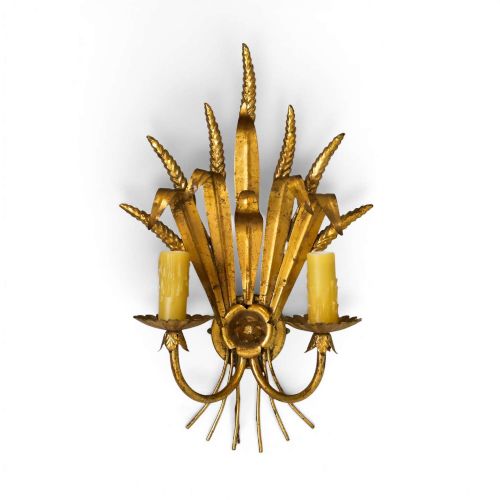
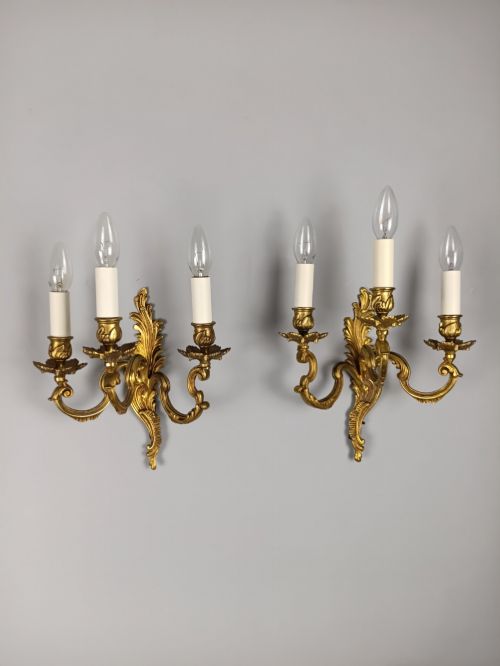
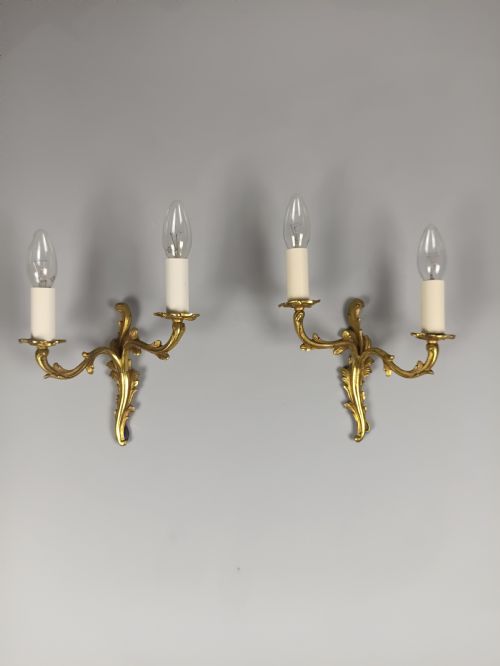
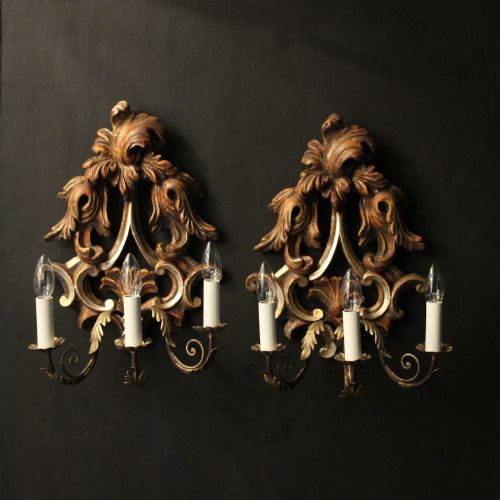
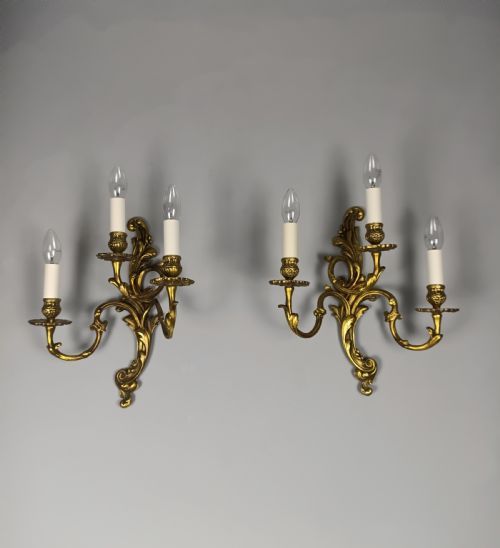
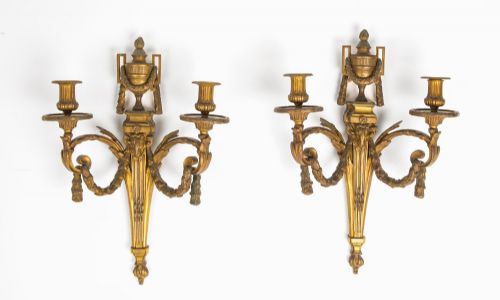
These vintage gilt wall fixtures bring warmth and decorative elegance to a room, ranging from ornate French bronze sconces to carved Italian giltwood girandoles.
Vintage Gilt Wall Fixtures
Vintage gilt wall fixtures encompass wall lights, wall sconces, girandoles, and light fittings designed to mount directly onto vertical surfaces. When searching for vintage gilt wall fixtures, buyers encounter pieces primarily originating from French and Italian workshops dating from the nineteenth century through the mid-twentieth century.
The selection frequently includes twin-arm and triple-arm configurations, often wired for electricity or configured with candle holders. Common stylistic manifestations draw heavily on French Rococo, Regency, Neoclassical, and Florentine Baroque traditions, with gilt bronze, gilt brass, and giltwood dominating the physical forms.
How they were made
Metal components utilise cast brass, bronze, and gilt metal, often finished with ormolu or gilding to achieve a reflective golden surface. Wood variants employ carved giltwood, sometimes paired with toleware or porcelain floral elements.
Many designs incorporate crystal drops, glass prisms, or mirrored backs to amplify candle or electric light within the room. Construction methods rely on traditional joining of metal arms, backplates, and candle nozzles, frequently housing electrical wiring added during subsequent twentieth-century updates.
Materials recorded across the inventory include gilt bronze, giltwood, crystal, toleware, and porcelain flowers.
What varies in quality
Quality rests in the crispness of the casting and the depth of the hand-carved detail on giltwood and bronze frames. Finer examples display deeply chased ornamentation, such as ram's head masks, ribbon motifs, or elaborate rocaille scrolls, rather than softened or flattened surface patterns.
The integrity of the original gilding or ormolu finish distinguishes superior specimens from heavily worn or later re-gilt alternatives. Heavier gauge metals and substantial carved wooden structures provide structural stability that lighter, mass-produced twentieth-century reinterpretations lack.
The Vintage Gilt Wall Fixtures Glossary
- Giltwood
- Wood that has been treated with gold leaf or gesso and gilding. This technique provides a luminous golden surface widely utilised in Italian and French decorative frames and sconces.
- Ormolu
- Finely ground high-carat gold applied to a bronze base using a mercury-gilding process. The method creates a rich, enduring metallic sheen seen on nineteenth-century French fixtures.
- Girandole
- An ornamental branched wall light featuring a mirrored backplate. The mirror reflects the candlelight to increase illumination in formal rooms.
- Toleware
- Painted sheet metal shaped into decorative forms such as leaves or flowers. It frequently appears alongside gilt metal elements on early twentieth-century Italian wall sconces.
- Applique
- A French term for a wall sconce or wall light designed to be mounted on a vertical surface. These fixtures often feature multiple candle arms projecting from an ornate backplate.
Vintage Gilt Wall Fixtures: Frequently Asked Questions
How do I wire vintage wall lights?
Most vintage wall fixtures require modern electrical rewiring to meet current safety standards before installation. A qualified electrician can adapt the internal channels for safe domestic use.
Many pieces arrive already rewired, while others retain older fittings that need updating. Professional installation ensures the heavy bronze or wooden backplates anchor securely to wall studs.
What is the difference between a sconce and a girandole?
A wall sconce is a bracket fixture designed to hold candles or electric bulbs on a wall. Sconces rely entirely on their metal or wooden arms and backplates for visual impact.
A girandole specifically incorporates a mirrored glass backplate behind the candle arms. This mirror plate distinguishes the girandole by reflecting and multiplying the light in the room.
How do I date gilt wall fixtures?
Dating relies on stylistic clues, manufacturing techniques, and material composition. Pieces reflecting Victorian, Regency, or Louis XV styles often date from the nineteenth century or early twentieth-century revivals.
Examination of the metal casting methods, screw types, and backplate construction helps narrow the period. Mid-century examples frequently incorporate simpler electrical components and distinct post-war metal alloys.
Where should I place wall sconces in a room?
Wall sconces suit hallways, living rooms, and dining spaces where ambient, eye-level illumination enhances the interior. Placing them on either side of a fireplace, mirror, or doorway creates visual symmetry.
Height placement depends on ceiling proportions and the specific height of the occupants, though standard installation usually positions the centre of the fixture around eye level.