




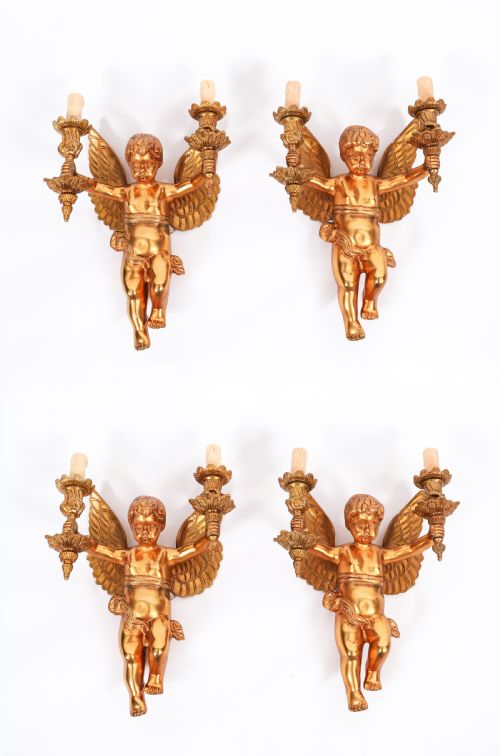


Vintage Gilt Putti
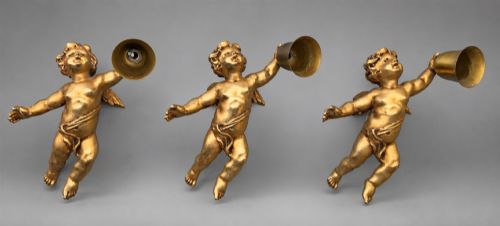
Vintage gilt putti bring animated charm to interiors through figures of winged cherubs rendered in gleaming metal and stone.
Vintage Gilt Putti
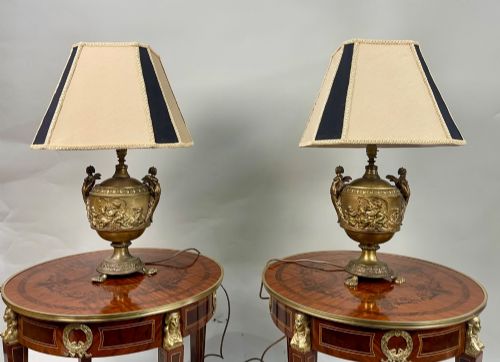
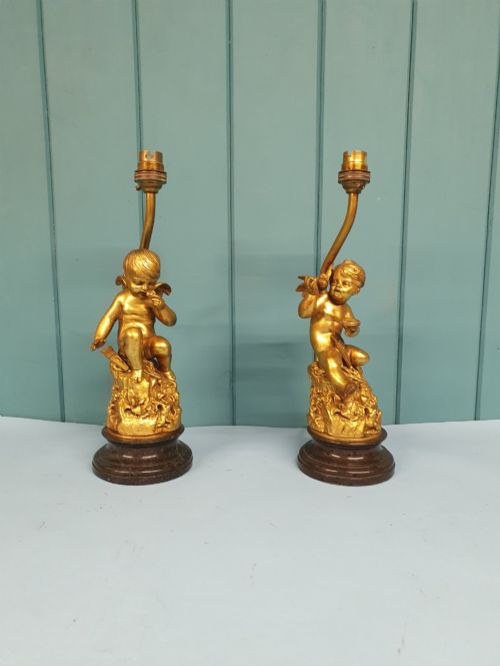
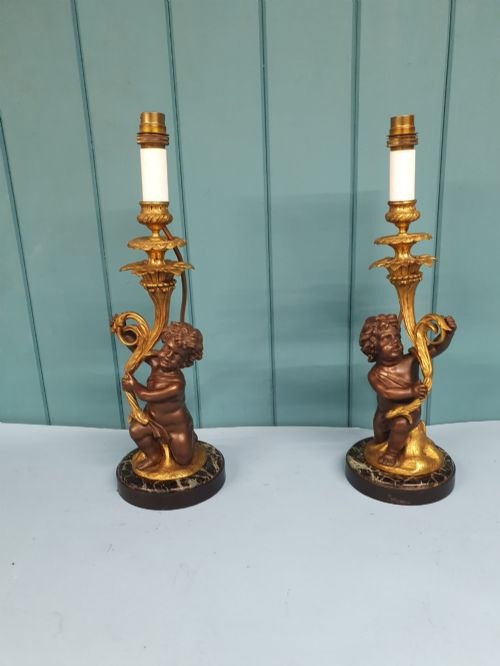
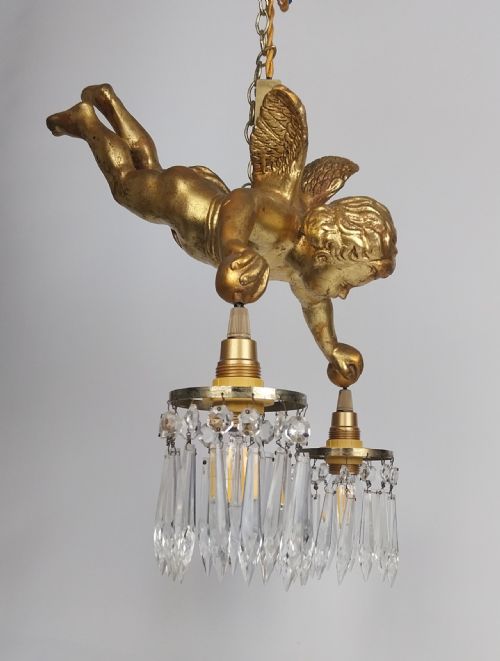
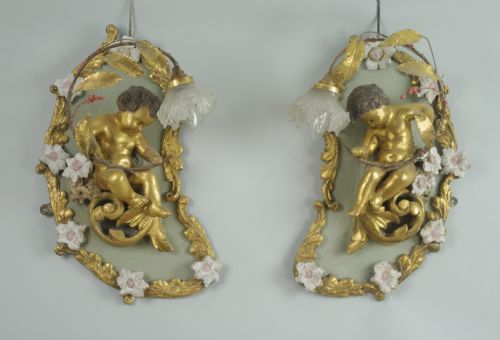
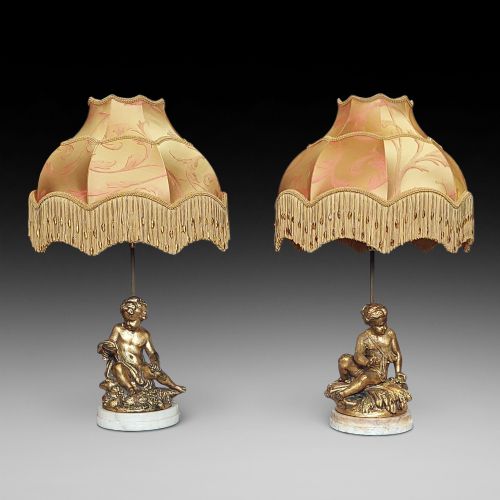
When buyers search for vintage gilt putti, they look at decorative objects depicting winged cherubs from the nineteenth and early twentieth centuries. These pieces appear most frequently as wall lights, table lamps, and mantel clocks influenced by French Rococo revival and Neoclassical styles. Continental workshops produced these figures to serve both ornamental and functional roles in domestic interiors.
Lighting fixtures dominate the selection, including wall sconces, chandeliers, and candelabra carrying gilt bronze or brass cherub figures. Mantel clocks and decorative mirrors also integrate cast putti reliefs into their frames and mounts. Most items date from the Victorian era up to the nineteen-thirties, reflecting persistent European demand for ornate classical ornamentation.
How they were made
Makers cast putti figures using metals such as bronze, brass, and gilt metal, applying gold leaf or gilding to create a luminous surface finish. Ormolu mounts combined mercury gilding with cast bronze to give decorative elements a rich metallic depth. Artisans also integrated materials like white marble, alabaster, glass, and porcelain into lamps, clocks, and mirrors.
Foundry workers chased and hand-finished cast metal components to define the feather details on wings and the contours of infant forms. Stonework elements such as alabaster bases or marble plinths were turned and polished to support heavier bronze figures. Skilled assembly joined these metal and mineral components into complex lighting fixtures and timepieces.
Vintage Gilt Putti Retail Price Guide 2026
Typical asking prices for vintage gilt putti among the pieces listed under this phrase on Sellingantiques today, from the lower quarter to the upper quarter. They describe what is for sale here now, not the wider market.
Listings feature lighting and decor spanning the nineteenth century through the nineteen-thirties, dominated by French Rococo revival and Neoclassical styles.
What varies in quality
The refinement of the casting and chasing on the putti figures separates superior pieces from standard production. Artisans who spent more time hand-finishing bronze or ormolu created sharper facial expressions and more detailed featherwork on the wings. Lower quality items often display softer contours from worn moulds and simpler surface finishing.
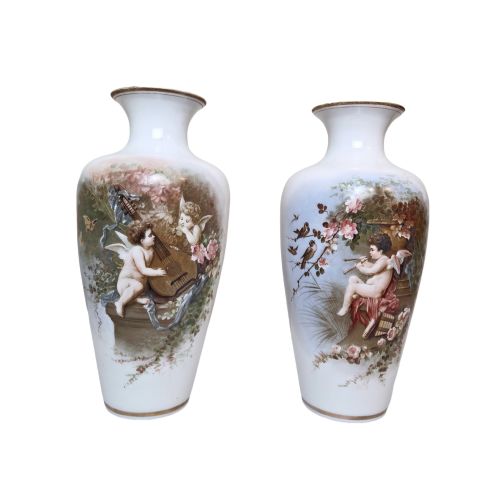
The choice of supporting materials significantly affects the overall character of an object. Pieces mounted on solid porphyry, carved alabaster, or high-grade white marble represent a higher tier of craftsmanship than those using basic cast metals alone. Integrated components like porcelain plaques and hand-cut glass further elevate the standard of manufacture.
Schierholz Plaue
The Vintage Gilt Putti Glossary
- Putti
- Plural of putto, representing plump, winged infant figures derived from classical art. These motifs appear frequently in Renaissance and revival decorative pieces.
- Ormolu
- Finely ground high-carat gold applied to a bronze object using a mercury-gilding technique. This process creates a warm, durable metallic lustre.
- Chenets
- Metal firedogs placed at the hearth to support logs. Elaborate examples often feature cast putti or classical figures.
- Porphyry
- An extremely hard igneous rock with purple or red crystals. It serves as a dense, decorative base for high-end candelabra and bronzes.
- Toleware
- Painted sheet metal objects finished with a durable lacquer. This technique provided colourful shades and decorative body elements for antique lamps.
Vintage Gilt Putti: Frequently Asked Questions
What materials make up vintage gilt putti?
These decorative objects primarily utilise cast bronze, brass, and gilt metal finished with gold leaf or ormolu. Artisans mounted these metallic cherub figures onto bases and structures made from white marble, alabaster, porphyry, and glass.
Additional elements include hand-painted porcelain plaques, enamel details, and fabric or toleware shades. Each material combination reflects the prevailing French and Italian decorative styles of the nineteenth and early twentieth centuries.
How were putti figures used historically?
Makers incorporated winged cherubs into functional domestic objects to bring classical elegance and lively character to rooms. They supported candle nozzles on wall sconces and candelabra, held illumination on table lamps, and adorned the cases of mantel clocks.
Larger figures also featured on architectural over-door carvings, wall mirrors, and decorative centrepieces for dining tables. These items allowed Victorian and Edwardian households to display ornate Continental craftsmanship in everyday spaces.
How do I care for gilt bronze and ormolu?
Preserve the delicate gilded surfaces by dusting gently with a soft, dry cloth rather than using commercial metal polishes. Abrasive cleaners will strip away the thin layer of gold leaf or ormolu applied to the underlying bronze or brass.
Keep these objects away from direct moisture and strong direct sunlight to protect any mounted marble, alabaster, or painted porcelain components. Careful handling prevents wear to the hand-chased details on the figures.
Can I safely use antique putti lamps today?
Many antique table lamps and wall lights have undergone conversion or rewiring to meet modern electrical standards. Buyers should have older wiring inspected by a qualified electrician before connecting them to mains power.
Original fittings can often be retained while updating internal cords for safe domestic use. Proper installation ensures these decorative fixtures can function securely in contemporary homes.