
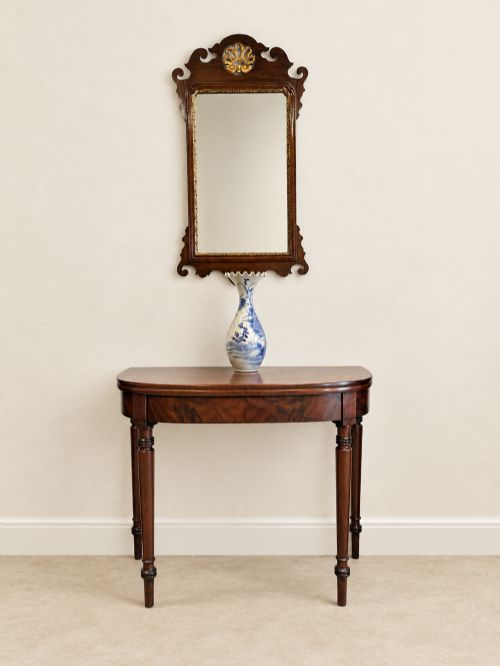

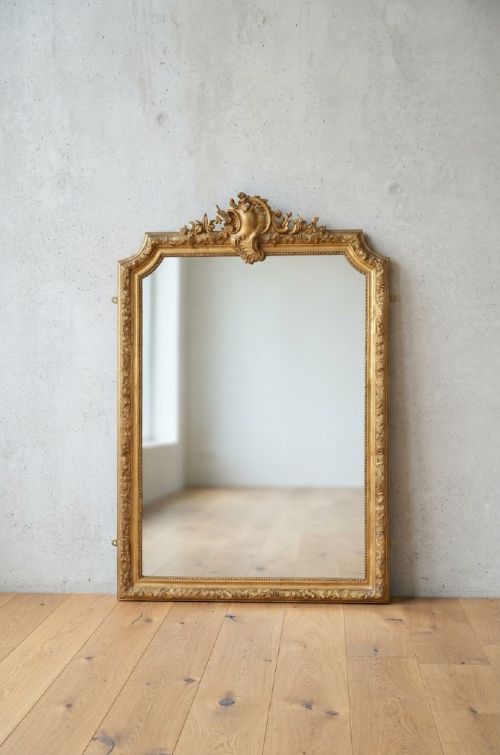
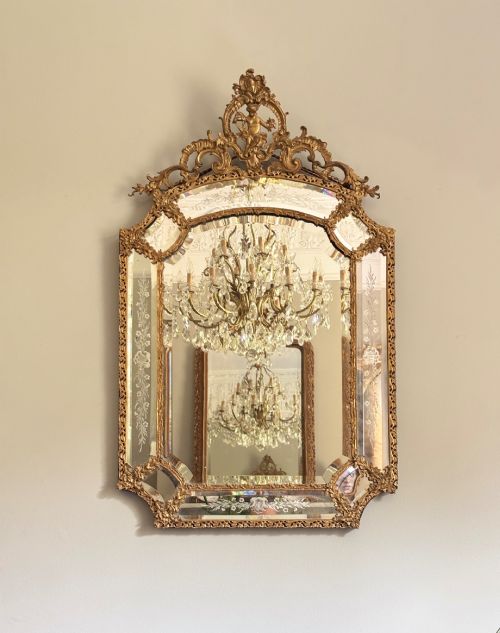
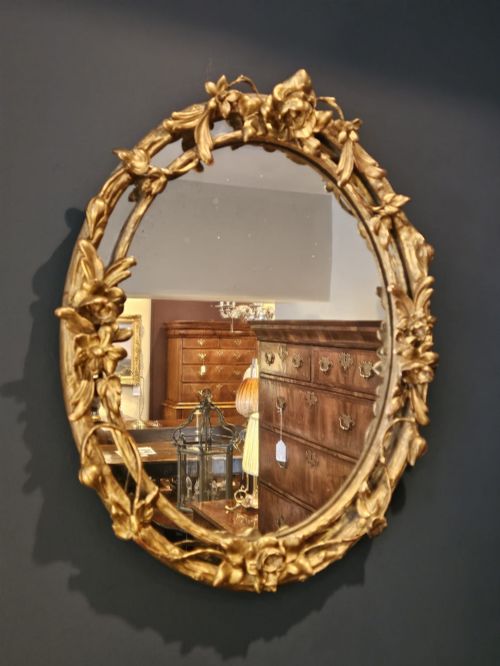
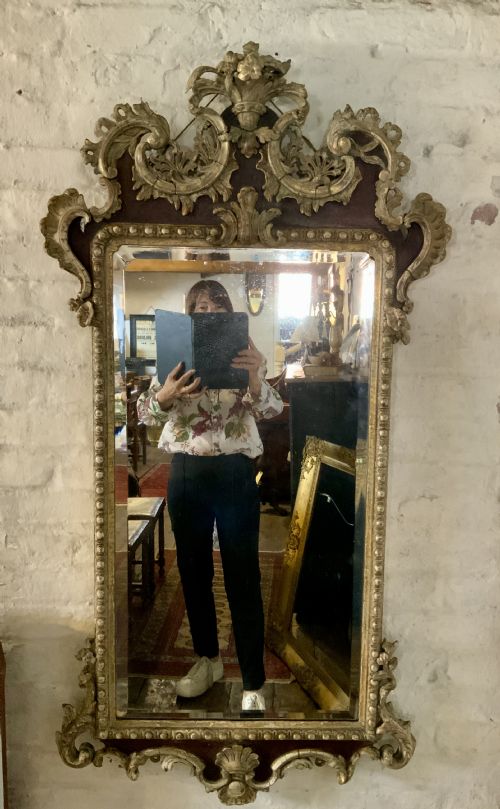
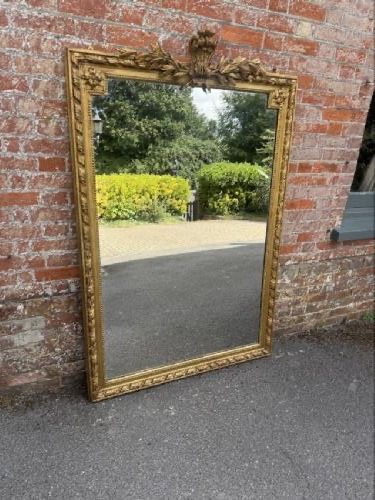
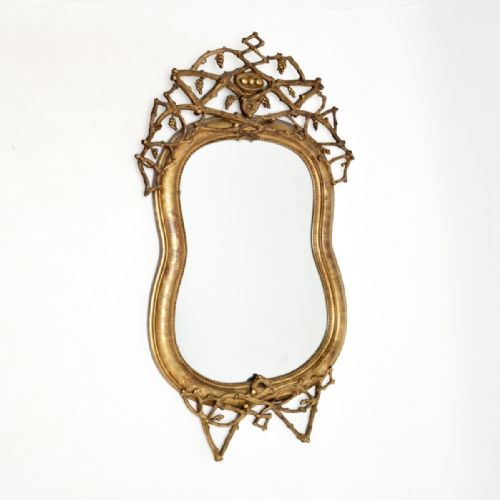

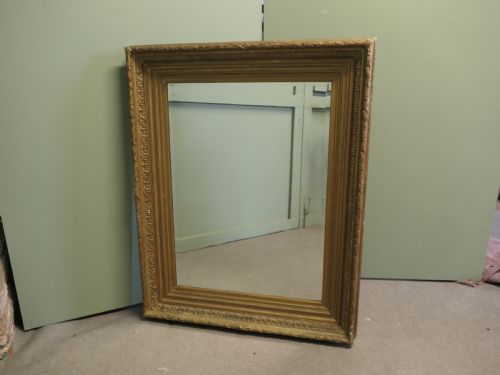

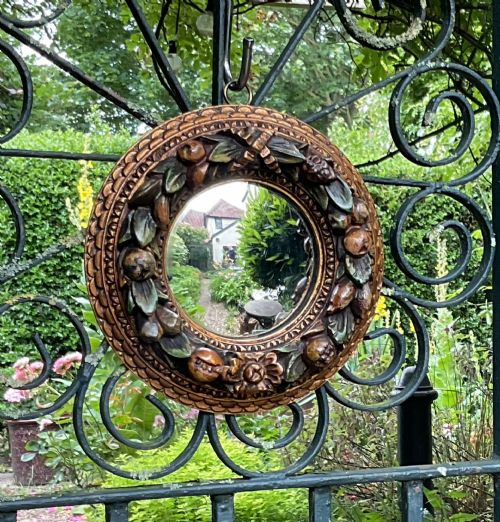
Vintage Gilt Accent Mirror
These vintage gilt accent mirror examples bring bright reflection and ornate character to a room, drawing the eye with carved gilt surfaces.
Vintage Gilt Accent Mirror
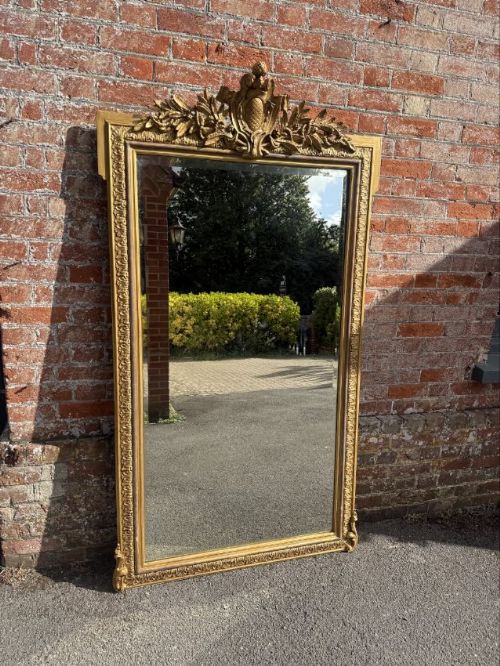
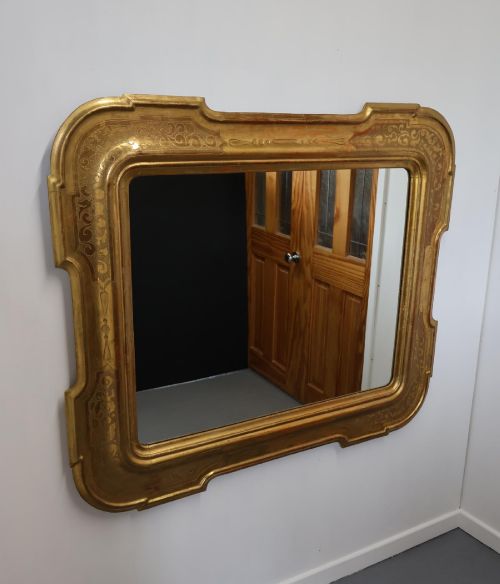
A vintage gilt accent mirror provides a reflective surface enclosed by a decorative gilded frame designed for wall hanging. The selection spans compact convex glasses and large overmantel mirrors intended for principal reception rooms.
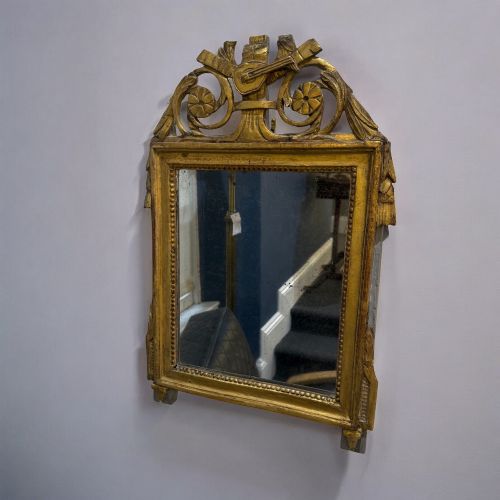
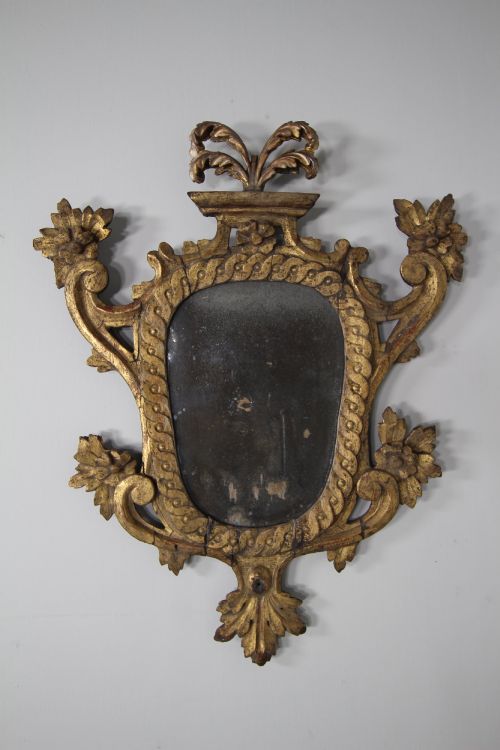
The objects originate across several periods, with nineteenth-century examples and twentieth-century revivals appearing frequently. Forms include cartouche shapes, oval frames, and rectangular wall mirrors.
Stylistic influences range from Italian and French rococo to Georgian and Victorian designs. Many incorporate carved wooden frames or gesso ornamentation finished in gold leaf or gilt paint.
How they were made
Frames rely on carved wood or moulded gesso built over a wooden core to achieve intricate relief work. Artisans applied gold leaf or gilt finishes to create the characteristic metallic sheen.
Mirror glass was set into the frames by hand, occasionally featuring engraved plates or bevelled edges. Joinery methods varied from traditional pegged joints in timber frames to cast brass and bronze components on specific styles.
Some convex mirrors include tiny carved eagle crests perched defensively at the top of the frame, watching over the room.
What varies in quality
The crispness of the carved detail separates standard production from superior examples. Hand-carved wooden frames display sharper relief and deeper undercut foliage than moulded gesso alternatives.
The preservation of the original gilding influences the character of the piece. Subtle ageing of the gold leaf and the clarity of the mirror plate indicate the standard of craftsmanship.
The Vintage Gilt Accent Mirror Glossary
- Giltwood
- Wood that has been coated with gold leaf or a gold-coloured finish. This material forms the primary structure of many ornate frames.
- Gesso
- A plaster-like mixture applied to wood surfaces to create a smooth base for carving or gilding. It allows for intricate moulded ornamentation.
- Rococo
- An artistic style characterised by asymmetrical scrollwork, C-scrolls, and naturalistic plant motifs. It heavily influences many nineteenth-century French and Italian frames.
- Overmantel mirror
- A large wall mirror designed specifically to hang above a fireplace mantelpiece. These pieces often feature wide rectangular or arched formats.
- Convex mirror
- A circular mirror with a curved glass surface that provides a wide-angle reflection of the interior. These often include decorative frames with ball accents.
Vintage Gilt Accent Mirror: Frequently Asked Questions
Where should I hang a vintage gilt accent mirror?
These mirrors suit placement above mantelpieces, in hallways, or as focal points on living room walls. Their reflective surfaces help to bounce natural light around smaller spaces.
Ensure the wall fixings match the weight of the frame, particularly for larger nineteenth-century carved wood and gesso pieces.
How do I identify the style of a gilt mirror?
Examine the decorative motifs and frame shape to determine the period influence. Rococo examples feature asymmetrical scrollwork and foliage, while Georgian pieces often show architectural symmetry and parcel gilt details.
Italian and French regional variations also display distinct carving depths and cresting designs.
Are these mirrors heavy?
The weight varies considerably depending on the materials used in construction. Solid carved wood and plaster gesso frames from the nineteenth century can be surprisingly heavy.
Smaller convex mirrors and brass frames generally require less robust wall support than large overmantel pieces.
How do I clean a vintage gilt mirror?
Dust the carved frame gently with a soft, dry brush to protect the delicate gilt surface. Avoid using liquid cleaners or abrasive cloths directly on the gold leaf.
Use a standard glass cleaner applied to a cloth rather than the mirror itself to prevent moisture seeping behind the frame.