


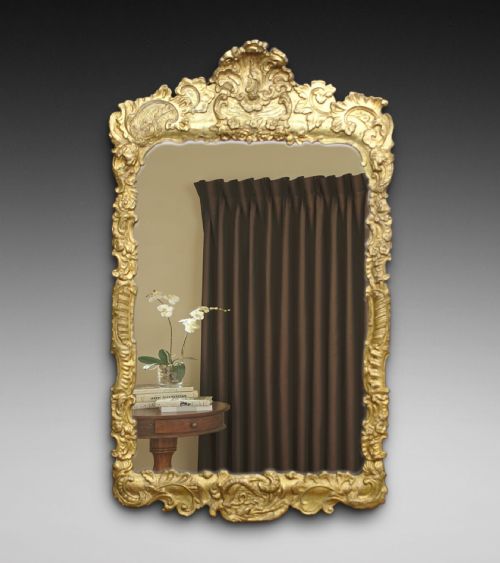

Rococo C Scroll Mirror
These rococo c scroll mirror examples combine carved timber, gesso and gold leaf into asymmetrical frames that catch the light.
Rococo C Scroll Mirror
A rococo c scroll mirror centres on flamboyant, asymmetrical scrollwork derived from natural forms like shells and foliage. When searching for a rococo c scroll mirror, buyers encounter wall mirrors, vanity mirrors, and grand overmantel pieces spanning from the seventeenth century through the twentieth century. These furnishings appear in various regional interpretations, including Italian, French, and Georgian revivals.
The most common examples on this page date from the nineteenth and twentieth centuries, often taking the form of Rococo Revival wall mirrors and vanity glasses. Pieces range from large timber frames to delicate carved pine and sycamore structures. Earlier Georgian and eighteenth-century examples also appear, showing deep hand-carving and gesso detailing.
Materials and Construction
Makers built the structural frames using timber, sycamore, pine, or oak as a solid base. Artisans then applied layers of gesso to the carved wooden surface to create smooth contours for detailing.
Gilding completed the process, with gold leaf or gilt applied over the prepared gesso base. Some mirrors also feature hand-painted decoration or engraved glass plates.
Listings feature items spanning from the 17th century through the 1930s, utilising materials like giltwood, gesso, sycamore, and glass.
Assessing Quality and Craftsmanship
Quality rests in the depth and crispness of the hand-carved scrolling elements rather than a uniform machine finish. Superior pieces show organic, fluid asymmetry in the wood and gesso rather than rigid symmetry.
The application of the gold leaf and the preservation of the original mirror glass plate indicate the standard of the piece. Heavier timber construction and refined joinery distinguish finer antique items from later decorative reproductions.
The Rococo C Scroll Mirror Glossary
- Giltwood
- Wood that has been coated with gold leaf or gilt. This finish provides the bright, reflective surface characteristic of many antique frames.
- Gesso
- A plaster-like mixture applied to wood frames to create a smooth surface for carving and gilding. It allows for crisp, detailed relief work.
- Overmantel Mirror
- A large mirror designed to hang above a fireplace mantel. These pieces often feature wide proportions and elaborate scrollwork.
- Pier Glass
- A tall mirror designed to hang on the wall between two windows, often placed above a console table. They reflect light into darker interior spaces.
- Fretwork
- Ornamental design work created by cutting patterns out of wood. This technique appears on lighter eighteenth-century frames.
Rococo C Scroll Mirror: Frequently Asked Questions
Where should I hang a large overmantel mirror?
These large mirrors sit naturally above a fireplace mantel to anchor a room and reflect natural light. Ensure the wall structure supports the substantial weight of the timber and gesso frame.
Lower placements allow the mirror to engage with surrounding furniture like console tables or seating. This positioning creates a balanced focal point within the interior space.
How do I distinguish an 18th-century mirror from a revival piece?
Examine the construction of the wooden frame and the composition of the gesso layers at the corners and joints. Eighteenth-century pieces show hand-tool marks and natural wear patterns consistent with age.
Revival pieces from the nineteenth and twentieth centuries often display more uniform machine-assisted cutting or different backing materials. Comparing the silvering on the glass plate also helps indicate the period.
How do I care for antique giltwood?
Dust the carved surfaces gently with a soft, dry brush to prevent the buildup of dirt within the intricate scrollwork. Avoid using liquid cleaners or commercial polishes which can damage the delicate gold leaf.
Keep the mirror away from direct sunlight and areas of high humidity to protect the underlying timber and gesso. Stable indoor temperatures prevent the wood from expanding and cracking the surface.
What is a vanity mirror used for?
Smaller vanity mirrors sit on dressing tables or tabletops to provide a close reflection for grooming and personal care. Their adjustable frames allow the glass angle to tilt according to need.
These pieces bring decorative rococo ornamentation into smaller domestic spaces. They combine functional glass with ornate carved frames.