


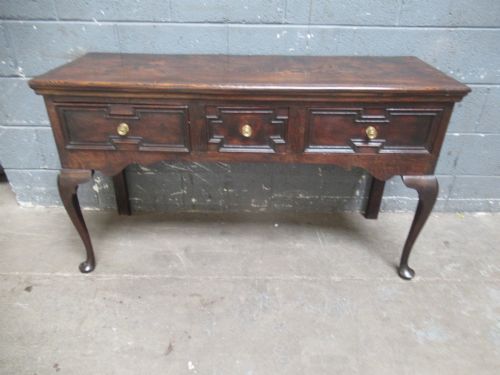


Vintage Geometric Chest
These vintage geometric chest pieces bring structured timberwork and period storage into a room.
Vintage Geometric Chest
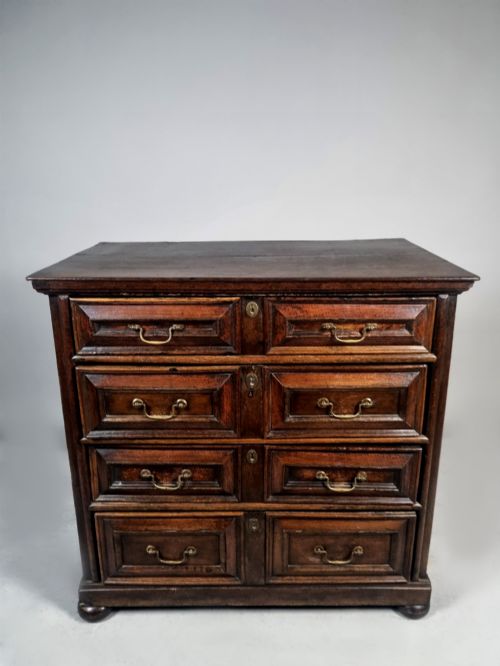
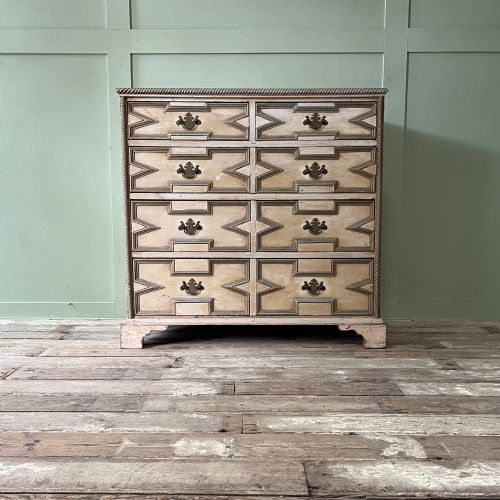
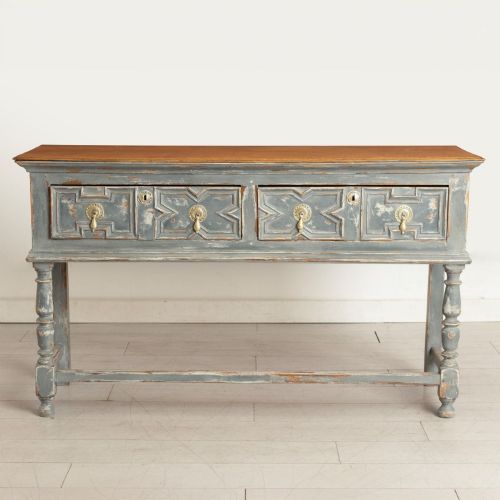
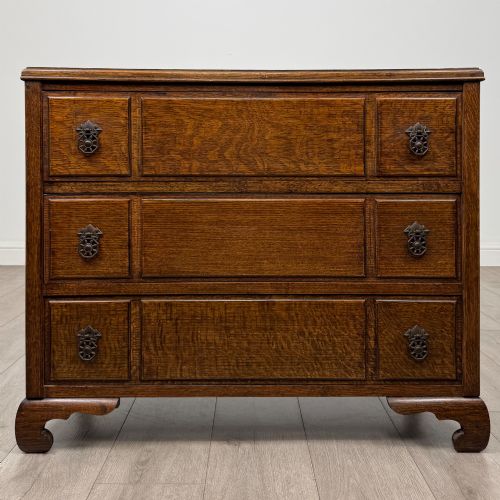
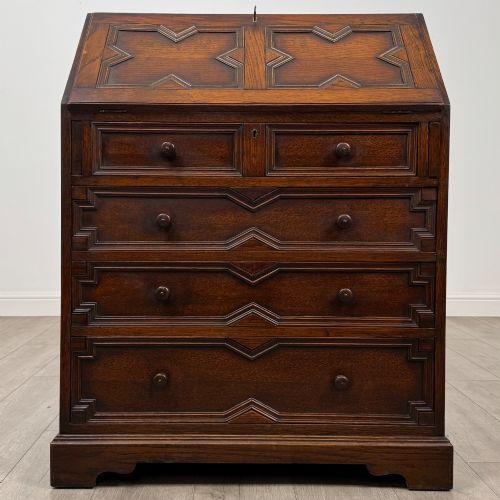
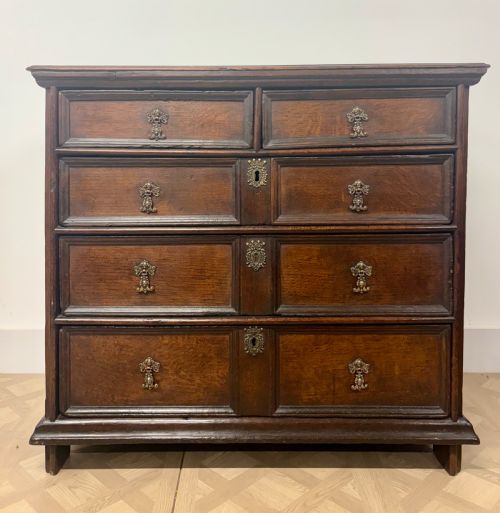
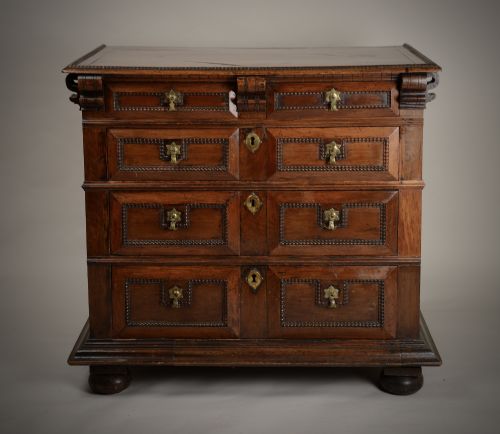
A vintage geometric chest encompasses storage pieces defined by structural timber forms, including chests of drawers, coffers, and commodes. When exploring a vintage geometric chest selection, the most frequent encounters are solid oak and walnut examples spanning from the seventeenth century through the Edwardian era and the early twentieth century.
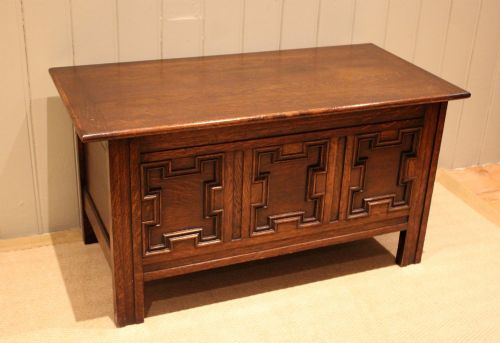
The assortment on offer ranges from small Charles II two-part drawers and moulded front storage units to painted Edwardian and Jacobean style interpretations. Alongside standard chests, the grouping extends to mule chests, writing bureaux, and decorated caddies that utilise similar panelled and patterned construction methods.
How they were made
Construction relies heavily on native timbers such as oak and walnut, worked into solid board frames and panelled carcases. Makers utilised iron and brass hardware for hinges, escutcheons, and drawer pulls, securing joints with traditional pegged and dovetailed methods.
Surface enrichment involves carved mouldings, painted finishes, and decorative inlays including specimen bone veneers and Tunbridge details. These applied techniques create the tactile patterns characteristic of the period styles represented.
Vintage Geometric Chest Retail Price Guide 2026
Typical asking prices for vintage geometric chest among the pieces listed under this phrase on Sellingantiques today, from the lower quarter to the upper quarter. They describe what is for sale here now, not the wider market.
Listings span periods from the seventeenth century through the Edwardian era to the nineteen-forties, constructed in oak, walnut, paint, and metal.
What varies in quality
The standard of timber selection and the crispness of carved or moulded geometric fronts distinguish finer examples from simpler vernacular pieces. Superior items display well-figured grain, particularly in walnut veneers and quarter-sawn oak, matched symmetrically across the facade.
Construction depth also marks the range, seen in the retention of original brass furniture, hand-dovetailed drawer linings, and intact structural backing boards. The precision of applied decorative elements and the integrity of early finishes further separate workshop productions.
Sir Clough Williams-Ellis
The Vintage Geometric Chest Glossary
- Moulding
- A shaped strip of timber fixed to a surface to create decorative relief and shadow lines. It is frequently built up in geometric patterns around drawer fronts and panels.
- Cofer
- A large timber storage box with a hinged lid, often raised on stiles or feet. Early examples feature heavy panelled construction and carved detail.
- Bureaux
- A writing desk fitted with a sloping flap that opens to reveal internal small drawers and pigeonholes. These often sit atop a chest base.
- Veneer
- A thin slice of decorative wood applied to a secondary timber base. Walnut and specimen bone variations appear on finer storage pieces.
- Mule chest
- A storage chest featuring one or more drawers at the base beneath the main compartment. This form bridges the traditional coffer and the chest of drawers.
Vintage Geometric Chest: Frequently Asked Questions
What is a vintage geometric chest?
A vintage geometric chest is a storage furniture piece featuring patterned woodwork, panelled drawers, or moulded facades from earlier centuries. These items range from seventeenth-century oak drawer units to early twentieth-century revival designs.
They combine practical domestic storage with distinct period joinery techniques and decorative timber finishes.
How do I style one in a modern home?
These timber chests work well as focal storage units in hallways, bedrooms, or living spaces, grounding contemporary interiors with historic texture. Their neutral oak and walnut tones blend easily with various wall colours and floor finishes.
Allow the patterned grain and hardware to stand by keeping surrounding surfaces relatively uncluttered.
How do I identify seventeenth-century oak furniture?
Seventeenth-century pieces typically display pegged timber joints, hand-split oak boards, and heavy geometric mouldings on drawer fronts. The wood often exhibits a dark patina developed over centuries of handling and wax polishing.
Construction methods rely on traditional joinery rather than modern mechanical fasteners.
What is the difference between a coffer and a chest?
A coffer is primarily a deep storage box accessed via a hinged lid at the top, often standing on extended side pieces. A chest of drawers incorporates sliding horizontal drawers accessed from the front.
Mule chests combine both forms by placing drawers underneath a lidded compartment.