

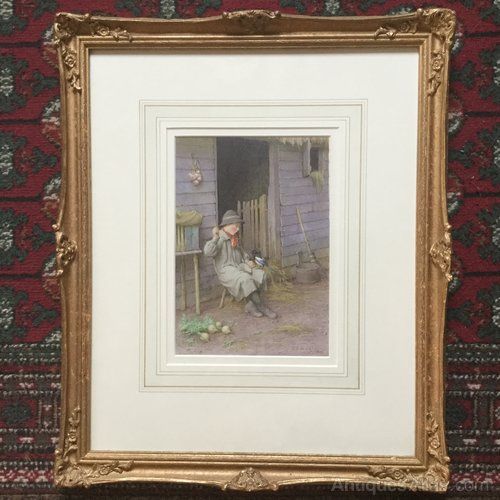


Vintage Genre Watercolour
A vintage genre watercolour captures daily life and narrative scenes on paper, offering a direct window into past domestic and social moments.
Vintage Genre Watercolour
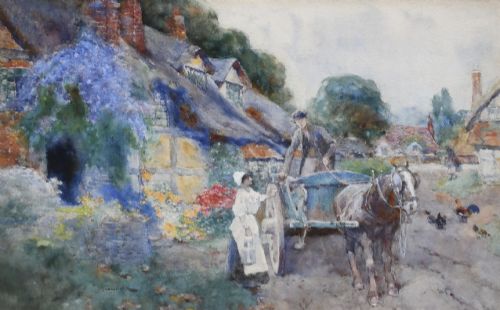
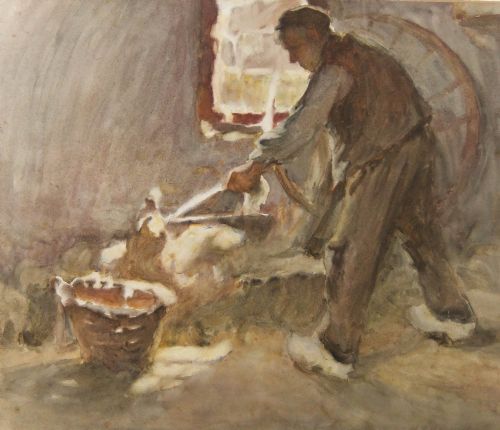
A vintage genre watercolour presents painted scenes of everyday life, showing figures engaged in common activities like cottage conversations, blacksmith work, or children playing. These works emerge from the nineteenth century, the Victorian era, the Edwardian period, and through the early decades of the twentieth century.
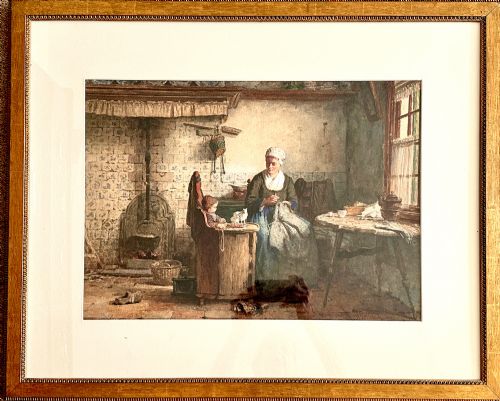
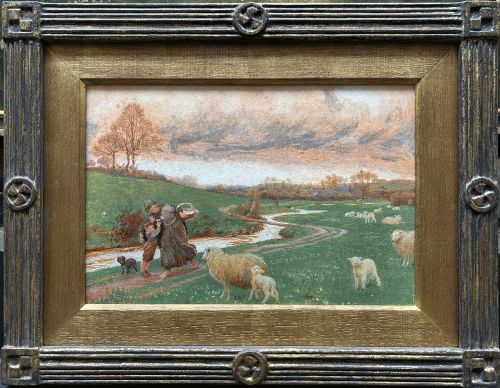
The pieces on this page appear as framed paintings, wall art, and fine art watercolours, often preserved under glass within wood or giltwood frames. Artists record domestic interiors, rural landscapes, street scenes, and sporting moments with pigment on paper.
Buyers encounter British Impressionism, Victorian Fine Art, and the Victorian Idyllic School alongside nineteenth-century Dutch realism and Belle Epoque pieces. Common subjects range from Spanish landscapes and French street life to domestic chores like peeling potatoes or eating breakfast on a doorstep.
Materials and technique
Artists apply watercolour pigment to paper using washes and fine brushwork to build transparent layers of colour and detail. Ink often provides the initial defining lines or structural framework beneath the pigment.
Finished works find protection behind glass and secure placement inside wooden or gilt wood frames that preserve the delicate paper surface from atmospheric damage.
Vintage Genre Watercolour Retail Price Guide 2026
Typical asking prices for vintage genre watercolour among the pieces listed under this phrase on Sellingantiques today, from the lower quarter to the upper quarter. They describe what is for sale here now, not the wider market.
Framing materials recorded across the selection include simple wood as well as ornate giltwood and glass protection.
Qualities that distinguish the works
The strength of a piece rests in the precision of the narrative and the liveliness of the figures portrayed within their setting. Expressive brushwork and a balanced composition elevate the artistic merit of a domestic or rural scene.
Condition of the paper and the preservation of the original pigments determine the visual impact of the painting over time. Framing choices, from simple wood mouldings to ornate giltwood, also influence the overall presence of the artwork.
David Woodlock·Henry Silkstone Hopwood·Frederick Walker·Hendrik Valkenberg·Albert Ludovici Jnr·Charles Edward Wilson·James Hardy Junior·John Augustus Atkinson·George Kilburne·Takashi Nakayama·Arthur Claude Strachan·Francis William Topham·Leon Girardet·Frank Dadd·Arthur H Buckland
The Vintage Genre Watercolour Glossary
- Genre painting
- Depiction of aspects of everyday life by portraying ordinary people engaged in common activities. This style forms the core subject matter of these watercolours.
- Watercolour pigment
- Colouring material ground with a water-soluble binder, applied to paper with water. It allows for delicate washes and translucent effects.
- Giltwood
- Wood that has been treated and covered with a thin layer of gold leaf or gilt. This material frequently appears in the decorative frames housing these paintings.
- Victorian Fine Art
- Artistic output produced during the reign of Queen Victoria characterised by narrative depth and technical skill. Many pieces on this page reflect this tradition.
Vintage Genre Watercolour: Frequently Asked Questions
What is a genre watercolour?
A genre watercolour depicts scenes from everyday life, featuring ordinary people in domestic, rural, or social settings rather than formal portraits or grand historical events.
These paintings capture narrative moments such as blacksmiths at work, children sailing toy boats, or families sharing breakfast outside a cottage.
How should I hang a watercolour?
Watercolours require careful placement away from direct sunlight to prevent the pigments from fading over time. Glass and appropriate framing protect the fragile paper from moisture and dust in domestic environments.
Stable indoor temperatures help preserve both the paper support and the wooden or giltwood frames.
How do I identify a Victorian piece?
Victorian watercolours often feature detailed narrative realism, pastoral settings, or domestic genre scenes aligned with nineteenth-century taste. Signatures, subject matter, and framing styles frequently offer clues to the period.
Stylistic movements like the Victorian Idyllic School or British Impressionism further define works from this era.
What subjects are most common?
Common subjects include rural labourers, domestic chores, children playing, and street scenes from Britain, France, Spain, and beyond. Artists record specific local details such as old inns, carts, and cottage doorways.
These narrative elements provide a direct record of social life across the nineteenth and early twentieth centuries.