

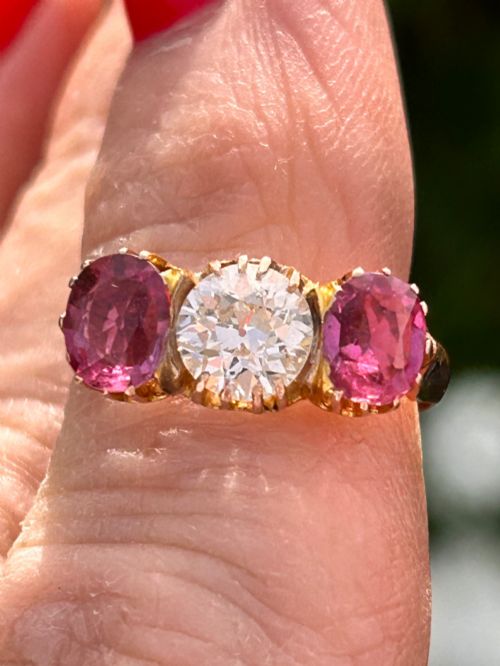
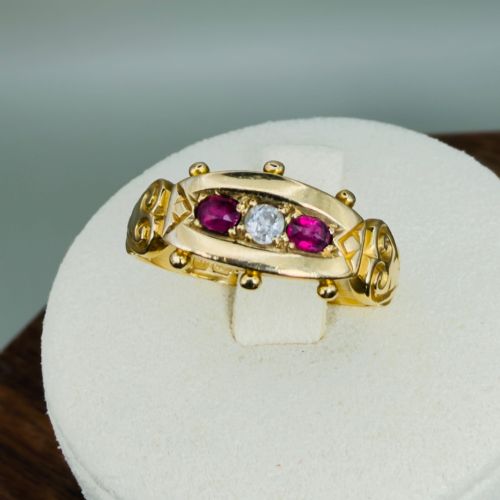
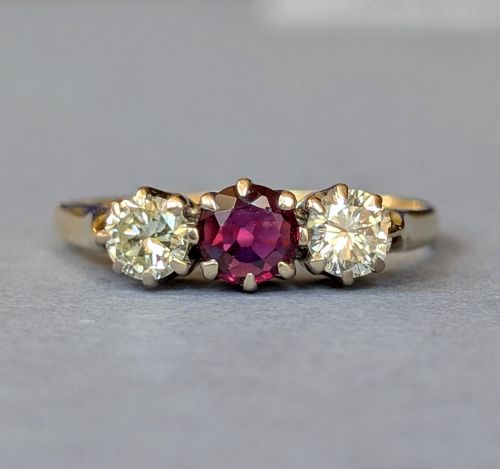
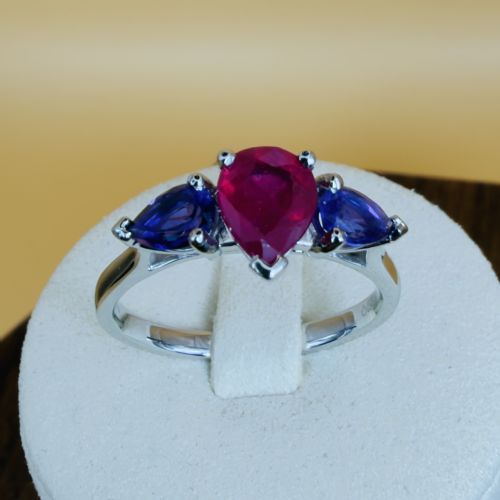



Vintage Gemstone Trilogy Ring
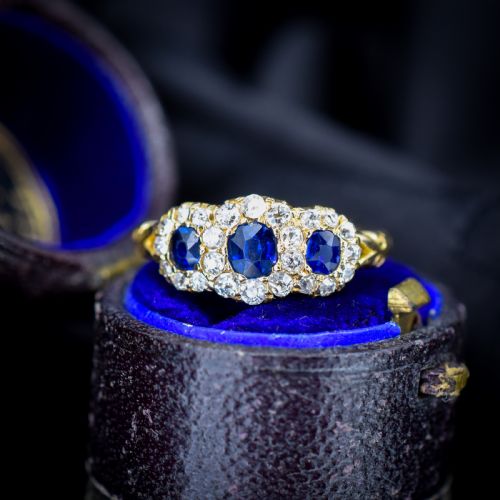
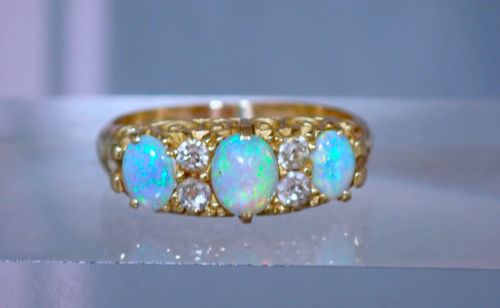
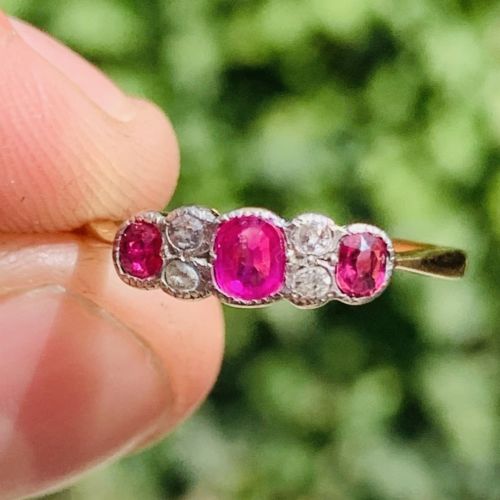
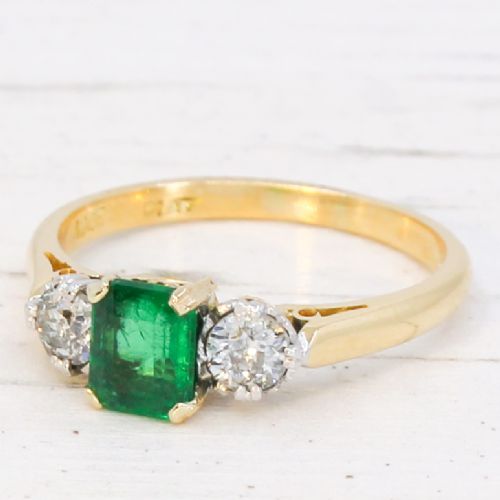
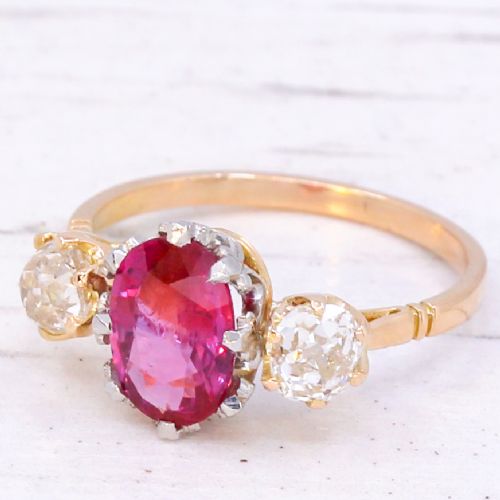
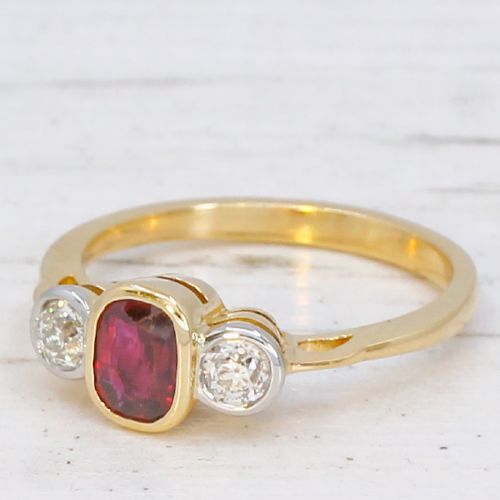
A vintage gemstone trilogy ring carries three stones symbolising past, present and future, often pairing rubies, sapphires or emeralds with diamonds.
Vintage Gemstone Trilogy Ring
A vintage gemstone trilogy ring groups three stones across the finger, a design seen frequently in Victorian, Edwardian and mid-century pieces.
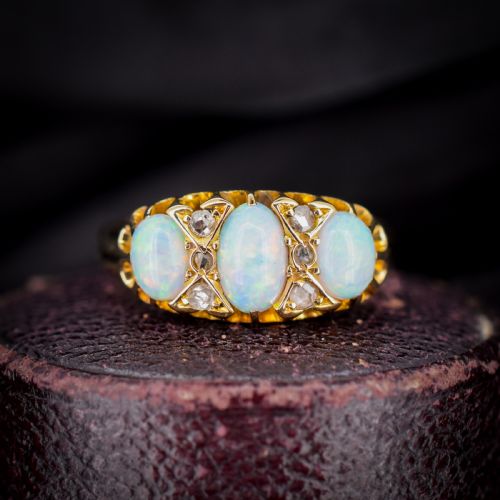
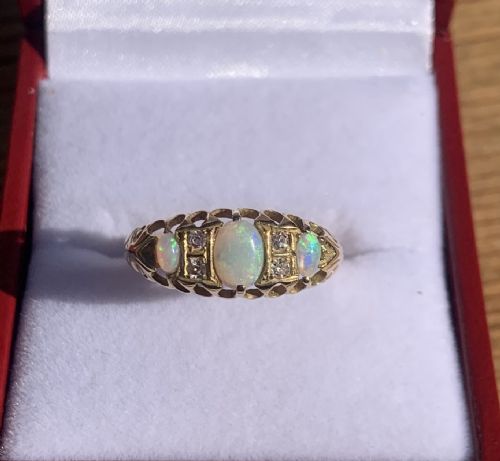
The selections span traditional combinations such as rubies, sapphires and emeralds flanked by diamonds, alongside opals, garnets and pearls.
Forms range from classic yellow gold settings to platinum mountings representing late Victorian, Art Deco and mid-century modern aesthetics.
How they were made
Craftsmen built these rings primarily using 18ct yellow gold, 9ct gold or platinum, often combining gold bands with platinum settings to secure the stones.
Gemstones such as old-cut diamonds, rubies, sapphires and emeralds were hand-set into claw, starburst or cluster arrangements depending on the period.
Listings span from the 19th century through the Victorian, Edwardian, Art Deco and mid-century periods in gold and platinum.
What varies in quality
Differences in quality rest on the origin, treatment and cut of the central gemstones, alongside the weight and purity of the gold or platinum metal.
The precision of the setting work and the preservation of original hand-cut stones distinguish finer examples from standard production.
The Vintage Gemstone Trilogy Ring Glossary
- Trilogy ring
- A ring featuring three principal stones set in a row. This layout typically signifies the past, present and future.
- Old cut diamond
- A diamond cut by hand before modern machinery, characterised by a smaller table, higher crown and open culet. These stones display a softer candlelit sparkle.
- Platinum
- A dense, durable white metal used for high-end jewellery mountings. It holds small claw settings securely without losing integrity.
- Gypsy ring
- A style where stones are flush-set directly into the thick band of the ring. The metal is hammered or pushed up around the gemstone.
Vintage Gemstone Trilogy Ring: Frequently Asked Questions
How do I care for an antique gemstone ring?
Precious stones and older metal settings require gentle handling during everyday wear. Remove the ring before heavy manual tasks or swimming to protect the claws.
Clean the piece using warm soapy water and a soft brush rather than harsh ultrasonic machines. Softer stones like opals and pearls need particular care regarding moisture and impacts.
Are these rings suitable for daily wear?
Many of these rings served as engagement pieces and were constructed for regular use. Harder stones like diamonds, rubies and sapphires withstand daily life well when the settings remain secure.
Pieces containing softer materials such as opals or pearls demand more caution to prevent surface abrasion or cracking over time.
How do I know the period of a ring?
Dating relies on a combination of stone cuts, metal choices and mounting styles characteristic of specific decades. Victorian and Edwardian pieces often utilise yellow gold and old-cut stones, while Art Deco designs favour geometric platinum work.
Assay office marks and maker stamps inside the band provide further clues to the exact year of creation.