

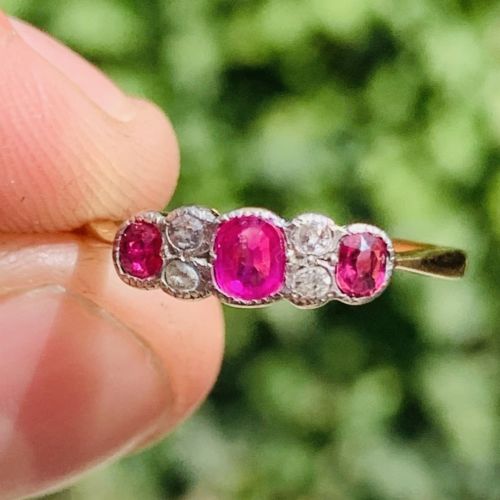
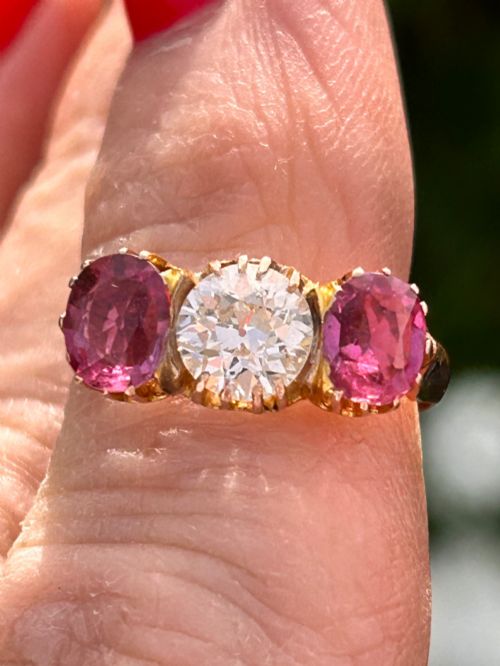
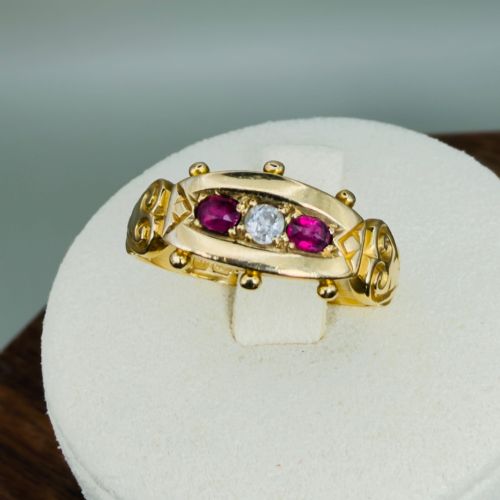
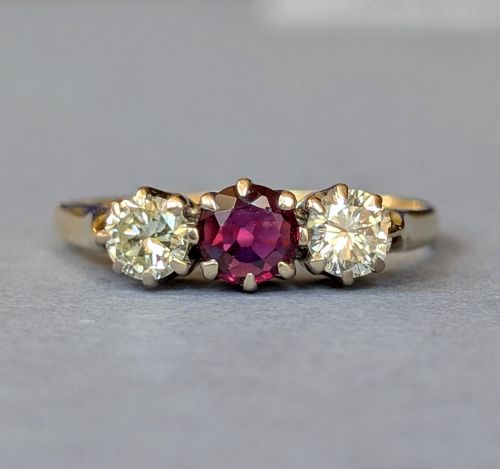
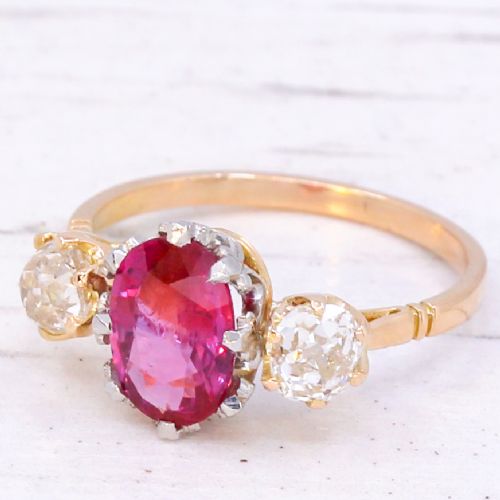
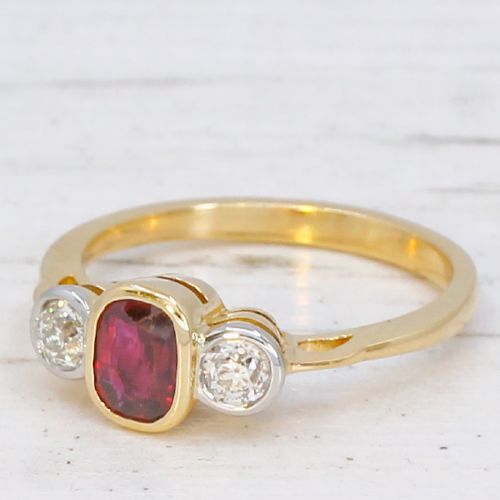
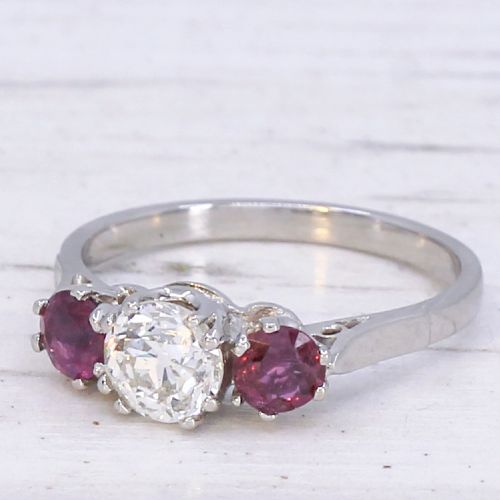


Gold Ruby Trilogy Ring
A gold ruby trilogy ring brings together three stones of rich red and bright white light, carrying centuries of design across Victorian, Edwardian, and mid-century eras.
Gold Ruby Trilogy Ring
The layout of these rings adapts across different decades, moving from starburst and gypsy settings in earlier periods to balanced three-stone arrangements. Metal choices shift from yellow gold and rose gold to platinum combinations, while retaining the signature three-gem format that defines the style.
How They Were Made
Jewellers constructed these rings using eighteen-carat yellow gold, rose gold, nine-carat gold, and occasionally platinum, often pairing the white metal with yellow gold shanks. Stones were shaped with old cut diamonds and rubies, sometimes incorporating unheated or Burmese stones secured in claw settings or flush gypsy mounts.
Craftsmen utilised traditional hand-working techniques, adding hallmarks from assay offices in locations such as Birmingham and Chester to denote the purity of the gold and the year of creation.
Listings feature gold ruby trilogy rings spanning the Victorian era through the 1960s, utilising eighteen-carat gold, nine-carat gold, and platinum.
What Varies in Quality
The calibre of a gold ruby trilogy ring rests upon the saturation and clarity of the ruby alongside the brilliance of the old cut diamonds. Stones with deeper natural colour and minimal inclusions elevate the piece.
The precision of the setting and the integrity of the gold band further distinguish the work, as does the crispness of the original hallmarks stamped into the metal.
The Gold Ruby Trilogy Ring Glossary
- Trilogy ring
- A ring set with three stones, traditionally symbolising the past, present, and future. This layout forms the core of the pieces found in this category.
- Old cut diamond
- A hand-faceted diamond shape common in antique jewellery, featuring a smaller table and wider facets that produce a softer, warmer gleam under candlelight.
- Gypsy ring
- A style where stones are flush-set directly into a thick, tapered gold band rather than held in raised claws. This setting gained popularity during the Victorian period.
- Hallmark
- An official stamp struck into precious metal indicating the purity standard, the assay office of origin, and the year the piece was tested.
- Carat
- A unit of weight used to measure gemstones, determining the physical size and heft of the rubies and diamonds set into the band.
Gold Ruby Trilogy Ring: Frequently Asked Questions
What periods do these rings come from?
These rings originate from the nineteenth and twentieth centuries, encompassing Victorian, Edwardian, Art Deco, and mid-century periods. Each era brings distinct characteristics in mounting styles and gold alloys.
Craftsmanship evolves from nineteenth-century gypsy settings to twentieth-century geometric arrangements and streamlined vintage designs.
Are the diamonds antique?
Many listings feature old cut diamonds, which were hand-faceted before modern machine-cut standards were established. These stones display characteristic proportions suited to older settings.
Their soft sparkle distinguishes them from later brilliant-cut stones found in post-war jewellery.
What metal types are used?
The bands are primarily formed from eighteen-carat yellow gold, rose gold, and nine-carat gold, occasionally combined with platinum settings for the stones. Hallmarks stamped inside the shank often verify the specific metal purity and origin.
Colour variations in the gold reflect the prevailing aesthetic preferences of different decades.
How do I care for an antique gold ruby trilogy ring?
Regular maintenance involves gentle cleaning with soft cloths and avoiding harsh ultrasonic cleaners, particularly for natural rubies that may have traditional treatments. Professional inspection of the claw or flush settings ensures the stones remain secure within the gold.
Storing the ring separately prevents abrasion from harder gems.