
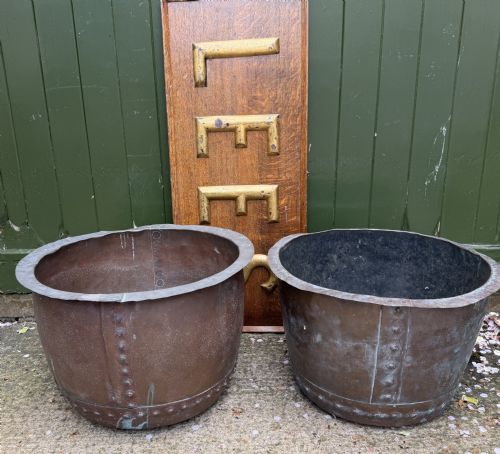


Vintage Garden Wash Tub
These vintage garden wash tubs bring robust utility and weathered metal textures directly into modern planting schemes.
Vintage Garden Wash Tub
A vintage garden wash tub transforms heavy domestic and agricultural vessels into practical outdoor planters and log bins. When searching for a vintage garden wash tub, buyers encounter substantial metal containers originating from the nineteenth century up to the nineteen-twenties.
The selection centres on durable utilitarian forms, including copper pots, galvanised steel tubs, and zinc dolly tubs. These pieces often arrive bearing the marks of their former laundry and dairy work, adapted now for contemporary gardens.
How they were made
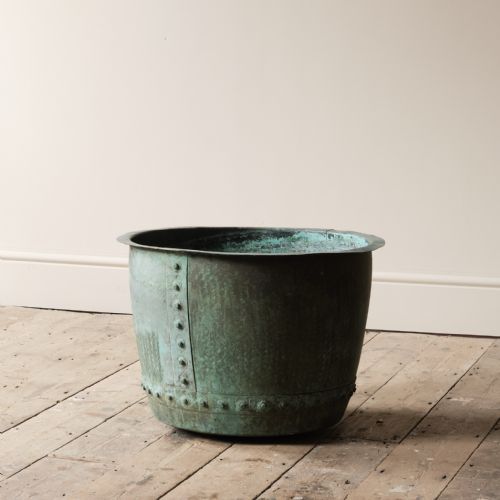
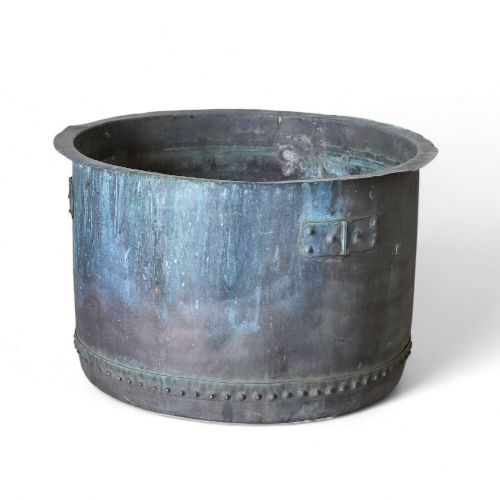
Maker construction relies heavily on durable metals like copper, iron, zinc, and galvanised steel shaped into robust vessels. Many pieces feature hand-riveted seams joining sheet metal panels together to withstand heavy boiling and washing tasks.
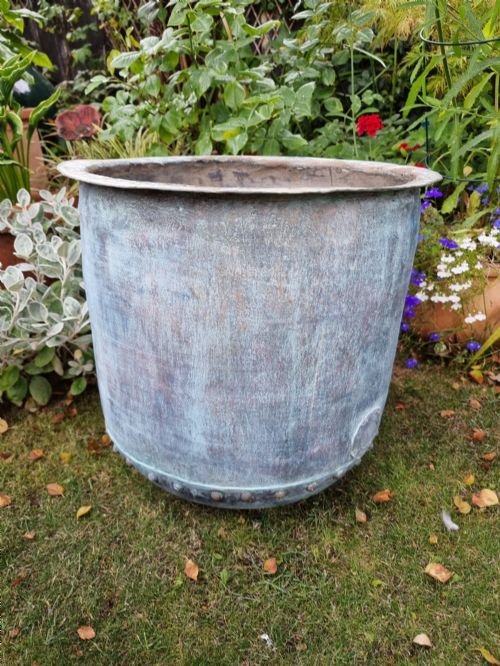
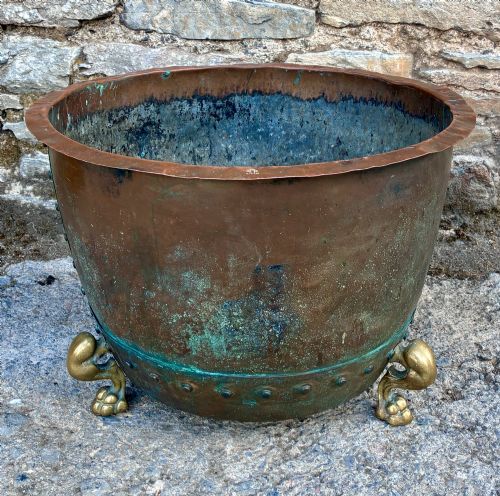
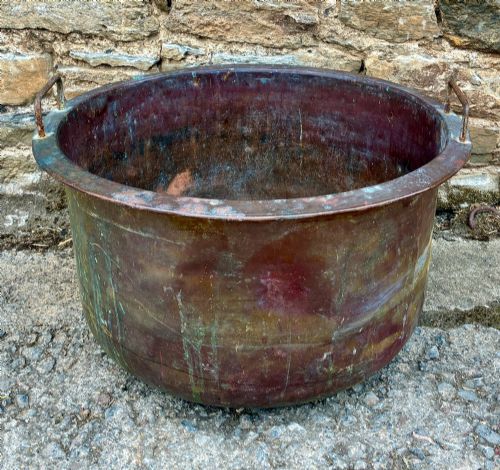
Attachments such as wrought iron swing handles and brass fixtures provide functional strength. Surfaces often display natural patina, paint traces, or verdigris finishes resulting from age and exposure.
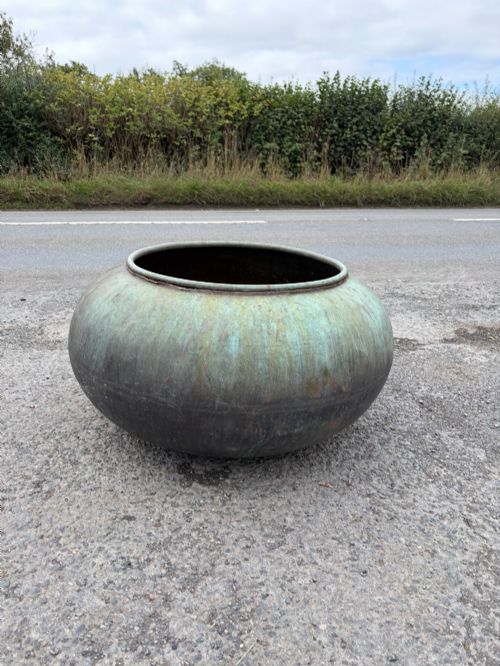
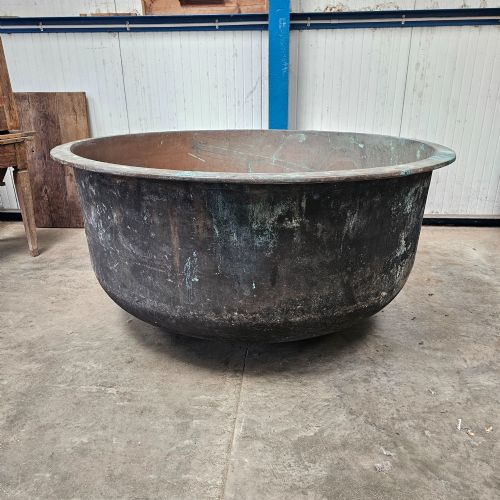
A French cheese vat moonlights quite happily as an extremely large garden display pot.
What varies in quality
Metal thickness and structural integrity dictate the grade of a vessel. Substantially heavier gauge copper or thick galvanised steel maintains form better than lighter alternatives.
The character of the surface finish separates standard items from exceptional examples. Rich natural patination, authentic verdigris, and intact hand-riveted joints elevate the visual presence of a tub.
The Vintage Garden Wash Tub Glossary
- Verdigris
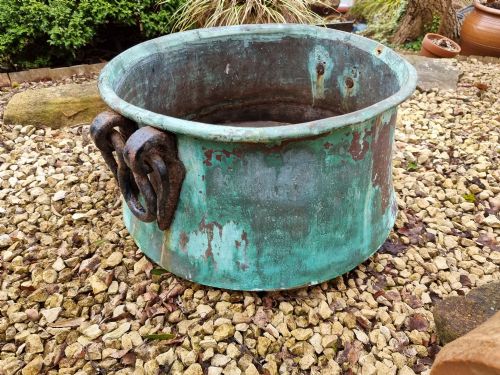
- A green patina formed naturally on copper, brass, or bronze surfaces through atmospheric oxidation. This surface layer develops over long periods outdoors.
- Riveted
- A method of joining metal plates using metal bolts hammered flat to secure the overlapping seams. Hand-riveting is common on nineteenth-century boilers and large pots.
- Galvanised steel
- Steel coated with a protective layer of zinc to prevent rusting. This treatment appears frequently on nineteenth-century and early twentieth-century utility tubs.
- Dolly tub
- A deep metal container originally used for soaking and washing laundry with a dolly peg. These circular vessels adapt well as garden planters.
- Patina
- The surface appearance altered by age, wear, and exposure to the elements. Collectors value a stable, weathered patina on garden metals.
Vintage Garden Wash Tub: Frequently Asked Questions
How do I use a wash tub in the garden?
These metal vessels function effectively as large standalone planters for small trees, shrubs, and floral arrangements.
Ensure adequate drainage is provided at the base if planting directly into the tub, or use the container as an outer cachepot.
Are copper pots safe to leave outside?
Copper withstands outdoor conditions reliably, developing a protective verdigris finish over time.
Wrought iron handles and steel components require occasional monitoring for weathering where they join the main body.
How do I date a metal wash tub?
Dating relies upon manufacturing techniques, such as hand-riveted copper construction typical of the nineteenth century.
Later pieces from the early twentieth century often utilise galvanised steel and machine-pressed seams.
Can I use these tubs indoors?
Many examples serve indoors as log bins, storage baskets, or decorative display pieces.
Protect interior floors by checking for historical drainage holes and using a suitable saucer or liner.