

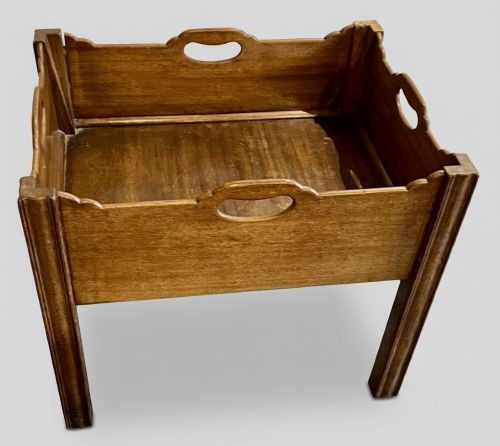

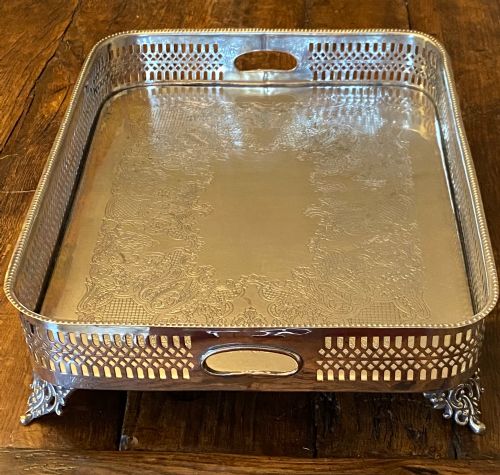
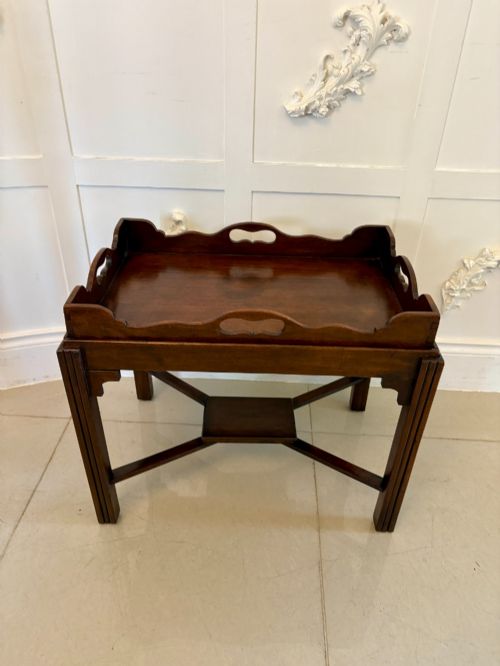
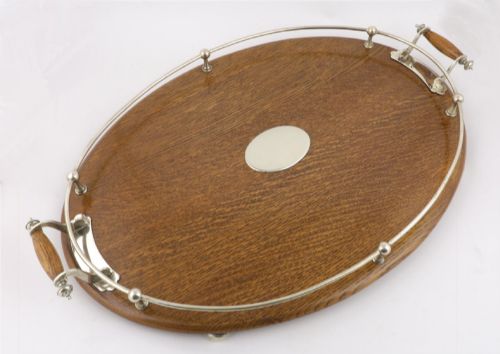
Vintage Gallery Tray
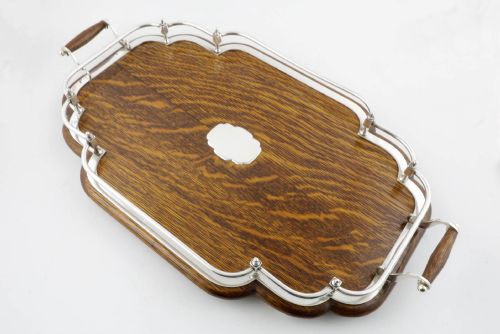
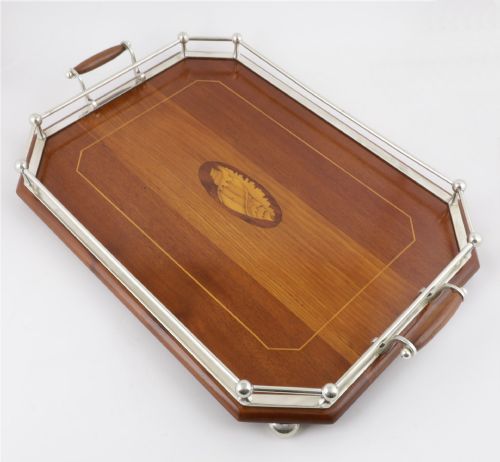
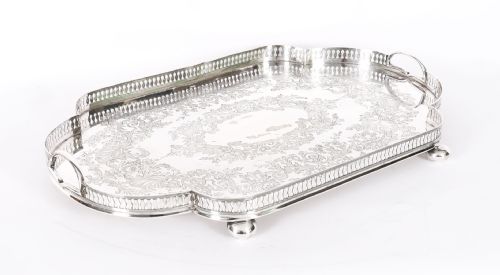
These vintage gallery tray examples range from silver-plated Edwardian tea services to mahogany serving pieces designed for drinks and display.
Vintage Gallery Tray
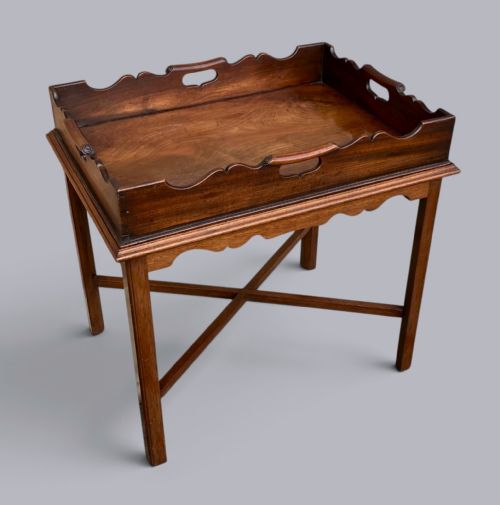
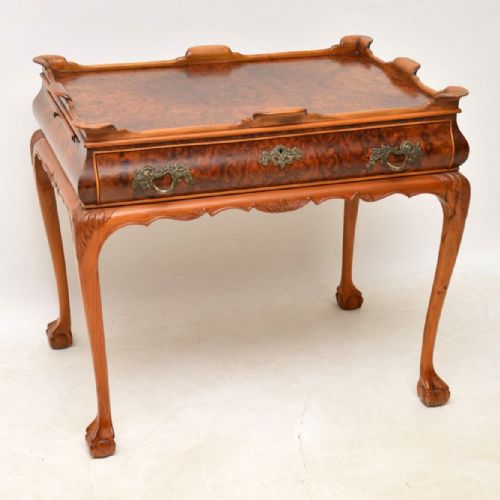
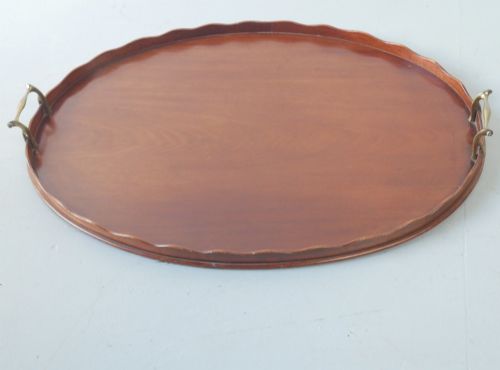
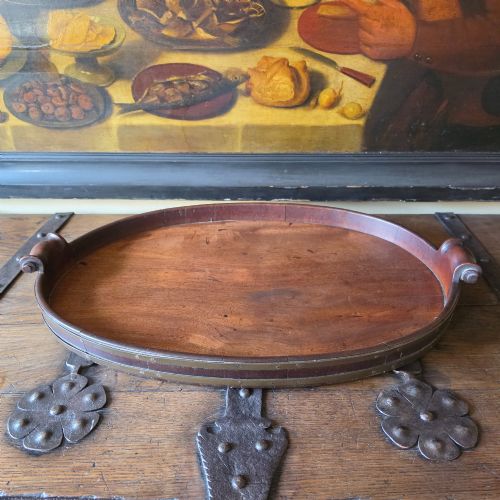
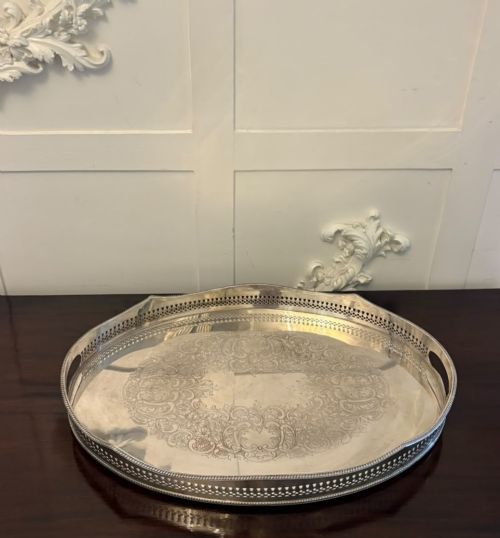
A vintage gallery tray serves drinks, holds decanters or acts as a display surface upon a table, often featuring a raised pierced metal or wooden border to keep items secure. When searching for a vintage gallery tray, buyers encounter numerous Edwardian silver-plated iterations alongside Georgian and Victorian wooden pieces.
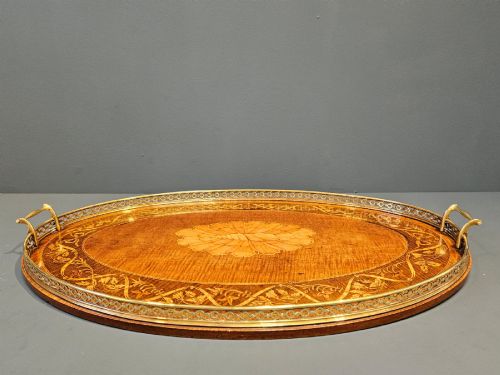
The form spans straightforward oval and rectangular serving shapes to larger cocktail and decanter trays fitted with carrying handles. Many examples combine rich timbers like mahogany or satinwood with detailed metal galleries, reflecting domestic entertaining habits of the nineteenth and early twentieth centuries.
Materials and Construction
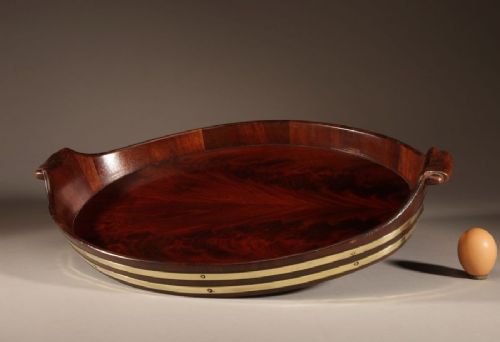
Cabinetmakers utilised dense hardwoods such as mahogany and oak for the bases, frequently incorporating satinwood marquetry, shell inlay or brass details. Silver plating, electroplated nickel silver and solid brass formed the raised galleries and pierced borders that define the type.
Joinery methods range from coopered wooden construction to sturdy plate bonding, with pierced galleries soldered or screwed securely to the tray perimeter. Engraved surface decoration and embossed scrolls adorn many silver-plated models from the Edwardian period onward.
Vintage Gallery Tray Retail Price Guide 2026
Typical asking prices for vintage gallery tray among the pieces listed under this phrase on Sellingantiques today, from the lower quarter to the upper quarter. They describe what is for sale here now, not the wider market.
Several trays include patent brass mechanisms or built-in stands, proving that Victorian hosts took the business of afternoon cocktails very seriously indeed.
Assessing Quality and Craftsmanship
Superior pieces display crisp piercing in the metal gallery and precise, tight inlay within the timber base rather than stamped decoration or superficial veneer. The weight and rigidity of the metalwork, alongside the depth of the mahogany or satinwood grain, separate standard utility items from finer maker-attributed examples.
Original handles, intact silver plating without heavy base metal show-through, and firm structural joinery indicate careful preservation. Lesser examples show worn plating, loose gallery pins or replacement handles that disrupt the original proportions.
James Deakin·Mappin and Webb·Edwards and Roberts
The Vintage Gallery Tray Glossary
- Gallery tray
- A serving tray featuring a raised raised border or pierced metal railing around the edge designed to prevent items from sliding off. This raised rim is the defining characteristic of the form.
- EPNS
- Electroplated Nickel Silver, a common base metal method utilised for silver-plated trays from the Victorian period onwards. It provides a bright metallic finish over a durable alloy base.
- Marquetry
- Decorative patterns formed by fitting together small pieces of different coloured wood veneers onto a primary timber surface. It appears on finer Edwardian and Georgian table tops and trays.
- Coopered
- Construction using closely fitted wooden staves joined together to form a curved vessel, similar to barrel-making. This technique appears on specific oval wooden trays.
Vintage Gallery Tray: Frequently Asked Questions
How were gallery trays used historically?
These trays served primarily for carrying tea sets, decanters, and cocktail glasses between rooms or presenting drinks to guests in formal drawing rooms.
The raised gallery ensured that glassware remained secure during transport across carpets and polished floorboards.
What is the difference between silver plate and EPNS?
Silver plate is a general term for objects covered in a thin layer of real silver, while EPNS specifies that the underlying metal is an alloy of nickel, copper, and zinc.
Both materials allowed households to own durable serving items that mimicked solid silver at a lower cost.
How do I care for a vintage wooden tray?
Keep wooden surfaces nourished with appropriate beeswax and avoid placing wet glasses directly on antique timber for extended periods.
Gentle dusting maintains the patina without stripping the historical polish.
Can I use a gallery tray as a coffee table?
Many larger examples function well atop low tables or stands to corral books, candles, and decorative objects in a living space.
Ensure the base and handles remain stable if supporting weight regularly.