




Vintage Fuel Box
These vintage fuel box pieces bring solid period utility to a hearth, combining sturdy timber and polished metal for daily fireside use.
Vintage Fuel Box
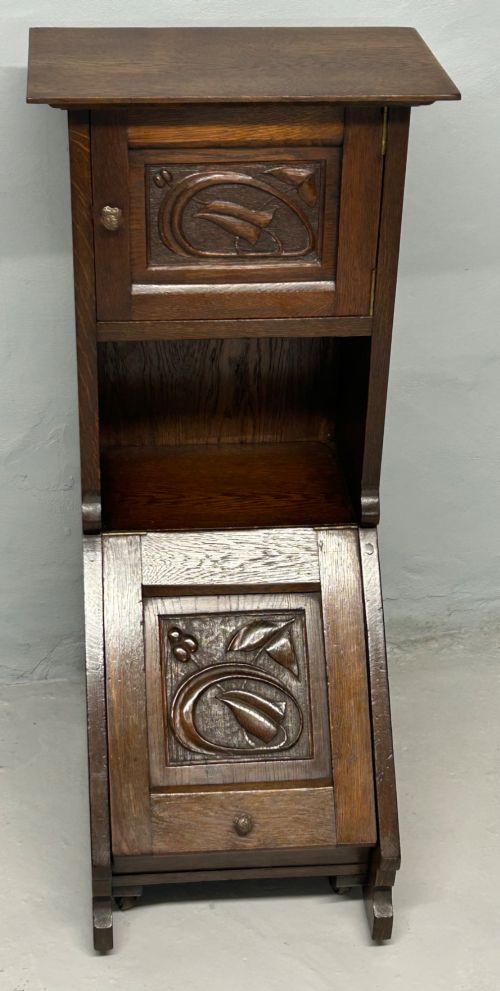
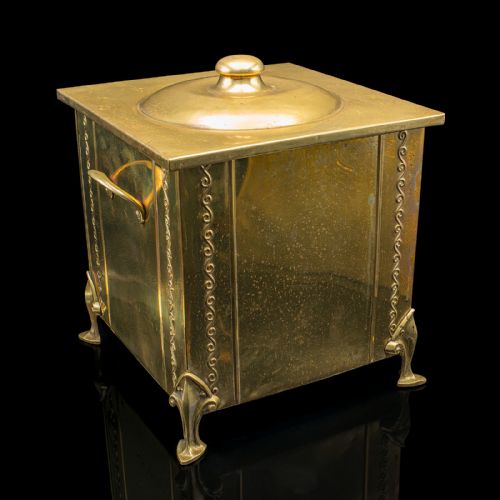
A vintage fuel box serves as a practical fireside container for coal, logs, and kindling, appearing in various forms from the Victorian era through the Edwardian period. Buyers encounter robust wooden cabinets, sloping purdoniums, and lidded metal bins designed to keep fuel tidy beside the hearth.
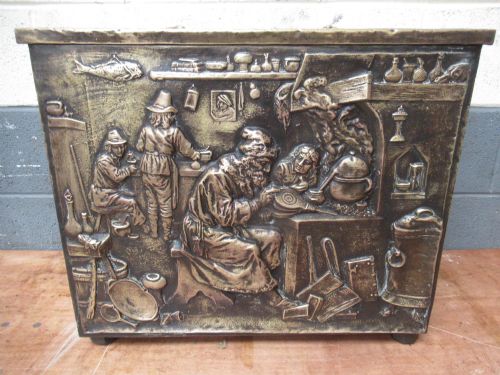
The selection on this page centres on sturdy receptacles constructed from timbers like oak, mahogany, walnut, and pine, frequently paired with heavy brass or copper fittings. These items range from simple utilitarian storage boxes to decorative Arts and Crafts designs with hand-beaten metal panels.
Traditional English forms dominate the listings, alongside occasional French provincial fireside pieces and Aesthetic Movement variants. Most examples date from the late nineteenth century up to nineteen hundred, reflecting the period need for coal and wood storage in every principal room.
How they were made
Cabinet makers utilised dense hardwoods such as oak, mahogany, and walnut to build the body of each box, often employing panel construction and carved details. Pine served as a simpler alternative for interiors and side panels.
Metalworkers shaped sheet brass and copper into lids, hinges, handles, and decorative panels, sometimes adding repoussé embossing or ormolu mounts. Arts and Crafts pieces frequently displayed exposed ironwork and hand-beaten copper surfaces.
Many designs incorporated a metal liner to contain coal dust and moisture, protecting the wooden exterior from the wear of daily fireside service.
Many a Victorian household kept a dedicated shovel hidden inside the purdonium, ready for the frantic stoking of parlour fires.
What varies in quality
The standard of timber selection and cabinet joinery dictates the structural integrity of each piece, with finer examples featuring dovetailed joints, figured mahogany veneers, or deeply carved oak panels. Lesser items rely on simpler nailed construction and plain pine carcasses.
Metal quality shows in the gauge of the brass or copper and the crispness of any embossed decoration. Heavy cast handles and secure hinges separate well-made boxes from lighter, mass-produced alternatives.
Benham and Froud
The Vintage Fuel Box Glossary
- Purdonium
- A specialised coal box, usually featuring a sloping front flap and a shovel stored in an internal compartment. This form gained popularity during the Victorian period for domestic hearths.
- Repoussé
- A metalworking technique where the artisan hammers the design from the reverse side to create a raised pattern in relief. Copper fireside panels frequently display this method.
- Ormolu
- Gilded bronze mounts applied to furniture and decorative metalwork for enrichment. It appears on select Victorian fuel containers.
- Aesthetic Movement
- A late nineteenth century design style that prioritised visual beauty over narrative function, influencing the decoration on various coal bins and purdoniums.
- Coal Scuttle
- A traditional open or lidded bucket designed for carrying coal from the cellar to the hearth. Metal versions often feature swing handles and flat bases.
Vintage Fuel Box: Frequently Asked Questions
What is a purdonium?
A purdonium is a dedicated coal box with a sloping front drop-down door, designed to hold a removable metal liner and a small coal shovel inside. This specific form became a staple of Victorian and Edwardian drawing rooms.
Cabinet makers produced them in matching woods like oak and mahogany to complement other fireside furniture.
How do I clean a copper coal box?
Cleaning copper requires a gentle metal polish to remove tarnish while preserving any intentional patination on the surface. Avoid abrasive pads that scratch the hand-beaten finish.
Regular dusting with a soft cloth maintains the lustre of both the metal panels and the surrounding timber.
Were these boxes lined?
Most quality coal boxes and bins include a removable metal liner, usually made from galvanized iron or zinc. This inner vessel catches coal dust and prevents moisture from rotting the outer wooden frame.
Liners make emptying and cleaning the container straightforward after use.
How do I tell Victorian from Edwardian?
Victorian fuel boxes often feature heavier carving, darker woods, and more ornate brass mounts or embossed decoration. Aesthetic Movement and Rococo Revival influences appear frequently in this era.
Edwardian examples tend to show lighter timber tones, inlaid stringing, and simpler Arts and Crafts copper panels.