





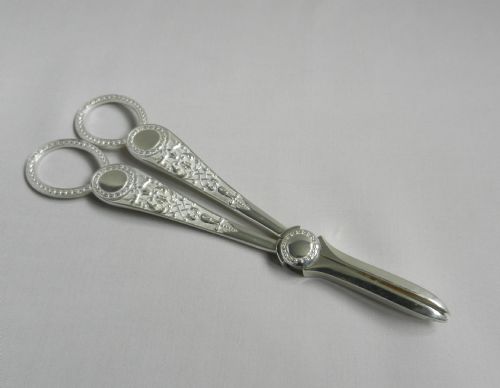
Vintage Fruit Shears
Vintage fruit shears are purpose-built implements designed for slicing through woody stems at the table, blending utility with refined nineteenth and twentieth-century craftsmanship.
Vintage Fruit Shears
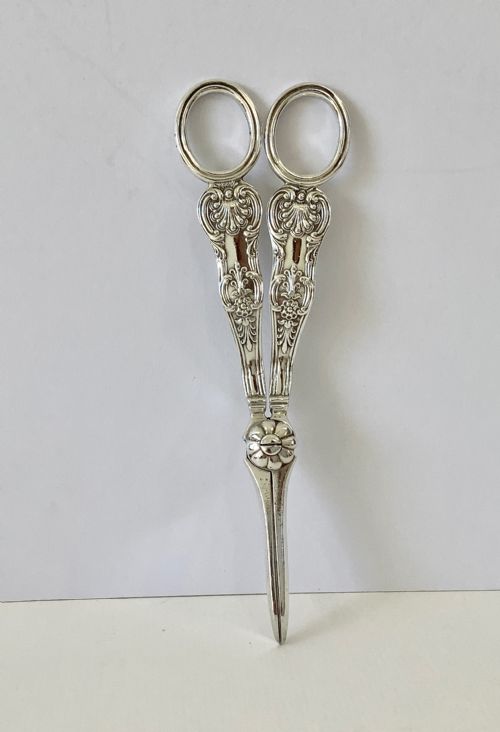
Vintage fruit shears primarily take the form of grape shears and grape scissors, engineered specifically for severing clusters of fruit without bruising the delicate skin or crushing the stems. When searching for vintage fruit shears, buyers encounter specialised cutlery spanning the Victorian, Edwardian, and mid-twentieth-century periods.
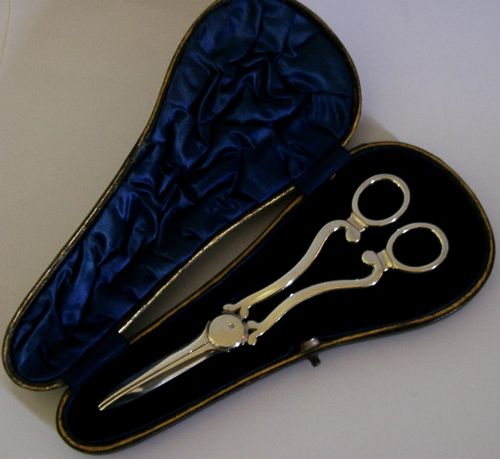
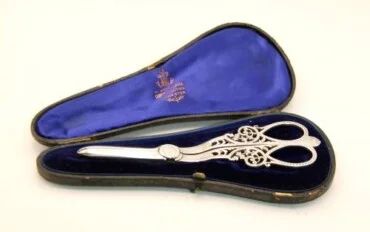
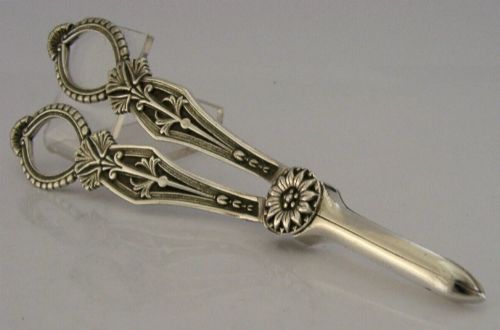
The pieces listed on this page encompass various iterations from the 1800s onwards, including William IV, Early Victorian, and Gothic Revival styles alongside later 1960s barware examples. These instruments frequently appear as standalone items or housed within fitted cases lined with velvet, silk, or satin.
Makers and manufacturers represented across these examples range from renowned silversmiths such as Paul Storr and Reilly & Storer to the Goldsmiths & Silversmiths Co., reflecting the enduring domestic ritual of serving fresh fruit. Both sterling silver and silver plate versions emerge regularly, often accompanied by protective leather or leatherette storage boxes.
Materials and Construction
The construction of these implements relies heavily on sterling silver and silver plate, selected for their lustre and durability during dining service. Master metalsmiths employed casting and forging techniques to shape the handles and blades, frequently incorporating structural strength required for cutting tough grape stems.
Ornamentation involved detailed techniques such as ornate engraving and silver gilt applications to elevate the visual appeal of the metal. Fitted presentation cases incorporated tactile interior linings of silk, satin, and velvet, paired with exterior coverings of leather or leatherette to protect the metalwork.
Vintage Fruit Shears Retail Price Guide 2026
Typical asking prices for vintage fruit shears among the pieces listed under this phrase on Sellingantiques today, from the lower quarter to the upper quarter. They describe what is for sale here now, not the wider market.
Listings feature sterling silver and silver plate materials, with periods spanning from William IV through the Victorian and Edwardian eras up to the 1960s.
Assessing Quality and Execution
Quality in these implements rests on the crispness of the engraved decoration and the balance of the handles in the hand, which distinguishes standard production from exceptional silversmithing. Heavier gauge metalwork and well-defined cast motifs demonstrate superior craftsmanship by established makers.
The integration of original fitted cases lined with silk, velvet, or satin adds considerable distinction to a set. Furthermore, the clarity of hallmarks indicating the exact year of manufacture and the silversmith's mark elevates the standing of an individual piece.
Goldsmiths & Silversmiths Co.·Charles Reily & George Storer·Paul Storr·Reilly & Storer·C.J. Vander
The Vintage Fruit Shears Glossary
- Sterling silver
- A silver alloy containing 92.5 percent pure silver by mass and 7.5 percent other metals, usually copper, ensuring structural durability for functional cutlery.
- Silver gilt
- Sterling silver that has been coated with a thin layer of gold on its surface, creating a warm, dual-tone appearance visible on certain Victorian examples.
- Gothic Revival
- An architectural and decorative style drawing inspiration from medieval design, visible in the heavier, ornate ornamentation of mid-nineteenth-century and later barware pieces.
- Hallmark
- An official stamp applied to precious metals indicating the standard of purity, the assay office, and the date letter corresponding to the year of creation.
- Grape shears
- Specialised scissors featuring blunt or curved tips and sturdy blades designed specifically for harvesting individual portions of fruit from a larger bunch.
Vintage Fruit Shears: Frequently Asked Questions
What are vintage fruit shears used for?
These implements were utilised at the dining table to snip individual clusters of grapes and other fruit from the main stem during dessert service.
Their design allowed diners to serve fruit cleanly without using fingers, reflecting formal nineteenth and twentieth-century dining etiquette.
How do I care for silver fruit shears?
Maintenance requires gentle cleaning with a soft cloth and specialised silver polish to remove natural tarnishing without damaging engraved details.
Storing the pieces inside their original velvet, silk, or satin-lined leatherette cases helps protect the metal surfaces from atmospheric oxidation.
Can I use them for modern dining?
Many examples remain entirely functional for cutting fruit stems or for use in contemporary barware settings.
Solid construction in sterling silver ensures they continue to perform their original cutting task effectively when handled with normal care.
How do I identify the period of a piece?
Dating relies heavily on the stamped hallmarks indicating the assay office and the specific year letter designated by British silver assay standards.
Stylistic indicators such as Victorian ornamentation, Edwardian delicacy, or later Gothic Revival heavy casting also point toward specific historical eras.