


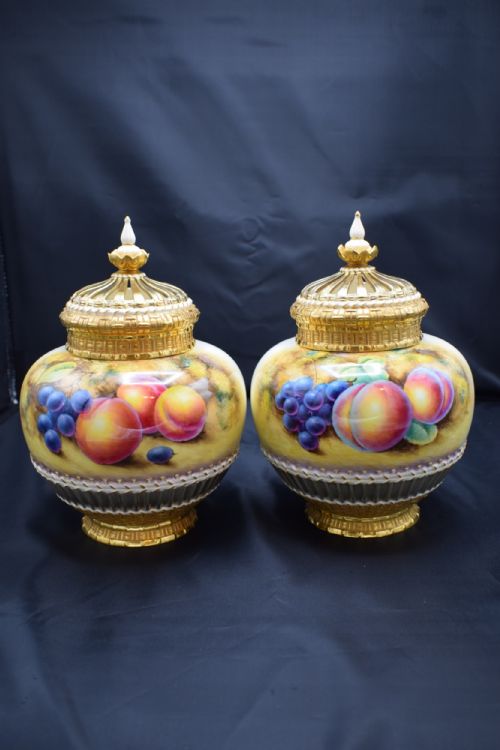


Vintage Fruit Painted Vase
These vintage fruit painted vase selections bring together hand-decorated porcelain and canvas works celebrating natural harvest themes.
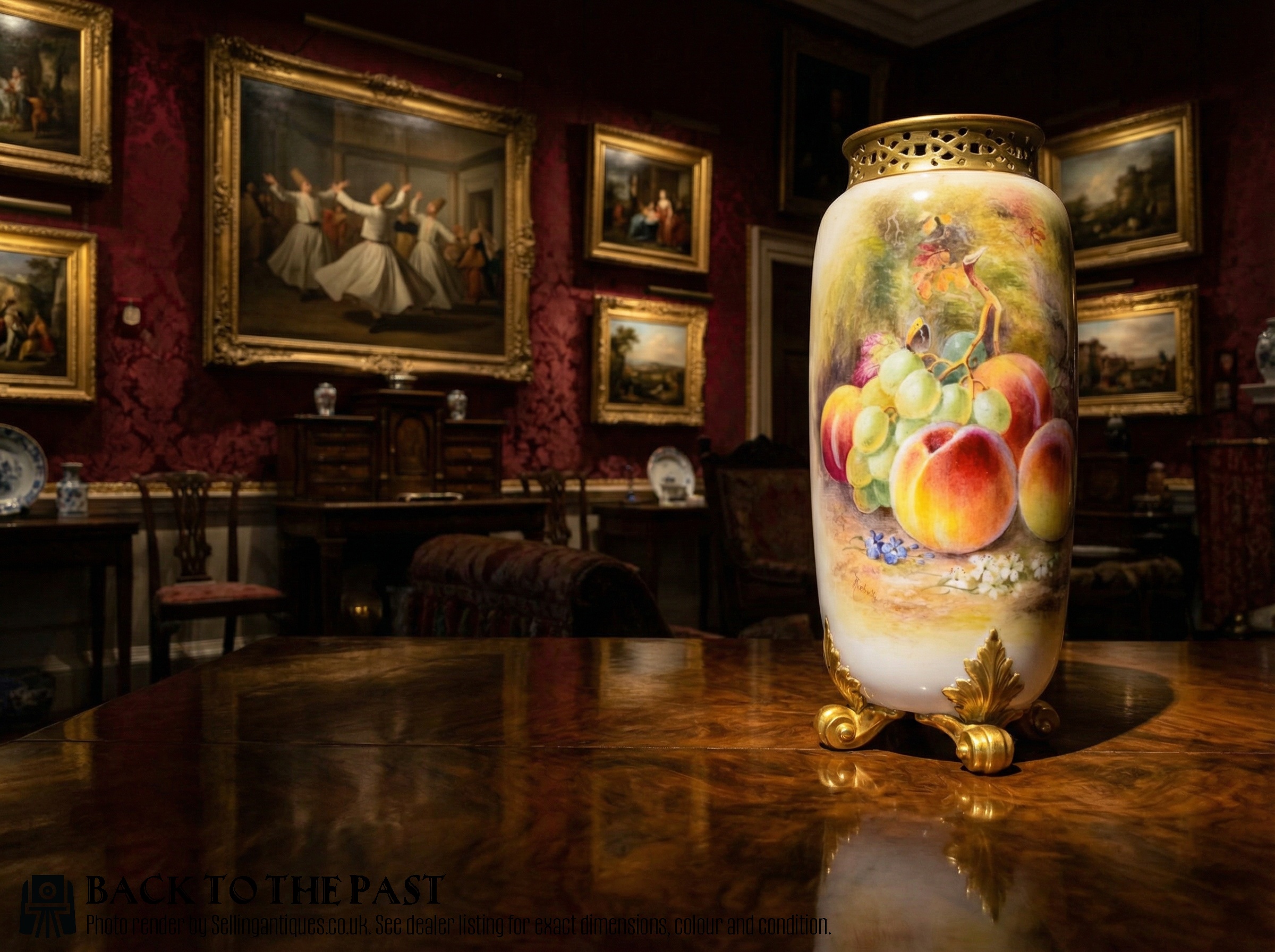
Vintage Fruit Painted Vase
A vintage fruit painted vase search brings up porcelain vessels decorated with detailed botanical motifs, alongside occasional oil paintings depicting fruit compositions. The most frequent pieces on this page are porcelain items originating from English factories, particularly pot pourri vases and ginger jars.
The objects span multiple decades from the early twentieth century through to the mid-twentieth century, with some eighteenth-century canvas works included. Buyers encounter various vessel shapes, including two-handled urns, spill vases, and crown-top containers.
Makers represented in these listings include established English porcelain works, whose artists applied detailed orchard scenes directly onto the ceramic bodies. These pieces reflect traditional decorative tastes spanning Edwardian, Art Deco, and Mid-Century periods.
Materials and construction
The physical pieces rely on porcelain, glazed earthenware, and wood panels supporting oil paint. Artisans shaped these ceramics and canvases before applying intricate colour designs by hand.
Surface decoration frequently incorporates enamel paints, gold leaf, gilding, and gilt accents to highlight the painted fruit subjects. Painters signed their finished ceramic works directly onto the glaze or within the painted panels.
Listings include porcelain, glazed earthenware, and wood supports decorated with enamel, oil paint, and gold leaf.
Assessing quality
Quality in these painted items rests upon the precision of the brushwork and the complexity of the fruit compositions rendered on the surface. Finer examples display meticulous detail in the rendering of leaves, shadows, and natural textures.
The application of supportive embellishments such as gold leaf, gilding, and structural elements like crown tops or twin handles influences the overall character of the piece. Recognition of named artists adds distinct merit to individual porcelain vessels.
Royal Worcester·Coalport·William Moorcroft·Charlotte Rhead
The Vintage Fruit Painted Vase Glossary
- Pot pourri vase
- A ceramic vessel featuring a pierced or openwork cover designed to diffuse scent from dried aromatic plant materials placed inside.
- Ginger jar
- A storage vessel with a wide body and domed cover, often utilised for decorative display in traditional interiors.
- Spill vase
- A tall, narrow container originally intended to hold tapers used for lighting fires or candles.
- Gilding
- The application of gold leaf or gilt powder to ceramic surfaces or frames to create metallic highlights.
- Enamel
- A durable, glossy paint fused to the porcelain body through firing to preserve vibrant colours.
Vintage Fruit Painted Vase: Frequently Asked Questions
What periods do these pieces span?
The available selection covers items from the eighteenth century up through various decades of the twentieth century. Most ceramic examples date from the early to mid-twentieth century.
Specific decades represented include the nineteen-twenties, thirties, forties, fifties, and sixties. Eighteenth-century oil paintings also appear alongside these porcelain items.
How are the painted scenes applied?
Artists painted the fruit motifs by hand directly onto the porcelain surface using enamel colours. Many pieces feature signatures from the specific painters who completed the artwork.
Gold leaf and gilt detailing often complement the hand-painted fruit compositions on these vessels. Canvases utilise oil paint on wood to portray similar still life themes.
What forms do these vases take?
Vessels appear in several distinct shapes including pot pourri jars with covers, ginger jars, and spill vases. Some items feature two handles or crown-top lids.
Pair configurations also occur, providing matching sets of decorated porcelain for display. Flat canvas paintings complement these three-dimensional ceramic objects.
How do I identify the maker?
Makers are identified through factory marks stamped or painted on the underside of the porcelain. Individual artists frequently signed their painted fruit panels on the front or base.
Stylistic elements and signature styles assist in linking pieces to specific English porcelain works and decorators. Comparing the painted detail helps distinguish different studio hands.