
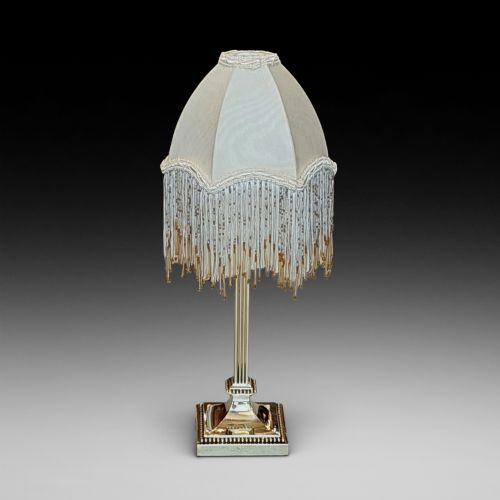
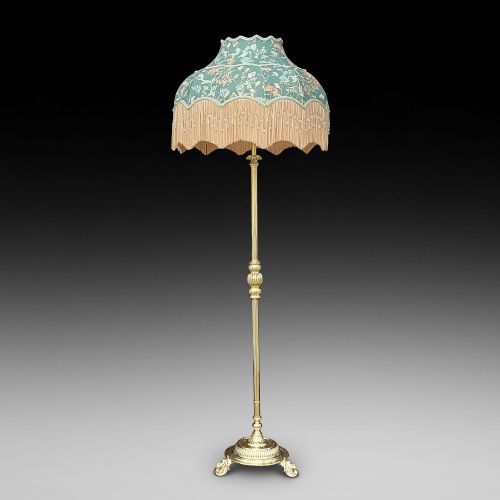
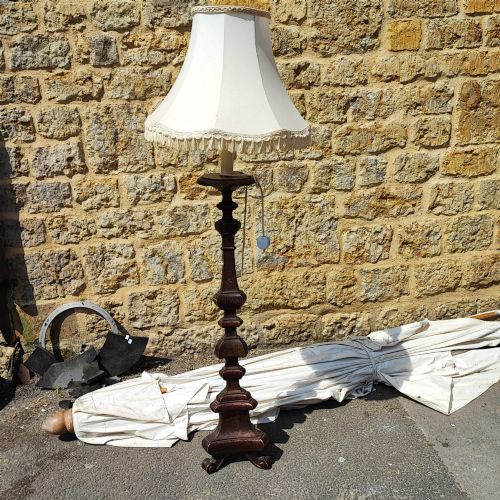
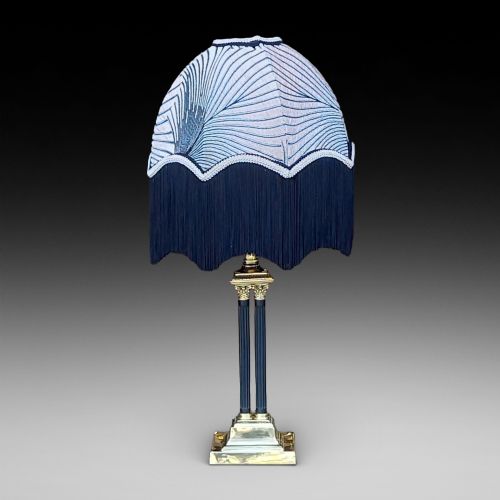


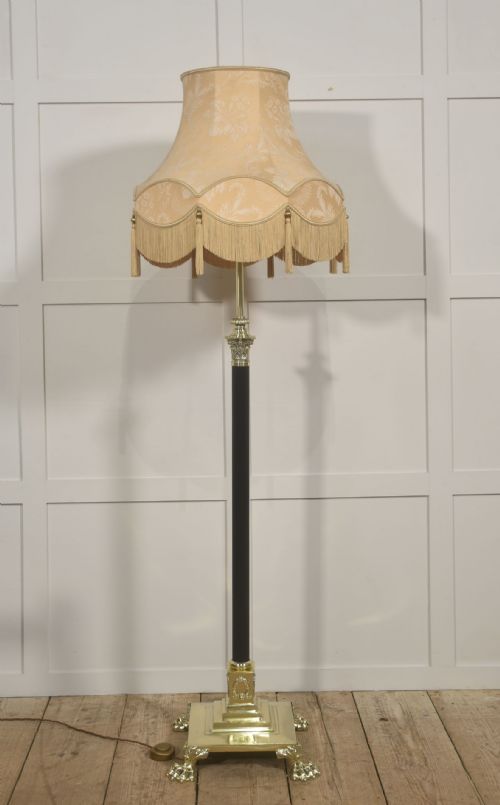


Vintage Fringed Lampshade
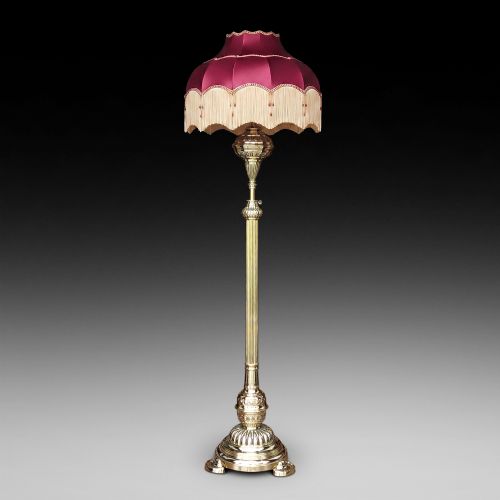
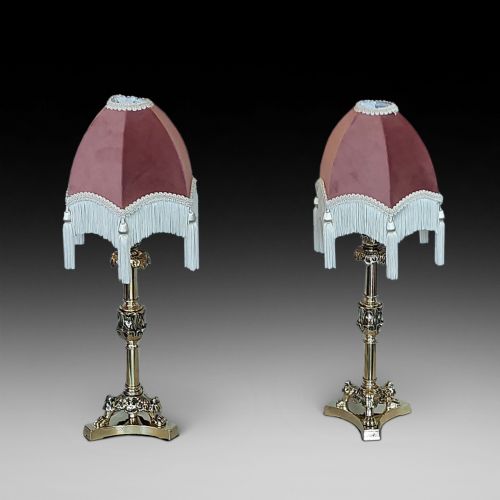
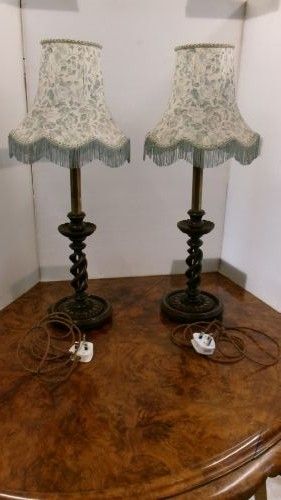
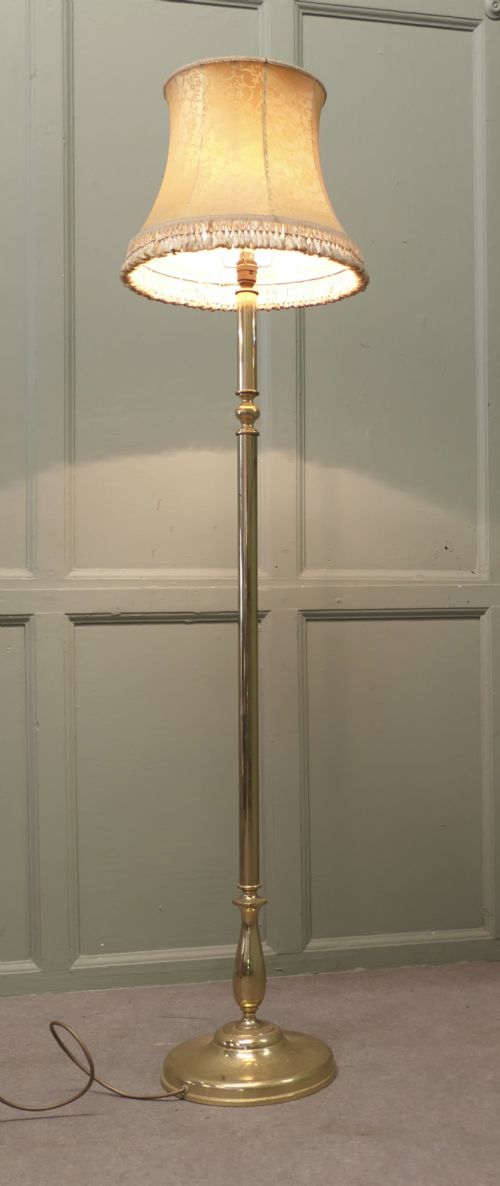
A vintage fringed lampshade tops a standard lamp, table lamp, or boudoir light, diffusing light through layered textiles and beaded trims.
Vintage Fringed Lampshade
A vintage fringed lampshade sits atop lighting fixtures originating from periods spanning the nineteenth century through the nineteen-thirties, including Victorian, Edwardian, and nineteen-twenties designs. These pieces often accompany standard lamps, floor lamps, table lamps, and converted oil lamps or candlesticks.
The assortment on this page draws from diverse stylistic influences such as Art Nouveau, Arts and Crafts, Neoclassical, and French Chateau. Buyers encounter shades paired with brass columns, ceramic bases, carved mahogany, and beaten copper bodies.
Materials and construction methods
Constructed primarily from fabric, silk, and thread, these shades incorporate intricate fringing and glass beads to soften and colour the emitted light. Structural integrity relies on metal frames, often paired with brass, copper, or wooden lamp bases.
Many extant lamps represent conversions, adapting nineteenth-century oil lamps, torchere vases, and altar candlesticks for electrical use. Metalworking techniques include pressed brass, beaten copper, and cast bronze statuary.
Listings feature items spanning the Victorian, Edwardian, and nineteen-twenties periods, utilising brass, fabric, silk, glass beads, and carved wood.
Distinctions in quality and execution
Quality rests in the precision of the metalwork, such as crisp fluting on Corinthian columns or weight in brass and bronze castings. Hand-carved wooden standards and detailed Majolica ceramics likewise separate ambitious pieces from simpler workshop productions.
The preservation of original fabric components, delicate threadwork, and glass bead embellishments dictates the integrity of the shade. Heavier gauge metals and robust extending mechanisms on standard lamps indicate superior original manufacture.
Hinks of B'ham
The Vintage Fringed Lampshade Glossary
- Standard lamp
- A tall floor-standing lamp designed to illuminate a room from a corner or beside seating. These often feature adjustable stems or heavy weighted bases for stability.
- Corinthian column
- An architectural column style featuring ornate acanthus leaf capitals, frequently utilised in brass table and standard lamps during the nineteenth and early twentieth centuries.
- Majolica
- A type of colourful, tin-glazed earthenware pottery often incorporated into Victorian and Edwardian lamp bases. It provides rich colour and textured relief decoration.
- Torchere
- A tall stand or lamp base originally designed to hold a torch, later adapted for oil and electric illumination. Examples in the listings include vase-form standards from the nineteen-twenties.
- Boudoir lamp
- A small, decorative bedside or dressing table lamp designed for gentle illumination. These often display French styling and intimate proportions.
Vintage Fringed Lampshade: Frequently Asked Questions
What periods do these lamps represent?
The pieces span the Victorian, Edwardian, and nineteen-twenties eras, alongside nineteenth-century examples and earlier converted candlesticks. Styles range from Arts and Crafts and Art Nouveau to Neoclassical and Gothic Revival.
Design choices reflect the prevalent aesthetic movements of their respective decades, incorporating materials like brass, copper, mahogany, and ceramic.
How were oil lamps converted?
Many nineteenth-century standard and table oil lamps undergo later conversions to electricity, retaining their original brass reservoirs and extending columns. Candlesticks and torchere vases similarly transition into wired table or floor lamps.
These adaptations allow historic metalwork and ceramic bases to function safely with modern electrical fittings while preserving their decorative character.
Where should a standard lamp go?
Standard lamps and floor lamps suit corners, beside armchairs, or framing furniture arrangements where they project ambient light outward. Adjustable stems allow height modification depending on the ceiling clearance and seating height.
Pairing them with textured fabric shades and fringing helps diffuse the light softly across the room.
How do I identify Art Nouveau pieces?
Art Nouveau lighting employs organic, flowing lines, natural motifs, and stylized plant forms executed in brass, copper, or bronze. These pieces frequently date from the late nineteenth century to the early twentieth century.
Complementary elements include whiplash curves, floral shade shapes, and decorative metalwork distinct from strict classical revival columns.