

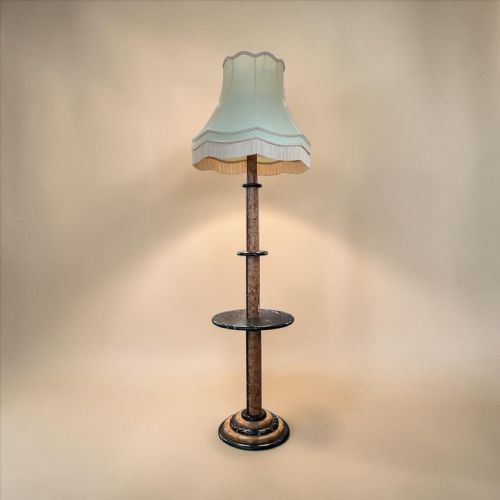
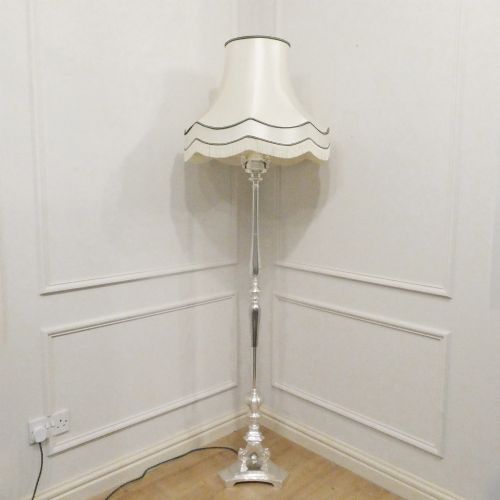
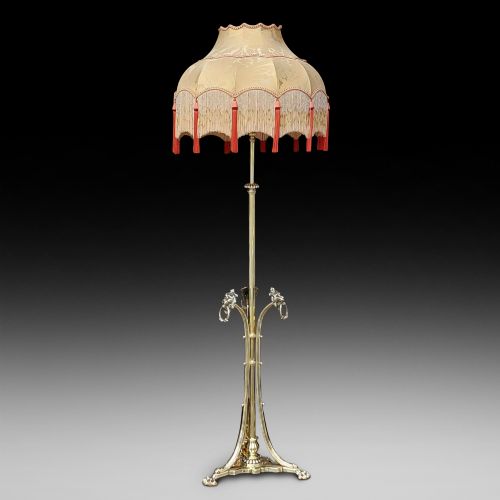
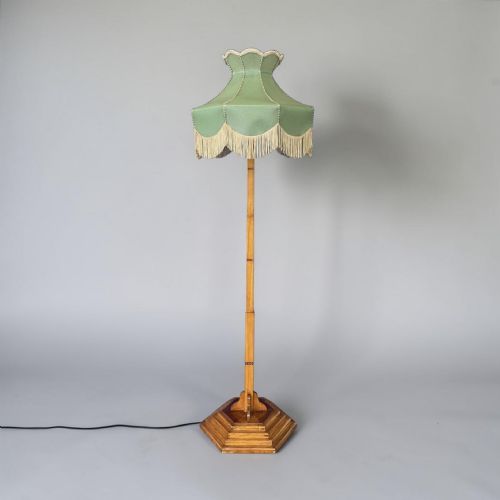



Vintage Fringe Floor Lamp
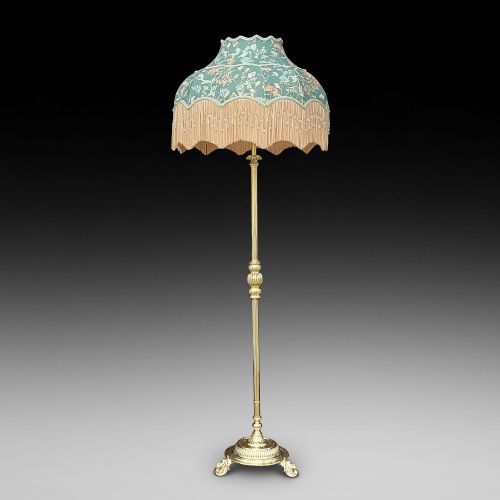
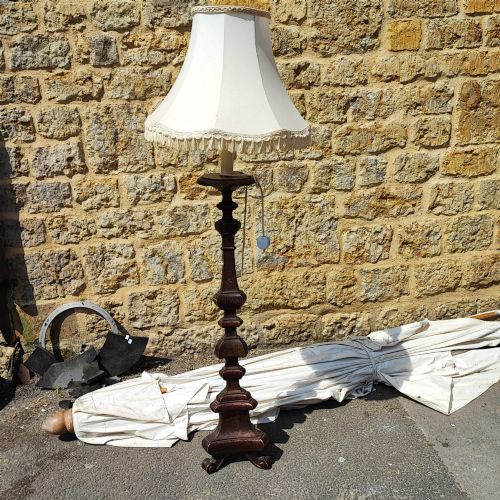
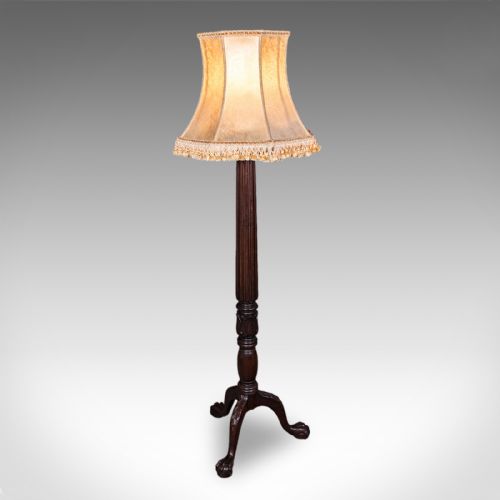
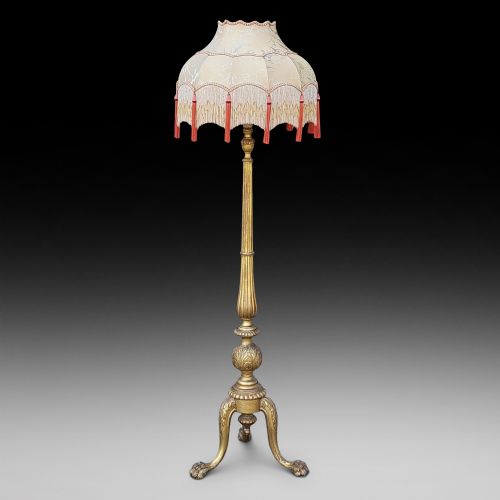
These vintage fringe floor lamp examples bring period presence and height to a room, turning utilitarian lighting into a sculptural focal point.
Vintage Fringe Floor Lamp
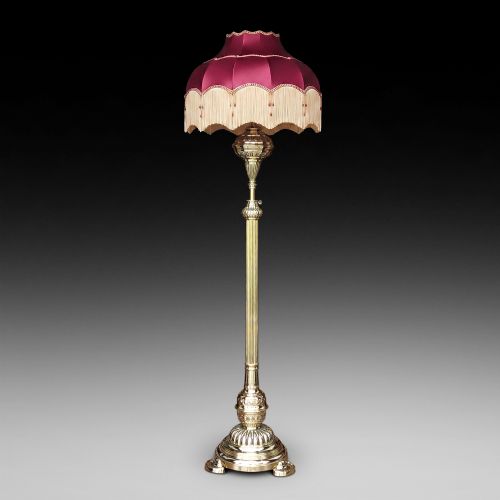
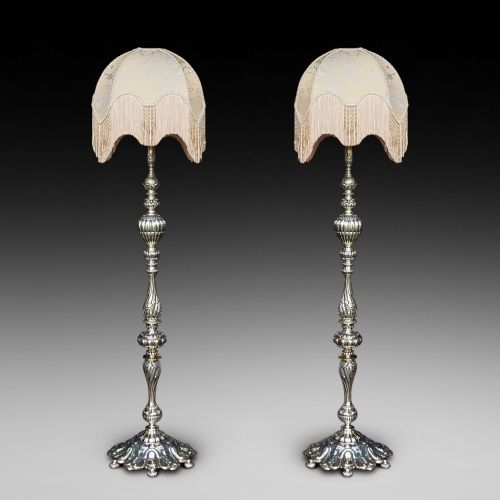
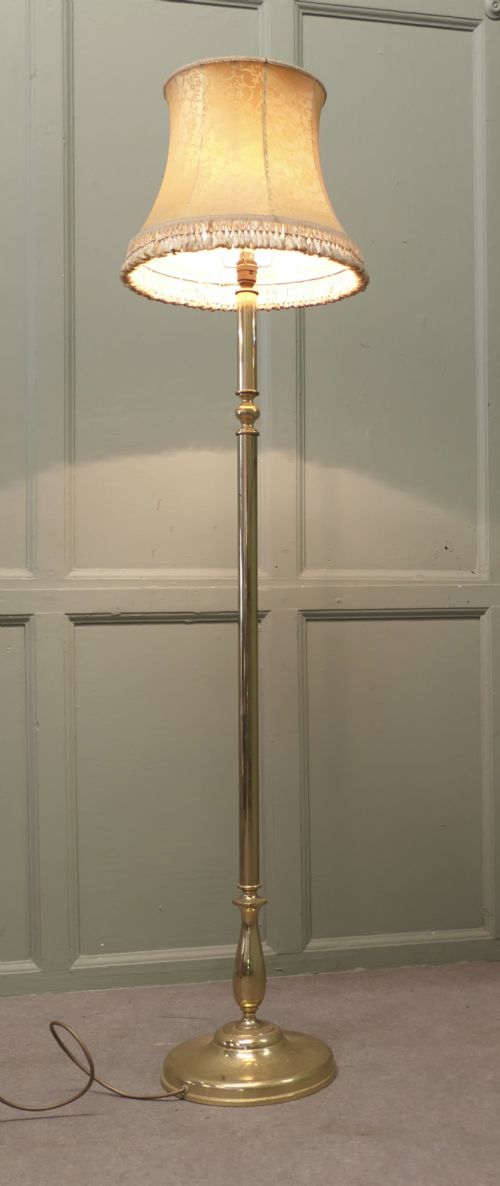
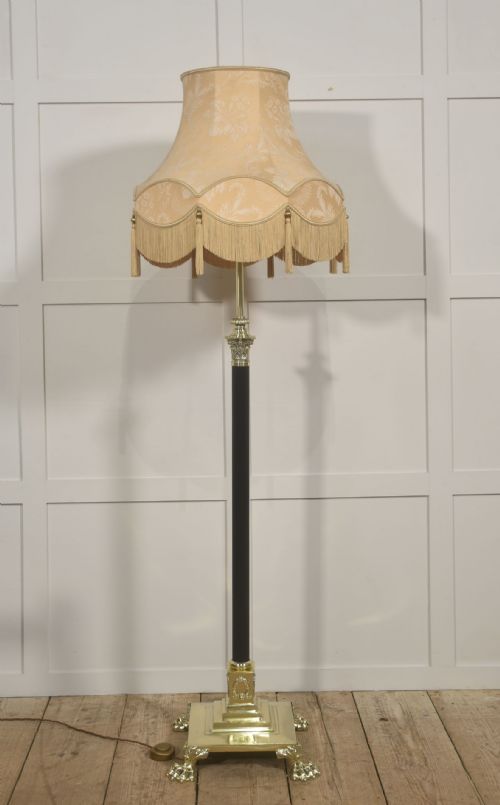
A vintage fringe floor lamp serves as a tall interior light source, combining a vertical stand with a decorative shade. When searching for this phrase, you encounter standard lamps and floor lights originating from the Victorian, Edwardian, and Art Deco periods, alongside pieces from the nineteenth and early twentieth centuries.
The selections on this page span diverse aesthetic traditions, including Art Nouveau, Neoclassical, Arts and Crafts, and French Chateau styles. These pieces range from heavy brass telescopic columns to carved giltwood and mahogany stands.
Materials and construction
Maker construction relies heavily on metals such as brass, copper, and iron, often shaped into adjustable stems, Corinthian columns, or openwork bases. Heavier metals provide the structural stability necessary to support tall standard lamps safely.
Woodwork utilises carved mahogany, giltwood, and black lacquered finishes for decorative stands, frequently complemented by fabric and silk elements on the shades and trims that define the fringe aesthetic.
Listings feature standard lamps spanning Victorian, Edwardian, Art Deco, and 19th-century periods, constructed in brass, mahogany, marble, and giltwood.
Distinctions in quality
Quality rests upon the integrity of the materials and the precision of the mechanics, such as smooth telescopic adjustment and solid brass casting. Finer pieces demonstrate careful carving in wood or intricate metal openwork rather than plain mass production.
The visual cohesion of the stand and its fittings dictates overall standard, with superior examples retaining original maker components and well-balanced proportions across the base and column.
Hinks of B'ham·Messenger
The Vintage Fringe Floor Lamp Glossary
- Standard lamp
- A traditional British term for a floor lamp or tall upright light fitting designed to stand on the floor. It typically supports a large shade at eye level.
- Telescopic
- A construction method allowing the vertical shaft of the lamp to extend or retract in height. This mechanism was frequently utilised in Victorian and Edwardian reading lamps.
- Giltwood
- Timber that has been coated with a thin layer of gold leaf or gilt. This finish appears frequently on Neoclassical and baroque style standards.
- Corinthian column
- A classical architectural column design featuring ornate carved capitals adorned with acanthus leaves. This motif is commonly found on brass standard lamps.
- Steamer lamp
- A specialised adjustable floor light designed for stability on ships or in compact spaces. They often feature weighted bases and flexible height settings.
Vintage Fringe Floor Lamp: Frequently Asked Questions
What is a standard lamp?
A standard lamp is simply the traditional British term for a floor lamp. These tall fixtures were designed to illuminate corners or sit beside seating areas before overhead ceiling lights became common.
They provide ambient or reading light at a lower level than ceiling fixtures, using a sturdy weighted base to support an upright shaft and shade.
How do I style a floor lamp?
Position your floor lamp beside a sofa, armchair, or in a dark corner to add height and layered lighting to a room. Taller brass or giltwood standards work well in traditional drawing rooms, while mahogany or black lacquered versions anchor reading nooks.
Ensure the scale of the lamp complements your surrounding furniture without blocking pathways or doorways.
How do I date a floor lamp?
Dating relies on identifying stylistic markers like Art Nouveau botanical curves, Neoclassical columns, or Arts and Crafts simplicity. Materials such as heavy cast brass indicate Victorian origins, whilst mahogany and giltwood often align with Edwardian or later twentieth-century revivals.
Mechanical details like telescopic adjustment screws and maker stamps also help pinpoint the manufacturing era.
Were these lamps used for oil?
Many nineteenth-century standard lamps were originally manufactured as oil lamps before being converted to electricity later in life. You can often identify these by the burner mechanisms and reservoirs integrated into the upper brass column.
Converted oil lamps offer substantial weight and historical character, retaining the original proportions intended for large fabric shades.