
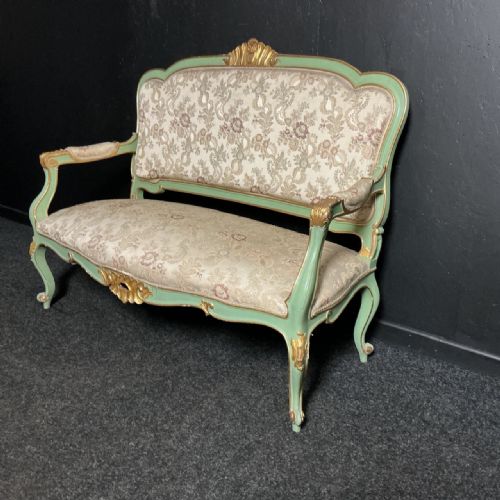


Vintage French Salon Bench
A vintage french salon bench brings tactile elegance to a room, offering compact seating dressed in period fabrics and carved wood frames.
Vintage French Salon Bench
A vintage french salon bench encompasses upholstered settees, couches, and small sofas designed for formal entertaining rooms. When searching for a vintage french salon bench, buyers encounter pieces spanning the nineteenth century through the mid-twentieth century.
The selections include Louis XV revival pieces alongside Victorian and Regency variants. These seating forms range from compact two-seat couches to larger open-arm settees and salon stools.
Originating predominantly from French and English workshops, these items function as focal points in reception rooms and bedrooms. The structural forms emphasise curved woodwork and upholstered seating surfaces.
How they were made
Construction relies heavily on solid walnut and carved wood frameworks shaped into traditional revival silhouettes. Artisans shaped these timbers by hand, applying decorative carvings to the rails and arm supports.
Upholstery techniques incorporate traditional textiles such as velvet, damask fabric, and standard decorative fabric stretched over internal padding. Giltwood and gold leaf finishes appear on select frames to add metallic surface enrichment.
A bentwood suite sneaks into the collection among the carved walnut heavyweights, proving that bent timber can also attend a formal salon.
What varies in quality
The sophistication of the wood carving dictates much of the visual merit, distinguishing deeply sculpted floral motifs from plain turned framing. Crisp details on walnut and giltwood surfaces reflect the skill invested by the original cabinetmaker.
The choice of textile also marks the grade of the piece, with heavy damask and plush velvet elevating the presentation above basic upholstery. Original frames that retain their integrated structural integrity provide the sturdiest foundation for continued use.
Baumann
The Vintage French Salon Bench Glossary
- Canapé
- An upholstered sofa or settee, typically featuring an exposed wooden frame and an elongated seat. This term often applies to eighteenth and nineteenth century French seating designs.
- Giltwood
- Timber treated with a thin layer of gold leaf or metallic paint to create a lustrous golden finish. This material appears on formal nineteenth century salon furniture.
- Louis XV Revival
- A nineteenth century design movement that reinterprets the curving lines and asymmetric rococo ornament of the mid-eighteenth century French court. Pieces in this style feature cabriole legs and organic floral carvings.
- Walnut
- A dense, dark hardwood favored by furniture makers for its stable working properties and rich grain. It serves as the primary structural timber for many continental European salon seats.
Vintage French Salon Bench: Frequently Asked Questions
What rooms suit a salon bench?
These compact seats fit well in bedrooms, hallways, and drawing rooms where full-scale sofas overwhelm the floor plan. Their decorative backs and carved frames look particularly striking when placed against an empty wall or beneath a window.
They also serve as practical seating at the foot of a bed or as an accent piece in a formal dressing area. The upholstered surface provides comfortable temporary seating without taking up excessive space.
How do I identify a revival piece?
Revival items from the nineteenth century adopt the curved silhouettes, cabriole legs, and floral carvings of earlier historic periods like Louis XV. Examining the construction methods and wood ageing helps distinguish nineteenth century interpretations from older originals.
These pieces combine historical decorative vocabulary with the manufacturing standards of their actual production era. The use of walnut and specific upholstery textiles often points directly to Victorian or later European workshops.
How do I care for antique wood?
Maintain walnut and carved wooden frames by dusting them regularly with a soft, dry cloth to prevent grime buildup. Avoid placing the furniture in direct sunlight or near heat sources to protect the timber and any giltwood finishes from drying out.
Harsh chemical polishes should be avoided in favor of natural wax treatments applied sparingly. Preserving the original finish maintains the character acquired over decades of use.
What is the difference between a settee and a sofa?
Settees traditionally feature lighter framing and smaller proportions, designed to seat two people comfortably in a formal setting. Sofas often provide broader seating capacity and heavier padding intended for extended lounging.
In historical salon furniture, the terms frequently overlap depending on the specific maker and regional terminology. Both types prioritize decorative visual appeal alongside functional seating.