

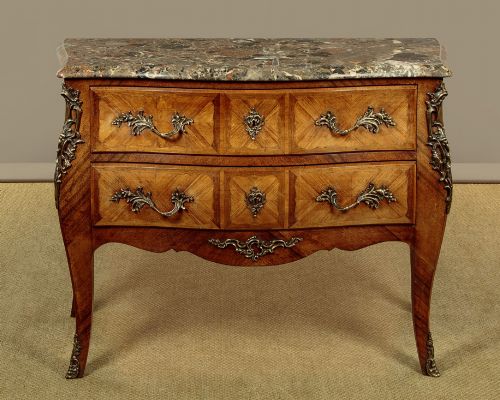
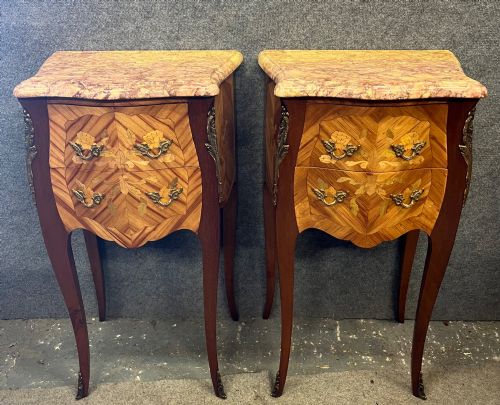
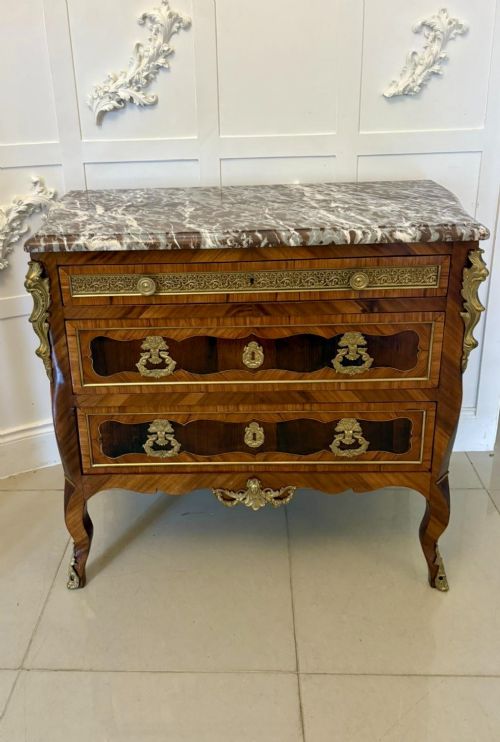
Vintage French Marble Commode
A vintage french marble commode brings sculptural weight and fitted stone to a bedroom or reception room.

Vintage French Marble Commode
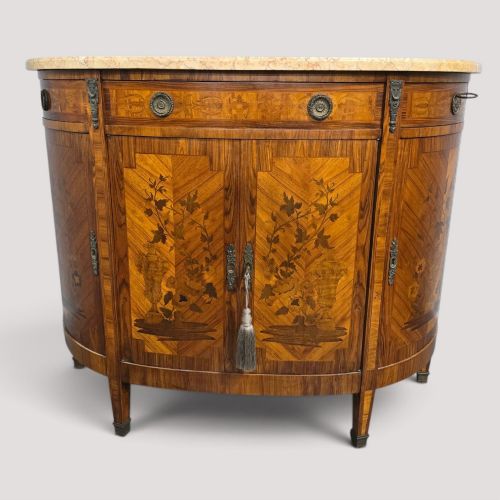
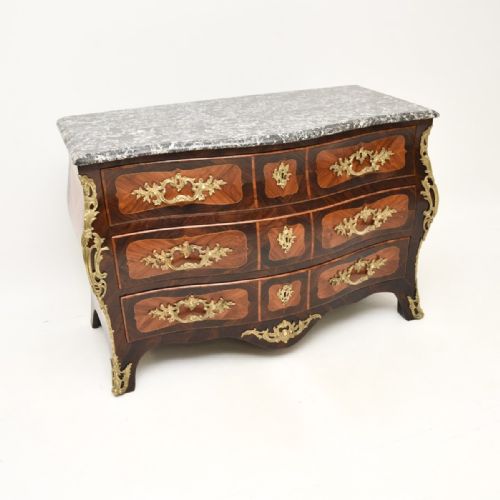
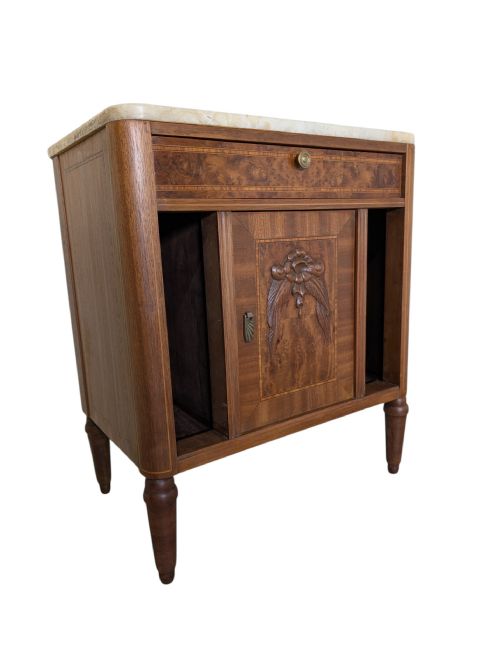
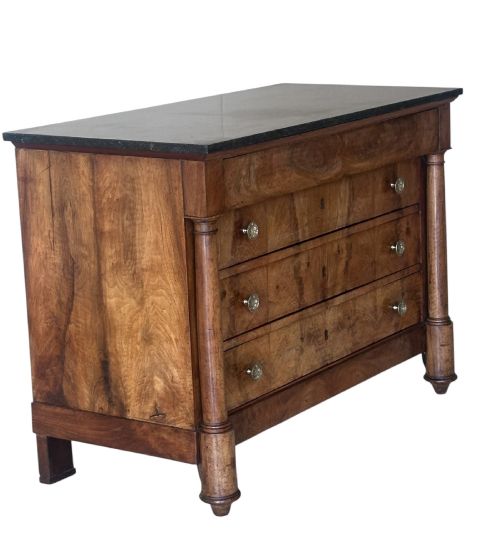
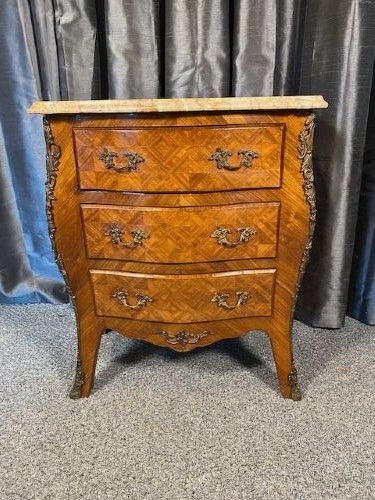
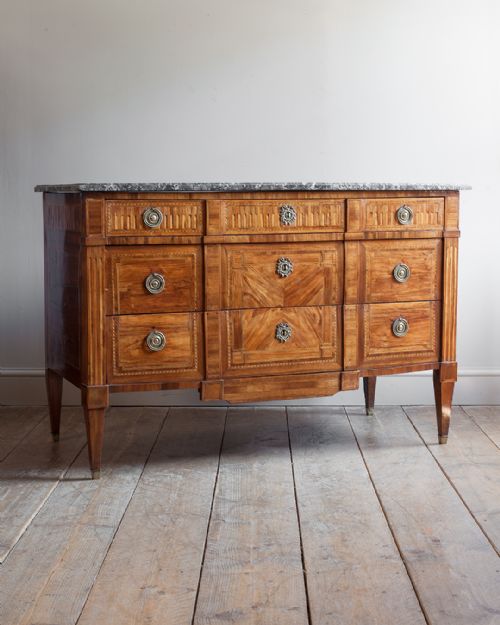
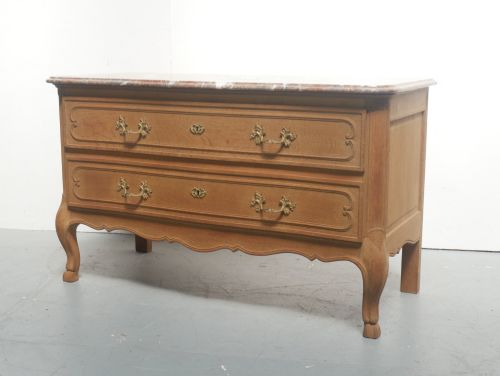
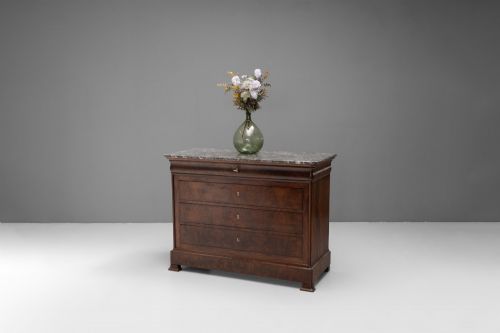
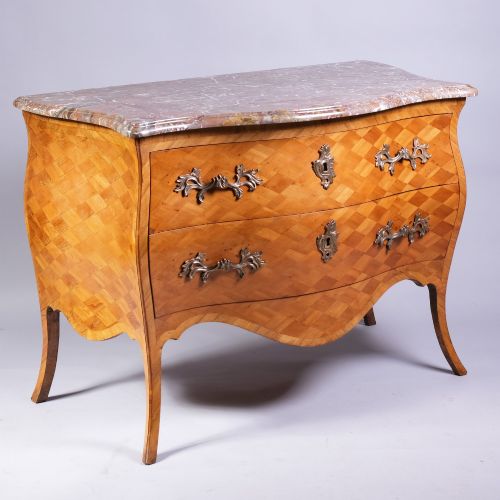
A vintage french marble commode serves primarily as a low chest of drawers or bedside cabinet topped with heavy stone. These pieces emerge across the nineteenth century and into the early twentieth century, taking forms from strict Louis Philippe rectangles to swelling bombe profiles.
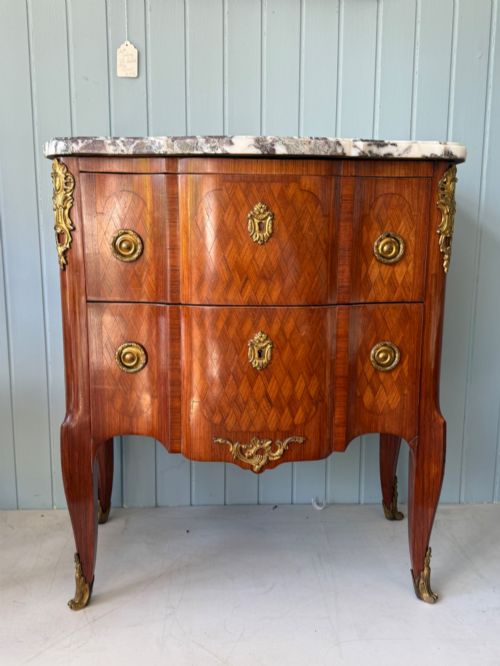
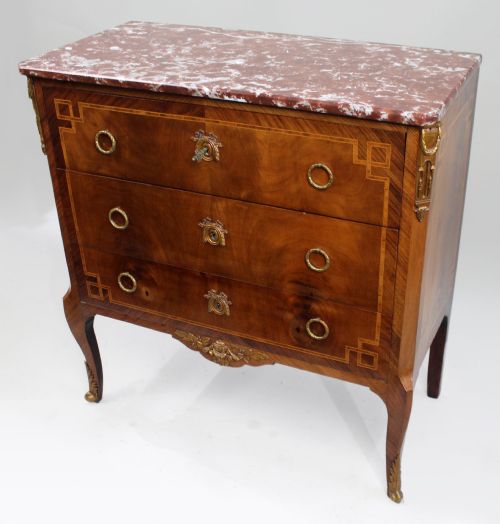
The inventory on this page spans walnut, mahogany, oak, and kingwood carcasses fitted with marble tops in grey, white, or rouge. Alongside full-size chests of drawers, buyers find smaller bedside cabinets and demi-lune side cabinets designed for domestic storage.
Stylistic influences draw heavily on earlier court aesthetics, resulting in Louis XV and Louis XVI revival pieces alongside provincial iterations. The underlying construction consistently prioritises deep storage drawers paired with ornamental stone surfaces.
Materials and Construction
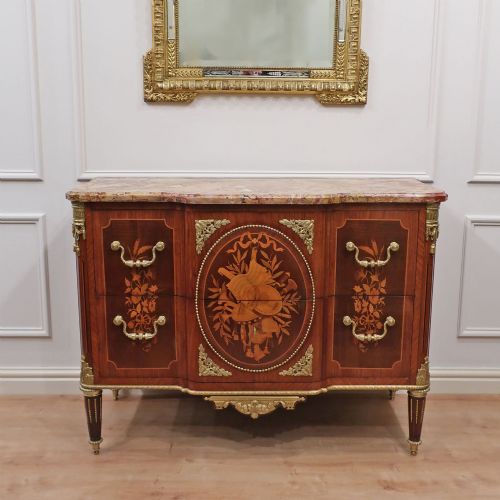
Carpenters build the carcasses using native timbers like oak and walnut or exotic veneers such as kingwood, rosewood, and mahogany laid over secondary woods. Marquetry and inlaid patterns of contrasting timber create intricate geometric or floral surface designs across the drawer fronts and sides.
Heavy marble slabs, selected for their colour and veining, are shaped to follow the exact serpentine or rectilinear contours of the wooden carcass below. Cast brass and ormolu mounts are applied to corners, handles, and aprons to reinforce the structural angles and provide decorative contrast.
Listings feature marble tops in grey, white, and rouge across oak, walnut, mahogany, and kingwood timbers.
Judging Quality
The standard of a piece rests upon the precision of its marquetry work and the crispness of its cast ormolu mounts. Finer examples display seamless veneer matching across moving drawer fronts and tight joints where the heavy marble meets the timber moulding.
The selection of the marble top dictates visual weight, with thick, heavily figured slabs indicating a more substantial piece than thin, plain replacements. Drawer action, timber selection, and the integrity of the secondary woods further separate standard production from superior workshops.
Jacques Bircklé
The Vintage French Marble Commode Glossary
- Commode
- A low chest of drawers, typically standing at table height and developed in France during the eighteenth century for domestic storage. It remains the primary furniture form found in this category.
- Bombe
- A swollen or bulging serpentine contour used on the front and sides of furniture carcasses, particularly popular in revival commodes. This curving form requires advanced woodworking skill to execute correctly.
- Ormolu
- Gilded bronze used for decorative mounts and furniture hardware. It provides a bright metallic contrast against dark timbers like mahogany and walnut.
- Marquetry
- The art of applying small pieces of veneer to a structure to form decorative patterns and pictures. Craftsmen utilise various coloured woods to achieve tonal depth without paint.
- Louis Philippe
- A mid nineteenth century French style characterised by restrained classical proportions and simplified curved lines. These pieces rely on the natural grain of walnut or mahogany rather than heavy ornament.
Vintage French Marble Commode: Frequently Asked Questions
What is a french marble commode used for?
These pieces function as drawer storage in bedrooms, hallways, or living spaces while providing a sturdy upper surface for lamps and decorative objects. The stone top offers a durable finish resistant to everyday wear.
Smaller bedside variants serve a similar purpose adjacent to a bed, holding lighting and night items while concealing enclosed storage behind doors or drawers.
How do I identify the period of a commode?
Dating relies on carcass construction, timber choice, and stylistic revival markers such as Louis XV curves or Louis Philippe restraint. Examining the interior drawer construction and secondary woods reveals the manufacturing era.
Earlier nineteenth century pieces often employ solid walnut or heavy mahogany, while later twentieth century interpretations frequently utilise lighter oak or distinct art deco geometry.
Are the marble tops original to the furniture?
Most marble tops are cut specifically to follow the contours of the wooden base and remain original to the piece. Inspecting the underside reveals matching edge profiles and historical seating marks.
Replacement marble occasionally occurs due to historical breakage, identifiable by modern cutting marks or slight discrepancies in the overall fit against the wood.
How do I care for a marble top commode?
Marble requires gentle cleaning with a damp cloth and neutral soap, avoiding acidic substances like lemon or vinegar that etch the polished surface. Regular dusting preserves the timber veneer on the body.
Applying a suitable furniture wax to the wood elements maintains the finish, while keeping the piece away from direct heat sources prevents timber movement.