


Vintage French Kitchen Island
A vintage french kitchen island brings utilitarian warmth to a room, offering sturdy oak, pine, or beech surfaces designed for serious daily work.
Vintage French Kitchen Island
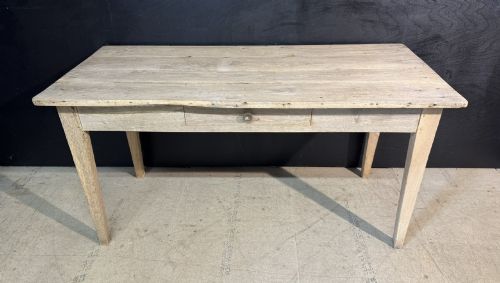
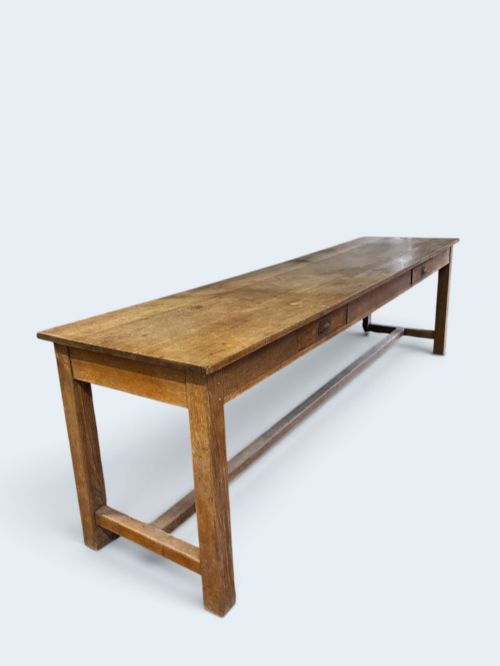
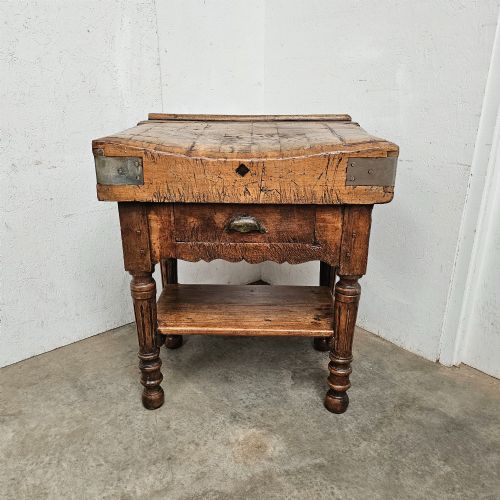
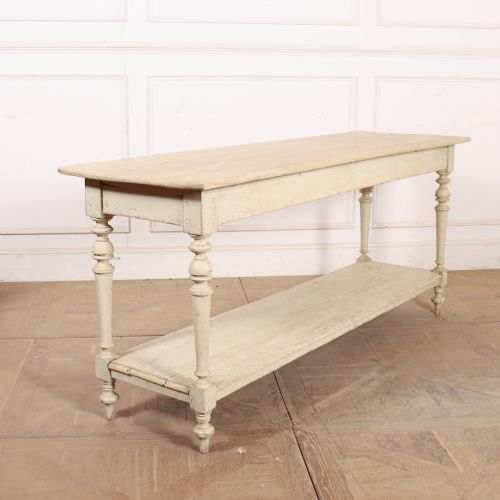
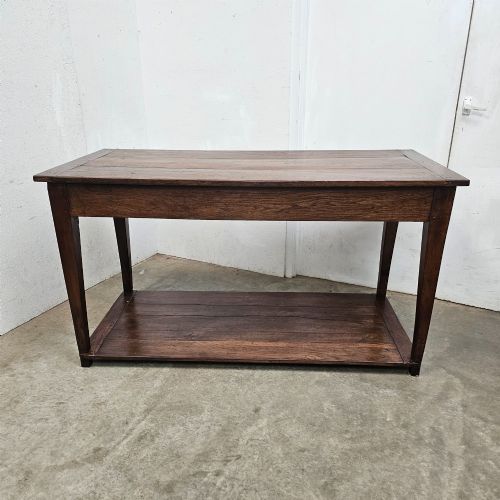
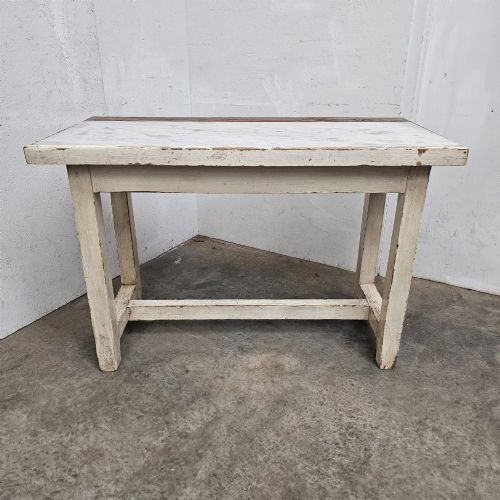
A vintage french kitchen island spans several functional forms including drapers tables, butchers blocks, prep tables, and shop counters.
The materials most commonly met in these pieces include oak, pine, beech, elm, and occasionally marble or iron.
Pieces stem from various periods, predominantly the nineteenth century through the early twentieth century, showing rustic farmhouse or provincial styles.
How they were made
Construction relies heavily on solid timbers such as oak, pine, and beech, joined to withstand heavy daily preparation and retail use.
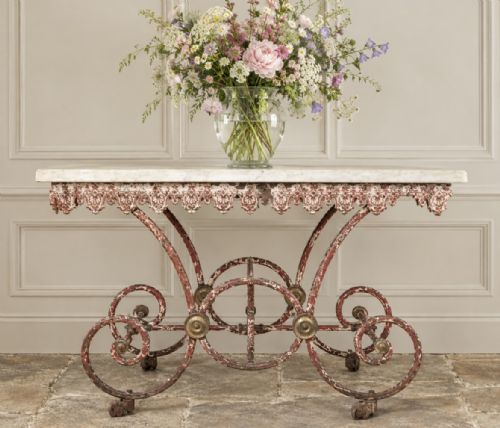
Surfaces often feature thick marble slabs for pastry work, end-grain chopping blocks, or well-worn wooden planks showing the marks of past labour.
Listings feature woods such as oak, pine, beech, and elm alongside iron, brass, marble, and original paint finishes.
What varies in quality
Quality rests in the original integrity of the timber, the presence of authentic vices or bronze mounts, and the honesty of the surface patina.
Proportion and scale dictate the distinction of a piece, ranging from modest provincial work benches to monumental four-metre drapers tables.
Trussant and Cie·Hennes France
The Vintage French Kitchen Island Glossary
- Drapers table
- A long, narrow table traditionally used in textile shops, prized in kitchens for its generous surface and slender proportions. These often feature lower tiers for storage.
- Butchers block
- A heavy chopping table built with thick end-grain timber, designed to absorb the impact of cleavers and heavy preparation work.
- Shop counter
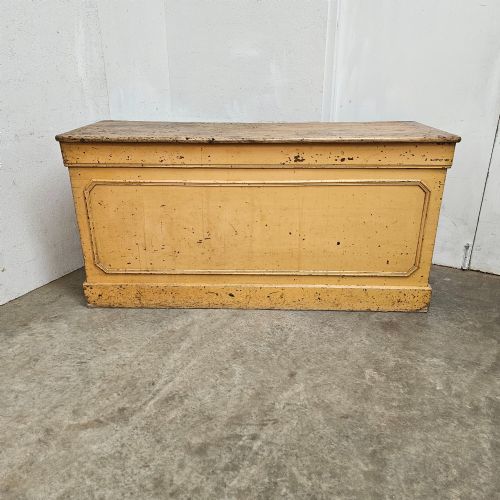
- A utilitarian retail fixture built with sturdy timber and panelled fronts, repurposed successfully for domestic kitchen islands.
- Patination
- The gradual softening and deepening of colour on wood and metal surfaces resulting from decades of handling, cleaning, and exposure.
Vintage French Kitchen Island: Frequently Asked Questions
How do I maintain a wooden prep table surface?
Regular oiling helps nourish the timber and prevents excessive drying in heated modern kitchens. Cleaning requires simple damp cloths rather than harsh chemical detergents.
Avoiding standing water preserves the structural integrity of older pine and oak frames. A light wax can also protect painted or bleached surfaces from daily wear.
Can I use a shop counter as a kitchen island?
Shop counters make excellent kitchen islands because they offer substantial length and useful under-counter storage space. Their original panelled fronts provide strong visual character in an open-plan room.
Consider the working height before installation, as nineteenth-century counters occasionally sit lower than standard modern kitchen surfaces.
What is the difference between a drapers table and a prep table?
Drapers tables generally feature longer, narrower proportions with shallow drawers, originally designed for folding cloth. Prep tables tend to be deeper and are built specifically for culinary tasks.
Both function well as freestanding kitchen furniture, depending on the available floor space and clearance required around the island.
Are marble tops practical for daily cooking?
Marble provides a cool, smooth surface that remains ideal for rolling pastry and working with dough. It resists heat well but requires care to avoid staining from acidic foods like citrus or wine.
Many antique french prep tables paired marble with oak or beech to combine pastry work areas with standard chopping zones.