


Vintage French Cane Chairs
These vintage french cane chairs bring together open woven seating and classic continental carved frames for any room.
Vintage French Cane Chairs
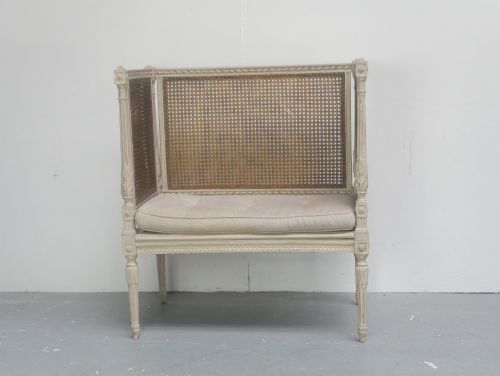
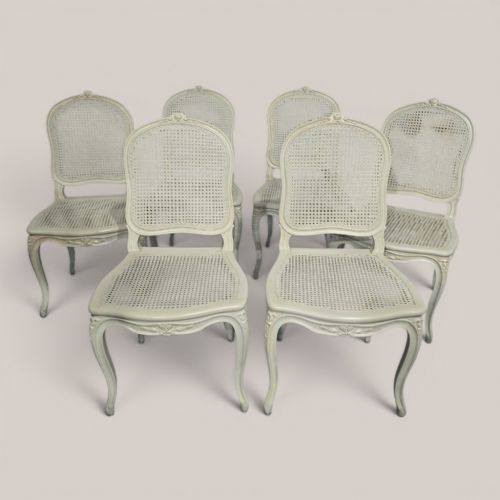
Vintage french cane chairs encompass seating built across the nineteenth and early twentieth centuries, drawing heavily on historic court aesthetics like Louis XV and Louis XVI styles. Buyers searching this phrase encounter everything from low lounge armchairs and dining sets to monumental giltwood settees, daybeds and occasional bedroom chairs.
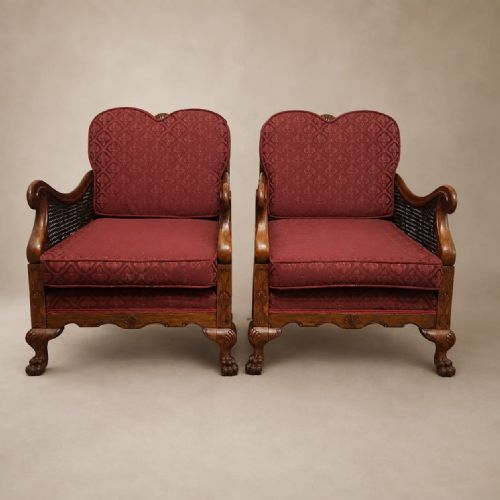
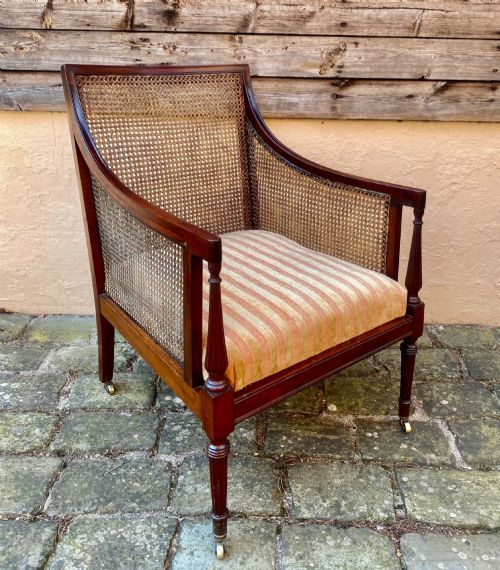
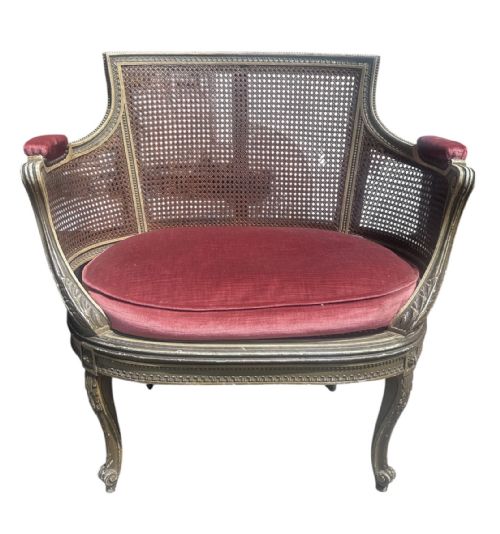
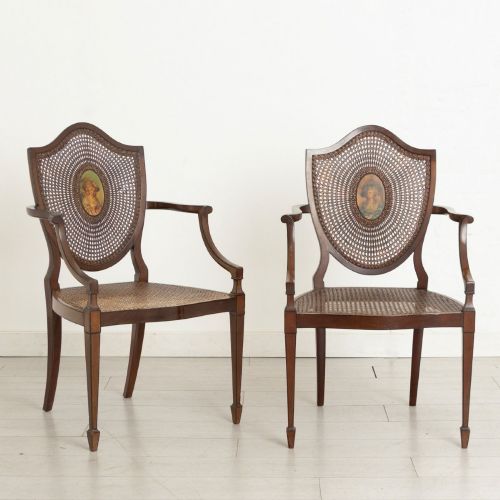
The form most frequently met on this page is the bergere armchair, typically constructed with enclosed wooden sides and woven cane panels to both back and seat. Alongside these sit side chairs, medallion backs and occasional pieces reflecting French provincial and chateau tastes from eras spanning the 1860s through the 1920s.
Construction and Materials
Makers built these frames using dense hardwoods like walnut, beech, oak and mahogany, often shaping the timber with hand carving or applying gilt, paint and faux bamboo details. The structural woodwork supports woven natural cane, split cane or rattan panels fitted into channeled frames.
Many examples incorporate upholstered elements alongside the cane work, pairing down-filled loose cushions or pad seats covered in fabric, velvet or leather with the rigid woven backrests.
Listings span the nineteenth century through the 1920s, featuring walnut, beech and oak frames paired with natural cane and rattan.
Evaluating Quality
Quality rests primarily in the crispness of the hand carving on the wooden frames and the tightness of the woven cane panels. Superior pieces display fluid, deep relief work on walnut or giltwood structures rather than shallow, mechanical shaping.
The integrity of the structural joinery and the resilience of the cane weave separate finer library and salon armchairs from standard utility seating. Uniform tension across multi-strand cane work indicates high workshop standards.
The Vintage French Cane Chairs Glossary
- Bergere
- An enclosed upholstered armchair with a wooden or painted frame and cane back and sides. These seats frequently feature loose squab cushions.
- Giltwood
- Timber treated with a thin layer of gold leaf applied over a prepared gesso base. This finish appears on decorative salon furniture from various nineteenth-century periods.
- Caning
- A method of weaving plant materials, specifically rattan peel, through holes drilled in a wooden frame. It provides a resilient, supportive surface for seats and backs.
- Medallion chair
- A chair featuring an oval upholstered or caned backrest framed by carved wood. The style originates in neoclassical French design.
- Faux bamboo
- Wood turned and carved to imitate the segmented stalks of natural bamboo. This decorative treatment gained popularity during the nineteenth century.
Vintage French Cane Chairs: Frequently Asked Questions
How do I care for antique cane?
Keep woven panels hydrated by wiping them occasionally with a damp cloth and avoiding direct heat sources that dry out natural fibres.
Support sagging seats with proper cushions rather than placing heavy point loads directly onto the cane mesh.
Can these chairs be re-caned?
Skilled artisans can replace damaged hand-woven or pressed cane panels using traditional techniques and matching materials.
Traditional hole-to-hole weaving requires considerable time and precision to replicate historical patterns accurately.
Are these chairs comfortable for daily use?
Most bergere and salon chairs offer deep proportions and supportive angled backs suited to relaxed sitting.
Adding fitted down cushions enhances comfort for extended seating periods in modern living spaces.
How do I distinguish Louis XV from Louis XVI style?
Louis XV pieces display asymmetrical curves, cabriole legs and flowing rococo ornamentation carved into the wooden frame.
Louis XVI furniture introduces straight tapered legs, geometric symmetry and neoclassical motifs like fluting and ribbon twists.