
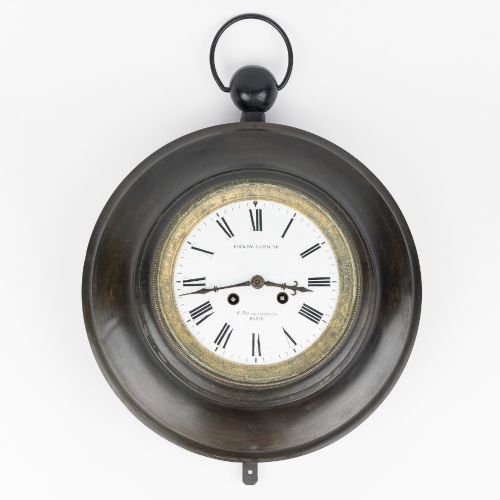
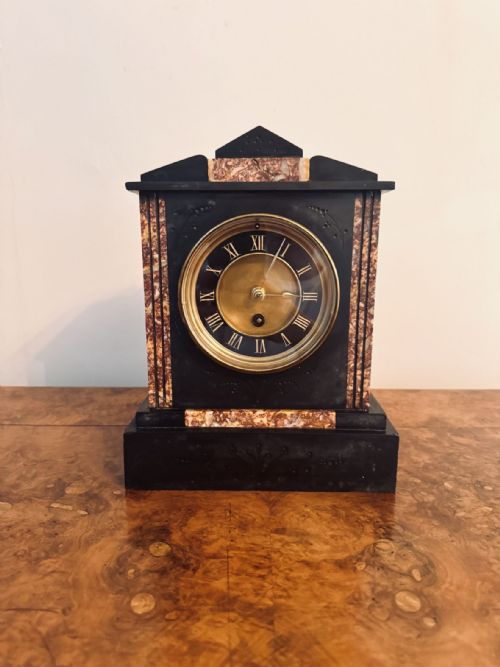
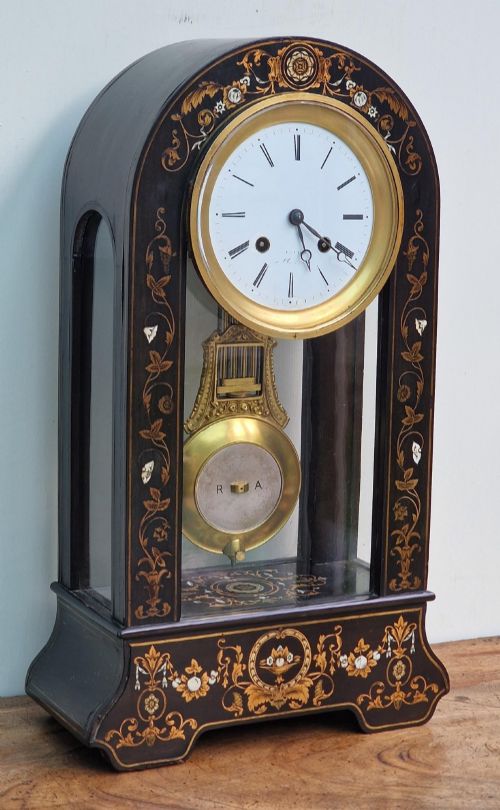
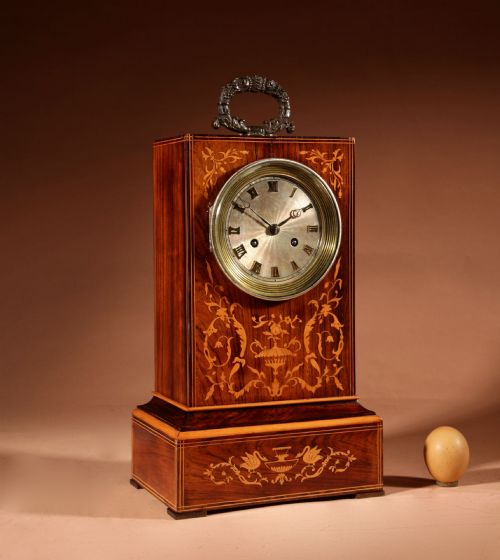
Vintage French Brass Clock
A vintage french brass clock brings the precision of nineteenth-century engineering and heavy, polished metal into a room.
Vintage French Brass Clock
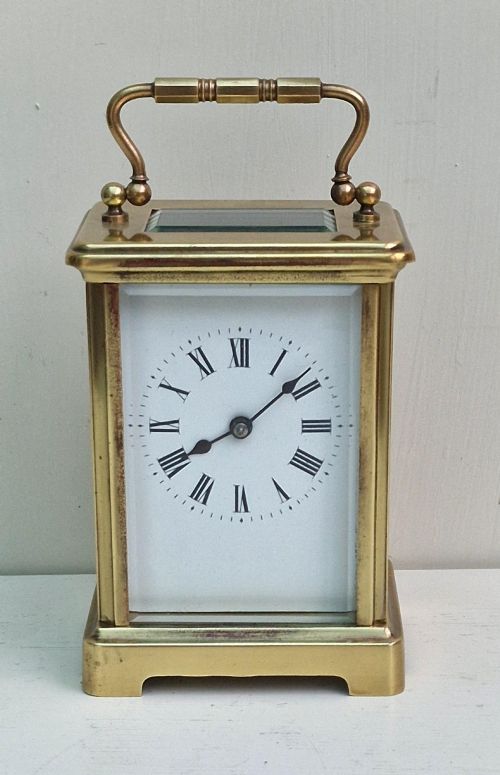
When searching for a vintage french brass clock, buyers encounter a wide variety of domestic timepieces spanning the nineteenth and early twentieth centuries. The selection on this page is dominated by carriage clocks and mantel clocks originating from French workshops during the Victorian era and the 1900s.
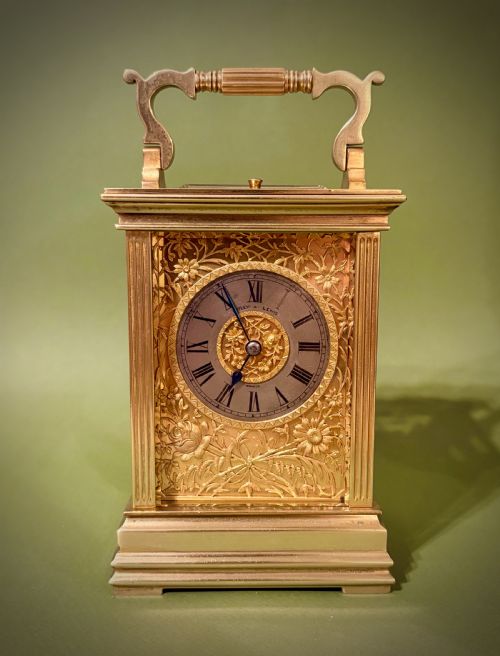
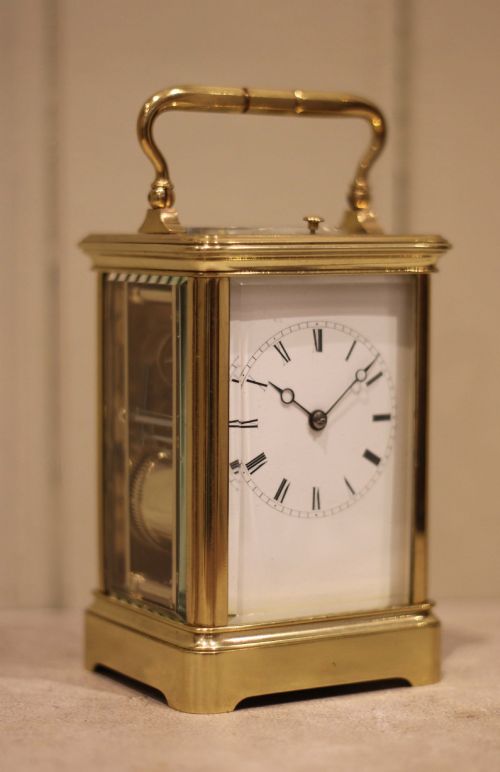
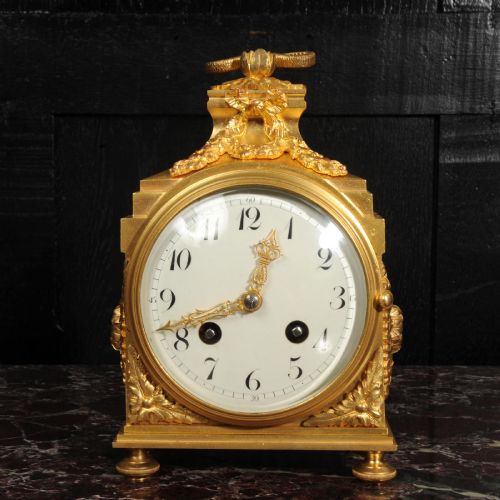
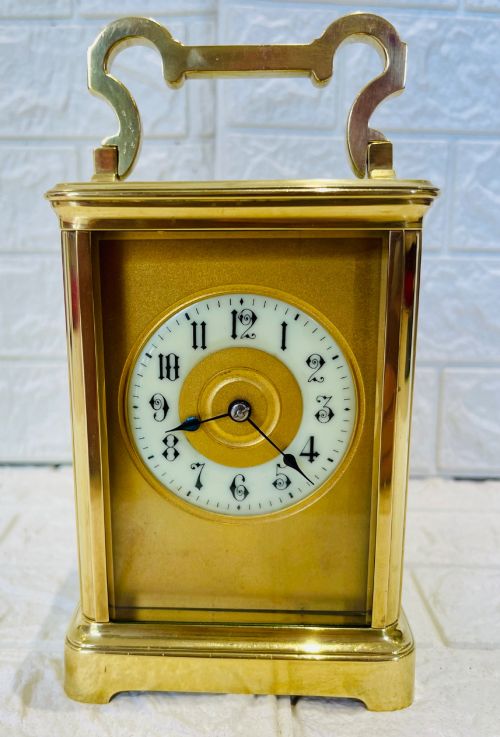
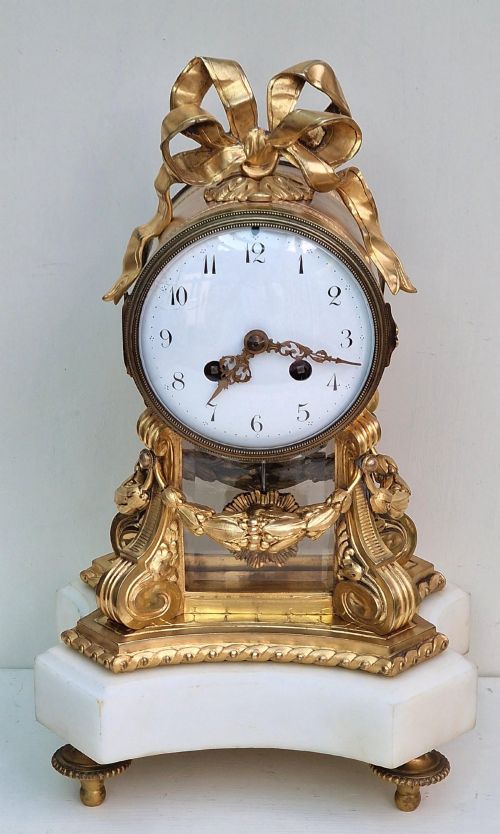
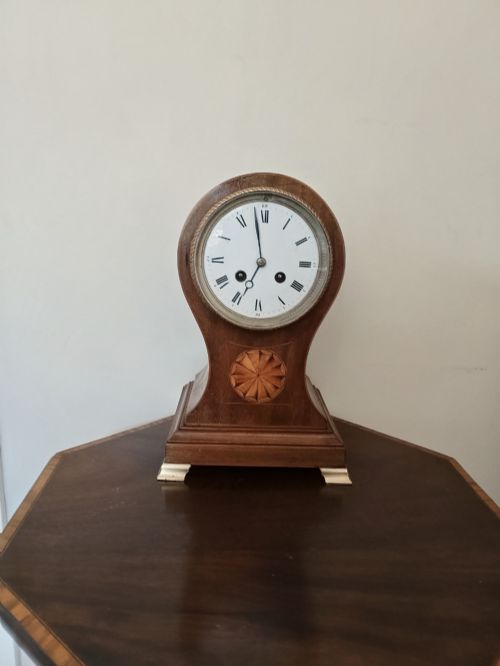
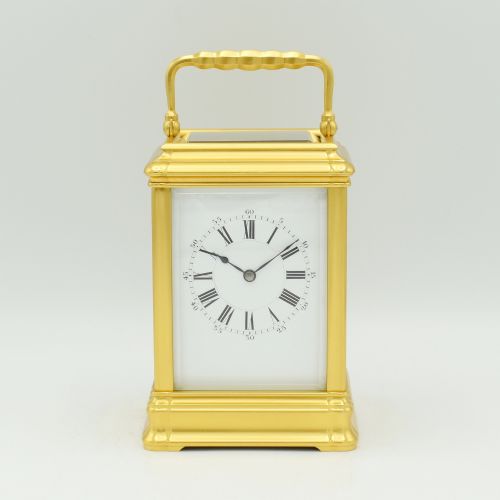
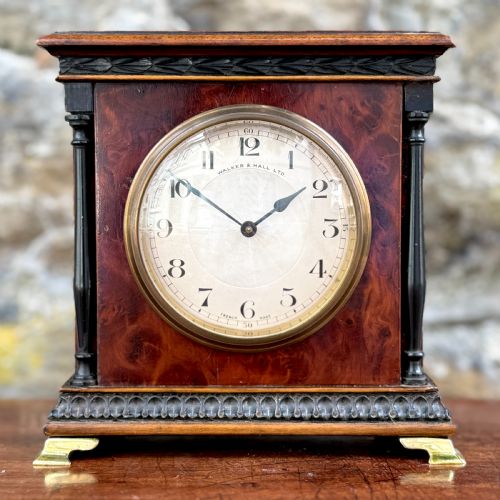
Carriage clocks form the core of these listings, often housed in heavy brass frames with bevelled glass panels that reveal the movement inside. Alongside these portable pieces, the inventory includes mantel clocks styled in French Rococo Revival, Empire, and Louis XVI aesthetics, utilising materials such as marble, gilt bronze, and mahogany.
Materials and construction
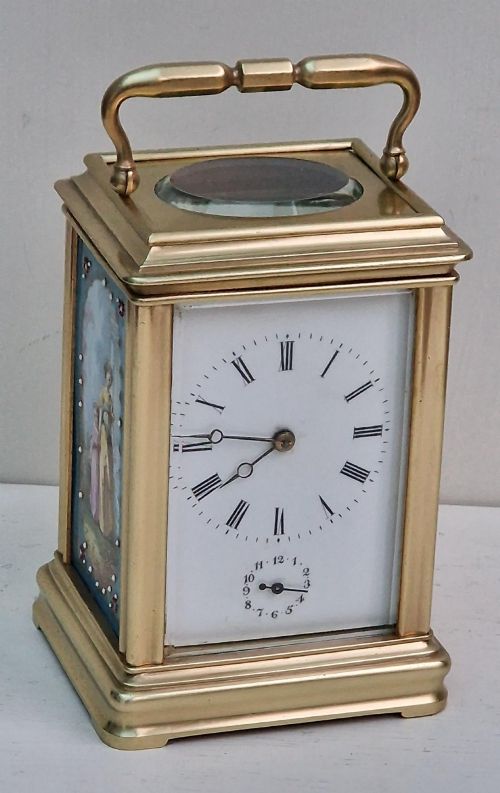
Makers constructed these timepieces primarily using cast brass, gilt brass, and gilt bronze, frequently mounting bevelled glass panels to showcase the intricate gear trains. Cases often feature detailed engraving, champleve enamel work, or porcelain panels inserted into the metal framework.
Movements relied on mechanical escapements, with many pieces incorporating striking or repeating mechanisms housed within gorge cases, doucine cases, or architectural frames. Wood variants such as mahogany incorporated inlaid details, while later twentieth-century examples experimented with Bakelite and electric movements.
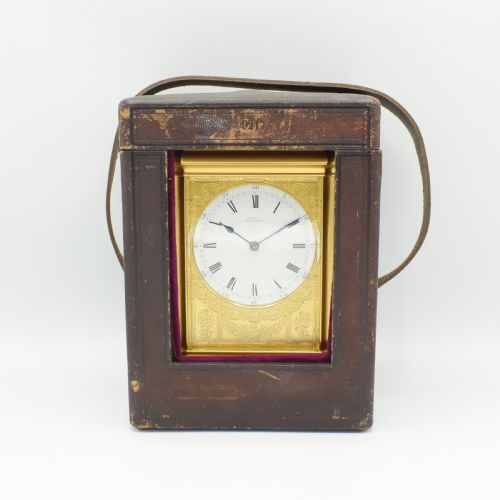
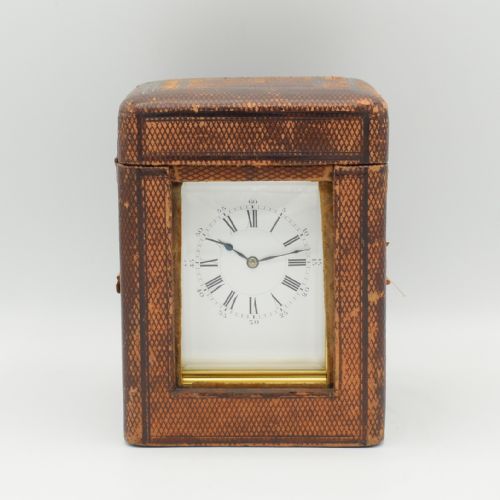
Several clocks include original travel cases, suggesting their previous owners took their timekeeping very seriously on nineteenth-century roads.
Distinguishing quality
Quality in these timepieces rests on the crispness of the brass casting and the depth of the hand-engraving across the case. Finer examples feature heavy, thick gauge brass, fully engraved panels rather than plain polished surfaces, and high-specification movements that include repeating complications.
The integration of decorative elements, such as multi-piece enamel dials, hand-painted porcelain panels, and matching travel cases, elevates certain pieces above standard production models. The weight of the housing and the precision of the glass bevelling similarly separate standard items from superior workshop output.
Henri Jacot·Walker and Hall·Pickford of London·T. Martin and Co·Maurice and Marcel Moulin Favre-Bulle·Jaz
The Vintage French Brass Clock Glossary
- Carriage clock
- A portable spring-driven timepiece originally designed for travelling officers and wealthy travellers. These clocks feature heavy brass cases with glass panels and a folding handle on top.
- Gorge case
- A specific style of carriage clock housing characterised by stepped mouldings at the top and bottom of the brass frame. It represents a classic French housing design from the nineteenth century.
- Clock garniture
- A set comprising a central mantel clock accompanied by matching side ornaments such as urns or candelabra. They were popular for decorative symmetry on nineteenth-century fireplaces.
- Champleve enamel
- A technique where troughs are dug into the surface of the brass and filled with vitreous enamel before firing and polishing. This adds colourful decorative patterns to the clock case.
Vintage French Brass Clock: Frequently Asked Questions
How do I wind a carriage clock?
Most mechanical carriage clocks utilise a specific key to wind the mainspring through holes in the backplate or underneath the base. Care must be taken not to overwind the movement.
Repeating mechanisms should be operated gently via the button on top, which sounds the last hour or quarter-hour on demand.
Where should I place a heavy brass mantel clock?
These clocks require a stable, level surface such as a heavy sideboard, mantelpiece, or dedicated shelf. A solid foundation prevents vibrations that can disrupt the pendulum or balance wheel.
Keeping them out of direct sunlight and away from damp areas protects the delicate enamel dials and gilt surfaces.
How do I identify the period of a French clock?
Dating relies on stylistic clues, case architecture, and any engraved signatures or serial numbers on the movement backplate. Victorian and late nineteenth-century pieces often display heavy casting and specific escapement types.
Later Edwardian and Art Deco examples shift toward streamlined forms, alternative materials like Bakelite, and early electric movements.