
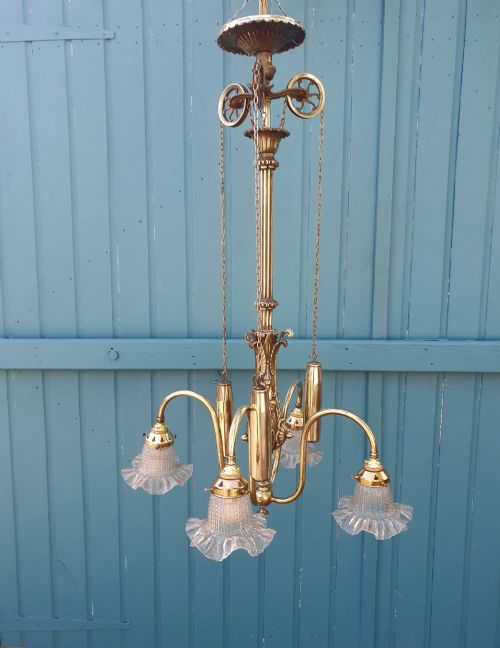


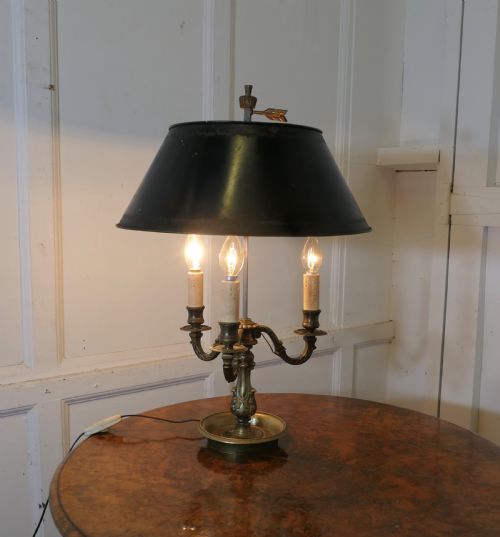


Vintage French Adjustable Light
These vintage french adjustable light pieces bring working French character to a room through brass, toleware, and pivoting arms.
Vintage French Adjustable Light
When you search for a vintage french adjustable light, you are looking at functional metal lighting designed to pivot, rise, or direct its beam where it is needed. These pieces include floor lamps, desk lamps, and table lamps alongside ceiling fixtures.
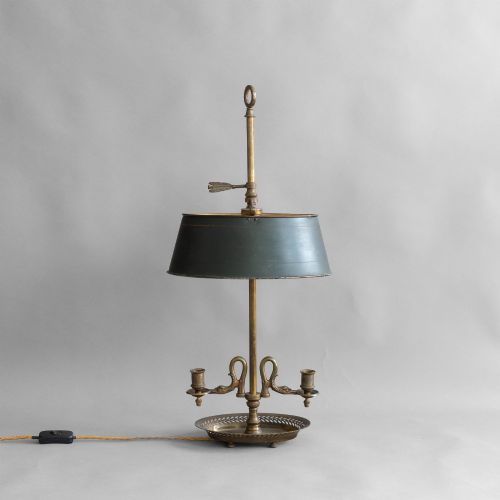
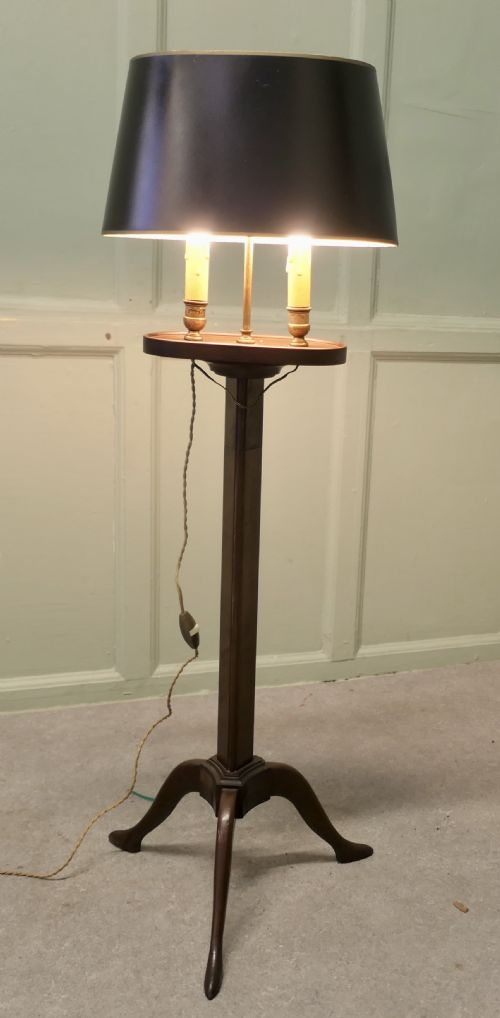
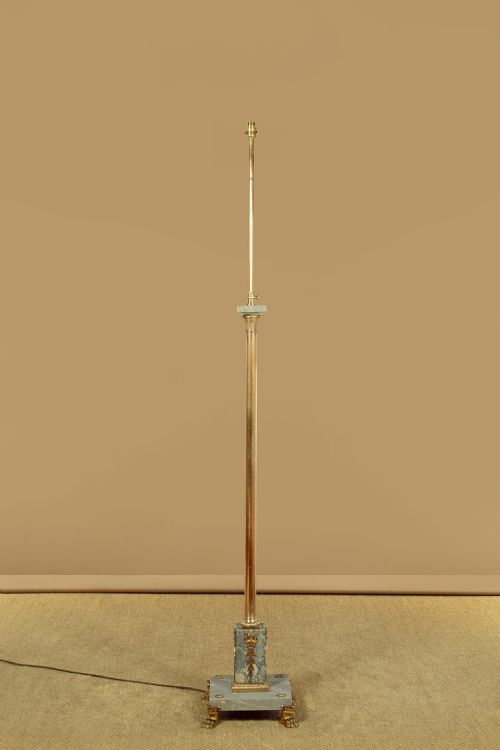
The versions you are most likely to meet on this page span the nineteenth century through the mid twentieth century, drawing on French Empire, Art Deco, and industrial styles. Brass and toleware dominate the forms, frequently seen in bouillotte and rise and fall configurations.
Makers such as Pirouette appear among the chrome desk lights, while traditional bouillotte designs utilise painted metal, tole, and multi-armed brass holders. The selection covers everything from Edwardian ceiling lights to heavy nineteenth century desk fixtures.
How they were made
Brass and metal form the structural backbone of these lights, providing the weight and rigidity required for adjustable joints and heavy shades. Chrome appears in later twentieth century pieces, offering a sleek alternative to older patinated metal.
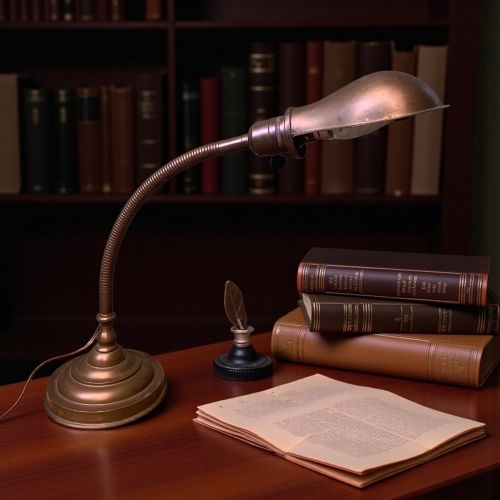
Some desk lamps feature adjustable shades originally designed to keep card players focused on their hands rather than the room.
What varies in quality
The distinction between standard production and finer work lies in the heft of the cast brass and the smoothness of the adjustable mechanisms. Rise and fall pulleys and pivoting brass arms operate with a reassuring weight in superior examples.
The depth and hand-painted finish of the toleware shades separate basic utility lamps from more decorative bouillotte pieces. Original patination on the metal surfaces also dictates the visual authority of the finished object.
Pirouette
The Vintage French Adjustable Light Glossary
- Bouillotte lamp
- A traditional French table lamp featuring a central standard, multiple candle arms, and an adjustable shade that moves up and down the stem. This design originated to light card games.
- Rise and fall
- A mechanical ceiling or hanging light system using pulleys or counterweights to adjust the height of the shade. It allows the light source to be lowered over a table or raised to illuminate a room.
- Toleware
- Painted or lacquered metalware, commonly tin or steel, used extensively for lamp shades in green, red, and gold finishes. It provides a durable, colourful surface that contrasts with polished brass.
- French Empire
- A neoclassical design style characterised by classical motifs, military symbols, and stately brass work. It heavily influences nineteenth century floor and table lamps on this page.
- Art Deco
- A twentieth century style marked by streamlined geometry and modern materials like chrome. Pieces from this era discard ornate classical foliage in favour of clean, functional lines.
Vintage French Adjustable Light: Frequently Asked Questions
What is a bouillotte lamp?
A bouillotte lamp is a traditional French desk or table lamp featuring multiple candle arms and a central shaft that holds an adjustable shade.
The sliding shade allows the user to direct the illumination downwards onto a desk surface or card table while keeping the light source out of the eyes.
How do rise and fall lights work?
Rise and fall fixtures use a pulley mechanism or counterweight system housed in the ceiling rose or central stem.
This setup lets you pull the lamp down closer to a dining table or push it upward when you need broader ambient room illumination.
What materials are typical for these lights?
Brass and toleware form the core materials of these French pieces, often combined to create contrasting metallic and painted surfaces.
Chrome appears in twentieth century designs alongside glass elements, while nineteenth century examples rely heavily on heavy cast brass and painted metal.
Are these lamps wired for modern use?
Many vintage lamps arrive with historical wiring that requires updating to meet current electrical safety standards before regular daily use in a home.
A qualified electrician can easily rewire the brass standards and internal channels without altering the exterior metalwork or original patination.