






Vintage Framed Silhouette
These vintage framed silhouette pieces capture personal likenesses in profile, offering a direct window into past lives.
Vintage Framed Silhouette
A vintage framed silhouette presents a profile portrait mounted behind glass within a wooden or gilt frame, capturing likenesses through cut paper, ink, or watercolour. These works span the eighteenth, nineteenth, and twentieth centuries, reflecting changing portraiture tastes from Georgian precision to Victorian sentimentality.
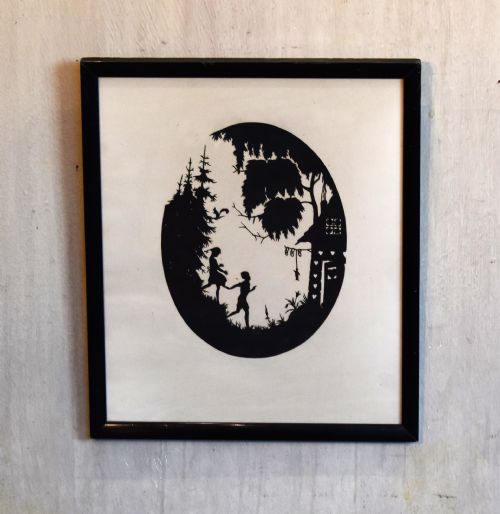
Buyers meet examples ranging from individual gentlemen and ladies to family groups with animals, alongside maritime scenes and narrative subjects like Gothic tales. The selection includes cut-paper techniques augmented with watercolour details as well as painted profiles bearing artist signatures.
Originating across periods including Regency, Victorian, and Art Nouveau, these profile portraits appear in various framing materials such as rosewood and giltwood. The form ranges from simple bust representations to full-length studies and panoramic compositions.
Materials and construction
The construction relies on paper profiles shaped by scissors or pigments applied with ink and watercolour, often mounted against a contrasting background. Artisans housed these delicate likenesses behind protective glass to prevent surface degradation from dust and moisture.
Frames utilise wood, gilt wood, giltwood, and gold leaf, occasionally featuring fret cut designs or rich rosewood grains. These surrounds provide structural support while enhancing the visual depth of the enclosed profile miniature.
Vintage Framed Silhouette Retail Price Guide 2026
Typical asking prices for vintage framed silhouette among the pieces listed under this phrase on Sellingantiques today, from the lower quarter to the upper quarter. They describe what is for sale here now, not the wider market.
Children posed alongside horses and even Hansel and Gretel found their way into these historic profile portraits.
Distinctions in quality
The refinement of the cutting or brushwork dictates the distinction between standard profiles and superior examples, where fine details like hair strands and lace collars emerge with crisp precision. Signed works and attributions to known practitioners elevate the standing of a piece significantly.
The preservation of the original paper, ink, and framing elements determines the integrity of the object. High-grade pieces retain their early glass and untarnished gilt mounts, maintaining the harmonious balance intended by the maker.
Bateman·Augustin Edouart·Alfred Darbyshire·John Smith of Edinburgh
The Vintage Framed Silhouette Glossary
- Cut-Paper
- A method where the likeness is snipped directly from paper using scissors or a small knife. Artists achieved remarkable precision in rendering costume and hair through this careful manual process.
- Giltwood
- Wood that has been covered with a thin layer of gold leaf or gold paint. This finish creates a reflective, ornate border suited to framing formal portrait miniatures.
- Regency
- An architectural and design period spanning the early nineteenth century. Pieces from this era often exhibit clean neoclassical lines and refined execution.
- Victorian
- A style period associated with the reign of Queen Victoria, marked by diverse revivals and sentimental domestic portraiture. Works from this time frequently capture family groups and narrative scenes.
Vintage Framed Silhouette: Frequently Asked Questions
What is a silhouette portrait?
A silhouette portrait is a profile likeness rendered in solid black or dark tones against a lighter background. These depictions focus entirely on the outer contour of the subject's face and head.
Artists created them through cutting paper or applying ink and paint to capture historical individuals before the widespread adoption of photography.
How do I date a silhouette?
Dating relies on examining the costume, hair style, and framing materials of the piece. Regency examples often feature distinct high-waisted dress and delicate gilt frames, while Victorian pieces show different mounting styles.
Signatures, inscriptions on the reverse, and construction methods also help place the artwork within a specific nineteenth or twentieth-century decade.
Where should I hang these?
These framed works suit small wall spaces, hallways, or groupings within a gallery wall arrangement. Their modest scale allows them to fit into intimate interior settings alongside other antique art.
Keep them away from direct sunlight to protect the fragile paper and watercolours from fading over time.
What frames are typical?
Common surrounds include rosewood, gilt wood, and plain dark wood frames that contrast with the light background of the profile. Many retain their original glass and backing materials.
The choice of frame often reflects the aesthetic of the period in which the silhouette was produced.