






Vintage Forest Scene
These vintage forest scene works capture wooded landscapes across various twentieth-century periods and styles, offering buyers evocative glimpses into natural habitats.
Vintage Forest Scene
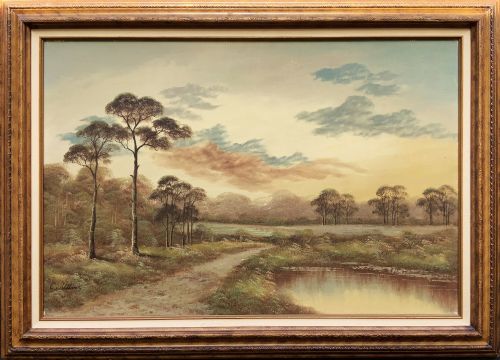
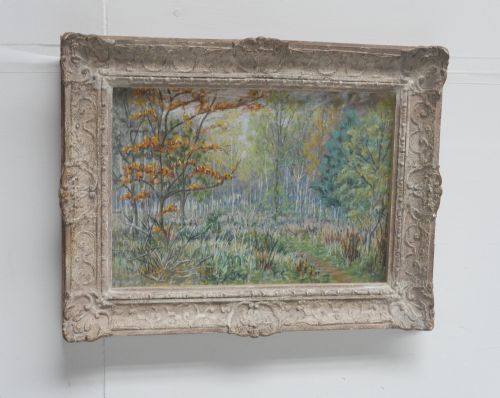
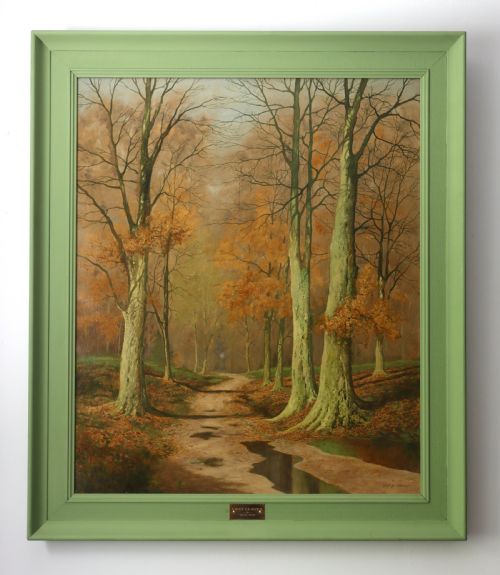
When buyers search for a vintage forest scene, they encounter oil paintings, watercolours, and pastel works depicting trees, woodlands, and rural nature. The selections range from nineteenth-century realism to mid-century impressionism, capturing wooded landscapes through different artistic movements.
The pieces on this page span the early twentieth century, the nineteen-fifties, and nineteen-sixties, alongside nineteenth-century examples. Common subjects include woodland lakes, cattle in British landscapes, and bluebell woods rendered in various painting mediums.
Materials and techniques
Artists create these forest scenes using oil paint applied to canvas and wood panels, alongside watercolours and pastels on paper. Many works employ traditional brushwork to build depth and texture within the woodland foliage and natural lighting.
Framing often involves gilt wood surrounds that complement the canvas or paper supports. The application of pigment ranges from detailed realism to looser impressionistic strokes, defining the character of each era.
Vintage Forest Scene Retail Price Guide 2026
Typical asking prices for vintage forest scene among the pieces listed under this phrase on Sellingantiques today, from the lower quarter to the upper quarter. They describe what is for sale here now, not the wider market.
The listings feature oil on canvas, watercolour, and pastel works across nineteenth-century and mid-century periods.
Variations in quality
Quality in these artworks depends on the dexterity of the brushwork and the artist's ability to capture natural light and atmosphere within the woodland setting. Listed examples bear signatures from identified painters or remain anonymous, which influences the recognition of the piece.
The handling of the medium, whether oil on canvas or watercolour on paper, determines the preservation of detail and vibrancy in the foliage and forest floor. Structural integrity of the original canvas and wood supports also distinguishes finer examples.
C Williams·William H Myers·David Watts·James Proudfoot·Rowland Henry Hill·Charles James Adams·J McIntyre
The Vintage Forest Scene Glossary
- Impressionism
- A style of painting that focuses on capturing the general impression of a scene, especially using shifting light. This approach appears frequently in mid-century forest landscapes.
- Watercolour
- A paint consisting of pigment suspended in a water-based solution, typically applied to paper. Several woodland scenes utilise this medium for delicate atmospheric effects.
- Gilt
- A gold-coloured application used to finish wooden picture frames. It adds a decorative border around canvas and paper works.
- Pastel
- A dry painting medium in the form of a stick, made of pure powdered pigment and a binder. Artists use pastels to create soft textures in woodland depictions.
Vintage Forest Scene: Frequently Asked Questions
What periods do these forest paintings cover?
The available artworks span from the nineteenth century through the early twentieth century, extending into the nineteen-fifties and nineteen-sixties. Mid-century modern and impressionist movements are well represented alongside traditional realism.
Buyers will find that each era brings distinct stylistic approaches to depicting trees, woodlands, and rural nature.
What materials were used for these artworks?
Makers utilised oil paint on canvas and wood panels, as well as watercolour and pastel on paper. Gilt wooden frames frequently accompany the canvas works.
These materials reflect the standard artistic practices of the nineteenth and twentieth centuries.
Are most of these paintings signed by artists?
Several pieces feature signatures from known painters such as William H Myers, James Proudfoot, and Charles James Adams. Other works remain unsigned by the original creator.
Attribution varies across the selection of oil paintings and watercolours.
How do I care for antique oil and watercolour paintings?
Oil paintings on canvas and watercolours on paper benefit from stable indoor environments away from direct sunlight and excessive moisture. Proper framing helps protect the pigments and supports from atmospheric degradation.
Avoiding extreme temperature fluctuations preserves the integrity of the canvas and paper over time.