





Vintage Forest Painting
A vintage forest painting brings the deep quiet of woodland shade and ancient trees directly onto your wall.
Vintage Forest Painting
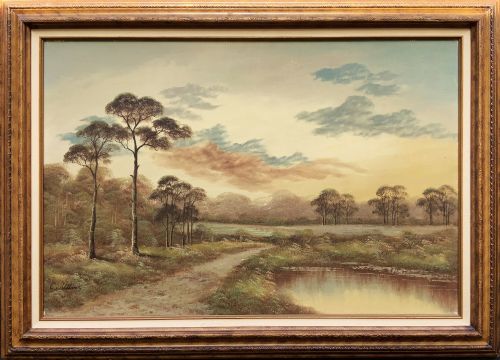
A vintage forest painting captures the mood of woodland and tree-filled landscapes, spanning the nineteenth century through to the mid-twentieth century. Buyers encounter works executed in oil on canvas, oil paint on panel, and delicate watercolours on paper. These pieces range from early twentieth-century British landscapes to alpine folk art and mid-century modern interpretations.
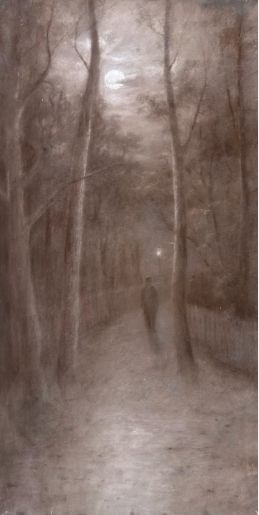
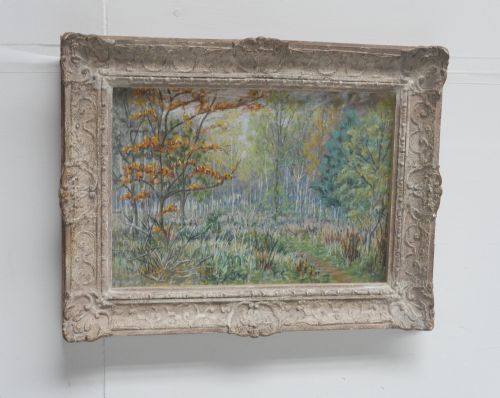
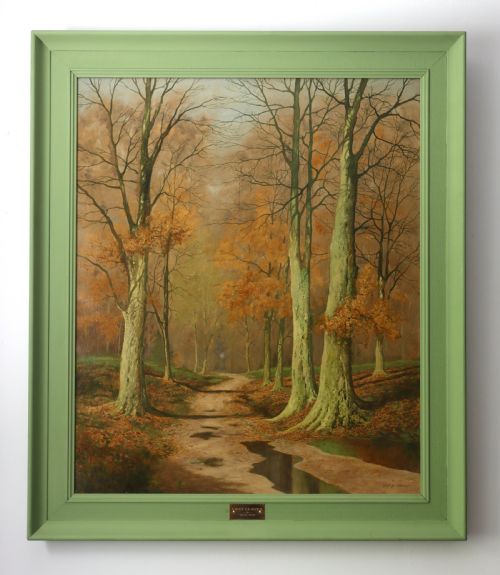
The most common formats on this page include oil paintings on canvas and framed watercolours depicting shaded groves, bluebell woods, and winter trees. Works often bear signatures from listed painters and carry stylistic influences ranging from impressionism and tonalism to nineteenth-century realism. Subjects frequently feature cattle in woodland, rustic cottages, and paths winding beneath dense canopies.
Materials and Techniques
Artists painted these works primarily using oil paint on canvas or board, alongside watercolours and pastel pigments applied to paper and canvas surfaces. The application of oil paint ranges from smooth, blended glazes to thick, textured impasto that builds up the foliage and bark of trees. Watercolours rely on washes of pigment on paper to capture the soft light filtering through winter or summer branches.
Support materials include stretched canvas secured to wooden stretcher frames, heavy paper sheets, and wooden panels. Many of these artworks remain in their original or period frames constructed from wood, sometimes accented with gesso mouldings.
Vintage Forest Painting Retail Price Guide 2026
Typical asking prices for vintage forest painting among the pieces listed under this phrase on Sellingantiques today, from the lower quarter to the upper quarter. They describe what is for sale here now, not the wider market.
Listings feature works created between the nineteenth century and the nineteen-eighties, utilising oil, watercolour, pastel, and charcoal.
Distinctions in Quality
Quality in these woodland scenes rests upon the artist's ability to handle light, depth, and atmospheric perspective within the trees. Superior examples demonstrate a careful balance of shadow and luminosity that gives the forest floor and canopy a convincing sense of space.
The handling of the medium itself separates standard decorative works from accomplished paintings. Finer pieces show assured brushwork in rendering foliage and branches, whereas lesser examples rely on stiff repetition or muddy colour mixing.
William H Myers·Thomas Bromley Blacklock·David Watts·James Proudfoot·Rowland Henry Hill·Charles James Adams·Ernest Higgins Rigg·Hans Kappel Øvre
The Vintage Forest Painting Glossary
- Impressionism
- A nineteenth-century painting style focusing on the visual impression of the moment, particularly shifting light and open brushwork. Artists working in this manner prioritized light effects over rigid detail.
- Tonalism
- An aesthetic style where paintings are dominated by dark, neutral tones and atmospheric mist. This approach creates a quiet, contemplative mood within landscape scenes.
- Impasto
- Paint applied thickly to a canvas or panel so that it stands out from the surface. This technique adds physical texture to the depiction of tree bark and rough ground.
- Watercolour
- A paint consisting of pigment suspended in a water-based solution, applied to paper. It allows for translucent washes of colour that mimic soft daylight.
- Provenance
- The documented history of a painting's ownership and origin. Clear provenance helps verify the attribution of signed works.
Vintage Forest Painting: Frequently Asked Questions
How do I date a vintage forest painting?
Dating relies on stretcher construction, canvas types, artist signatures, and framing materials. Stylistic clues such as impressionist brushwork or mid-century palettes also help narrow down the decade.
Examining the back of the canvas or panel often reveals old gallery labels, exhibition stamps, or handwritten inscriptions that provide specific chronological markers.
Are these paintings usually framed?
Many works retain their period wooden frames, which can range from simple mouldings to ornate gesso designs. These frames often reflect the aesthetic preferences of the decade in which the painting was created.
Collectors sometimes choose to preserve the original framing for authenticity, even if minor chips or surface wear are visible on the wood.
What is the difference between oil and watercolour forest scenes?
Oil paintings use thick pigments on canvas or wood panels, offering rich textures and deep colour saturation. Watercolours use translucent washes on paper, creating lighter, more luminous effects.
Oils are generally more robust and traditionally required protective glass less often than paper-based watercolours.
How do I care for an antique oil painting?
Keep the canvas away from direct sunlight, damp environments, and sudden temperature fluctuations to prevent cracking in the paint layer. Dust the surface very gently with a dry, soft brush when necessary.
Avoid using water or chemical cleaners on the paint surface, and consult a professional conservator if the varnish yellows or cleaning becomes essential.