

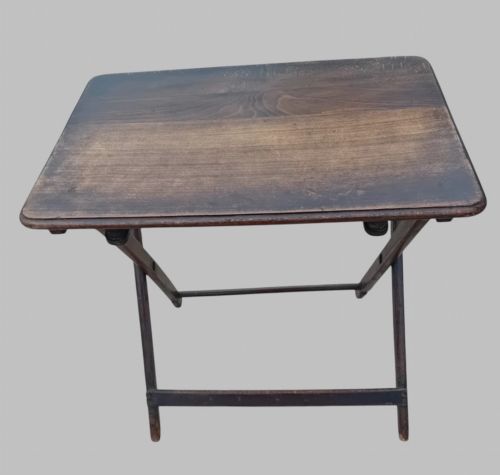
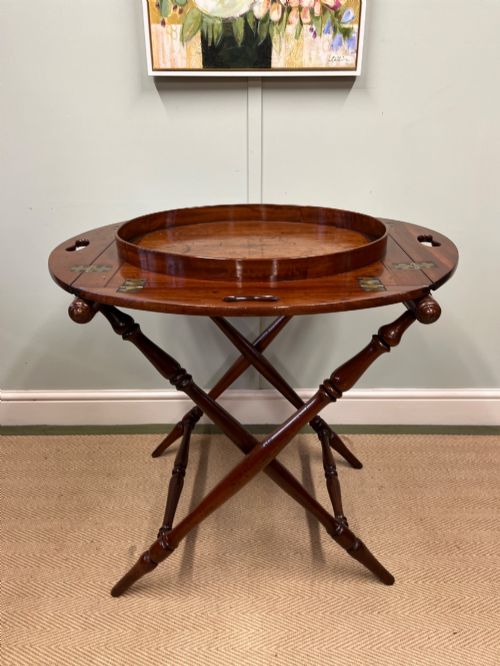
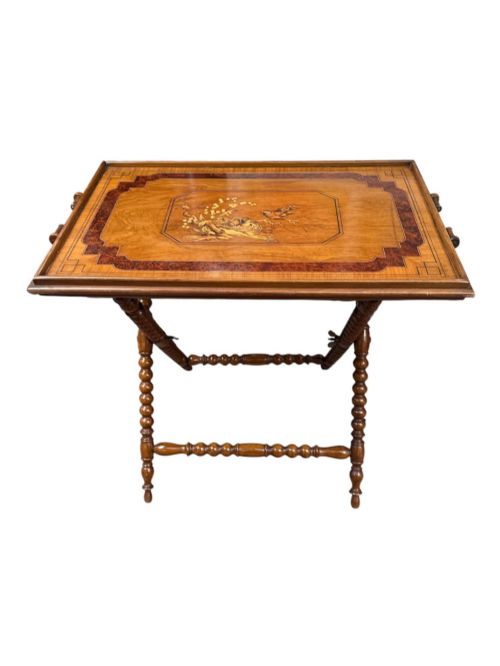
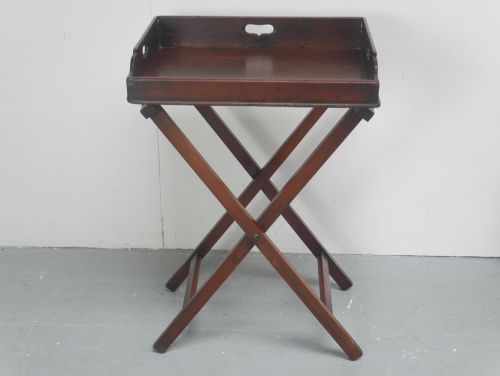


Vintage Folding Tray Table
These vintage folding tray table pieces offer a portable surface that packs away flat, serving as an adaptable piece for drinks or serving.
Vintage Folding Tray Table
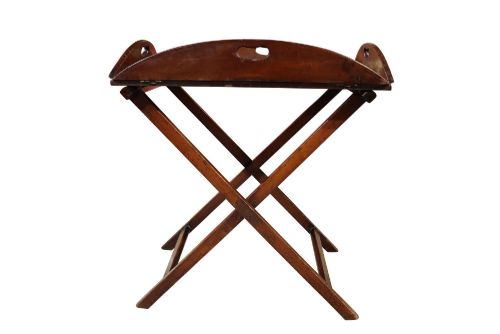
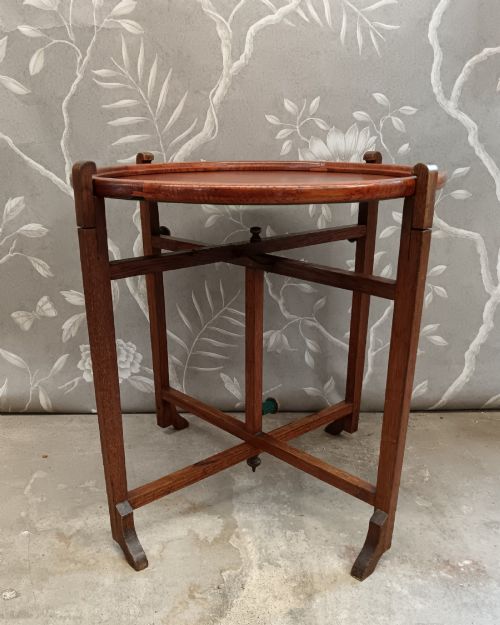
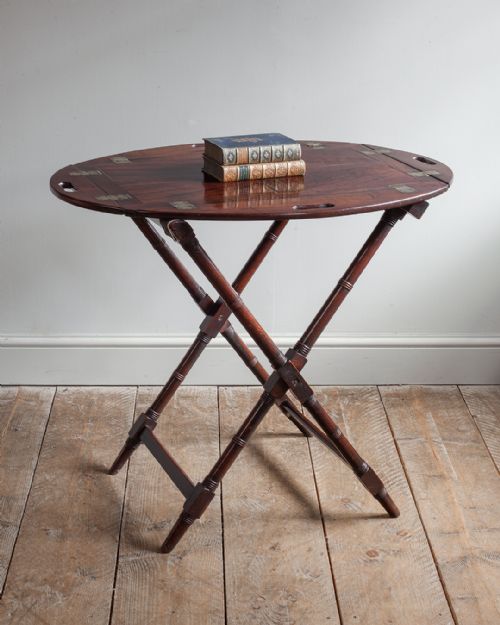
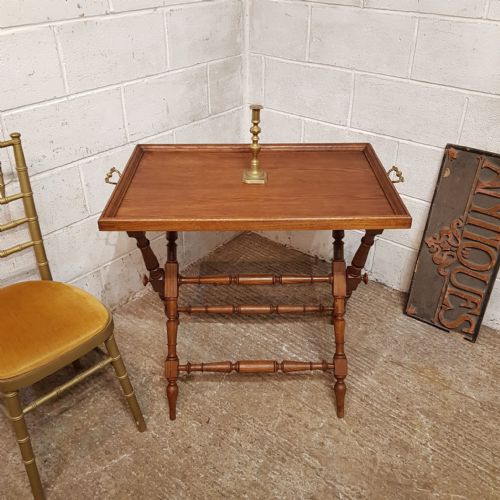
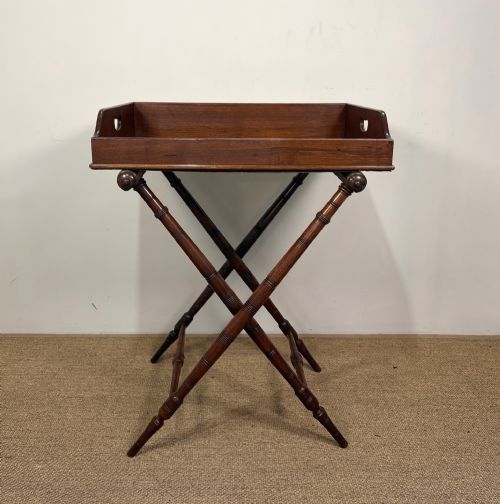
When you search for a vintage folding tray table, you find a collection of pieces designed for portable service, primarily taking the form of butler trays resting on folding stands, coaching tables, and occasional tables. These items span from the eighteenth century through the Victorian era and into the early twentieth century, reflecting practical domestic utility.
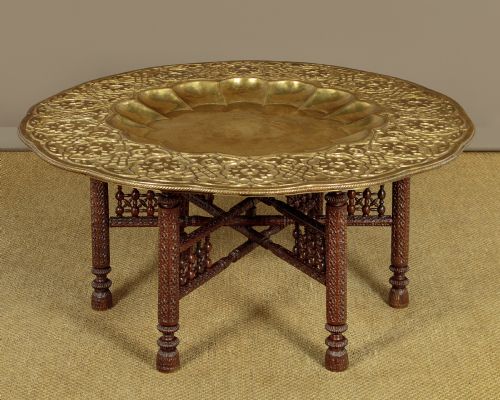
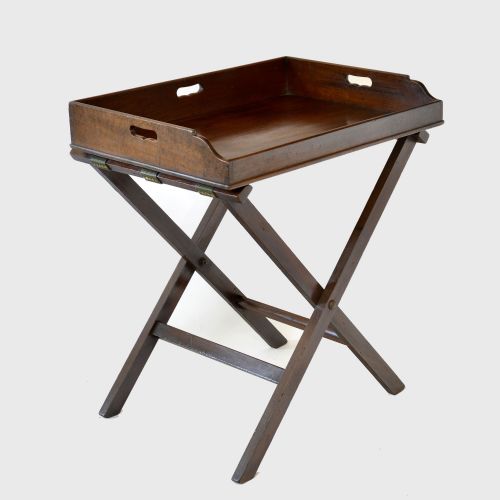
The version you meet most often on this page is the mahogany or oak butler tray on a folding stand, often originating in the nineteenth century or the Georgian period. Alongside these traditional British serving pieces, you encounter campaign styles, bamboo-turned frames, and decorative Anglo-Indian or Persian tables featuring brass or copper tops.
Makers and craftsmen adapted these designs for various rooms, resulting in side tables, coffee tables, and two-tier dumb waiters that fold away when not in use. The emphasis across all these forms remains on mobility, stability, and the ability to lift the tray clear of its support.
How They Were Made
Joiners and cabinet makers constructed the trays and stands predominantly from timbers such as mahogany, oak, walnut, beech, and assorted hardwoods. Mahogany and oak dominate the domestic British examples, selected for their structural strength and ability to form raised edges that kept glasses and china secure during transit.
Folding mechanisms rely on clever scissor actions, hinged X-frames, and collapsible wooden supports that allow the entire stand to pack flat. Metal components such as brass hinges and pins provide the articulation points, while decorative tables incorporate sheet brass or copper tops fastened to folding wooden bases.
Vintage Folding Tray Table Retail Price Guide 2026
Typical asking prices for vintage folding tray table among the pieces listed under this phrase on Sellingantiques today, from the lower quarter to the upper quarter. They describe what is for sale here now, not the wider market.
One Swedish table arrived bearing the provenance of Bäckaskog Castle, proving that even folding furniture occasionally travels in royal circles.
What Varies in Quality
The distinction between a standard utility piece and a superior version lies in the choice of timber and the crispness of the carpentry in the tray gallery and folding hinge. Better examples feature finely figured mahogany or quarter-sawn oak, with hand-cut dovetails or neat finger joints securing the tray corners.
Proportion and stability separate the finer tables from heavier, clumsier equivalents. A top-tier table sits level when open, with a tray that fits snugly onto its stand without excessive lateral movement, demonstrating precise alignment between the supporting frame and the removable top.
The Vintage Folding Tray Table Glossary
- Butler's Tray
- A shallow wooden tray with hinged or fixed sides, designed to be lifted off a folding stand for serving food and drink. These trays often feature cut-out hand grips along the edges for easier carrying.
- Campaign Style
- Furniture designed for military officers on the move, characterised by folding frames, brass corners, and removable parts for compact packing. These pieces prioritize portability without sacrificing structural integrity.
- Sorrento Ware
- Wooden objects decorated with intricate micro-mosaic marquetry, produced in the Italian town of Sorrento during the nineteenth century. They display multicolored geometric or pictorial wood veneers.
- Dumb Waiter
- A tiered serving table used to hold dishes and glasses without requiring servants present in the room. Folding versions allow multiple circular or shaped trays to collapse for storage.
Vintage Folding Tray Table: Frequently Asked Questions
How do you fold these tables?
Most stands operate on a scissor mechanism or hinged cross-legs that pivot inward to lie flat. You simply lift the tray off the top, fold the legs together, and slide the assembly away.
Certain campaign and occasional styles utilise interlocking wooden members or pinned joints that pull apart easily without tools.
Are these tables sturdy enough for daily use?
Yes, despite their folding nature, these pieces were built from dense hardwoods like oak and mahogany to endure heavy service. The rigid joinery on the stands provides reliable support for daily placement of lamps, books, or tea sets.
Checking that the hinges and pivot points remain secure ensures the table maintains its stability during everyday placement.
How do I date an antique tray table?
Dating relies on timber selection, construction methods, and hardware styling, with Georgian and Victorian pieces showing distinct hand-tool marks and joinery techniques. Earlier tables often feature solid mahogany with pegged joints, while twentieth-century versions incorporate lighter hardwoods and standardised metal hinges.
Matching the design characteristics to specific periods like the Regency or Edwardian era helps narrow down the decade of production.