



Vintage Folding Privacy Screen
A vintage folding privacy screen divides a room and shields a corner with hinged panels of wood, leather, or fabric.
Vintage Folding Privacy Screen
A vintage folding privacy screen serves to partition spaces and create secluded areas within a larger room. These pieces appear in configurations ranging from three to six hinged panels.
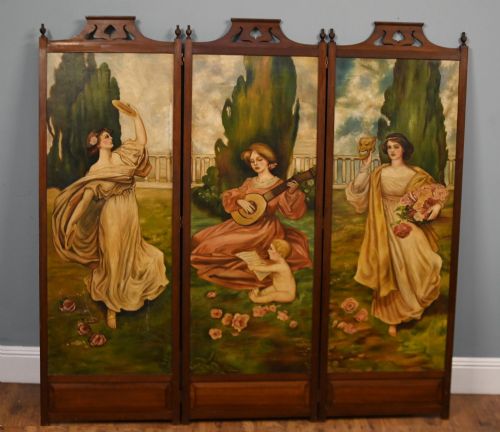
The selections on this page span the Victorian era through the early twentieth century. Examples include French walnut designs, Edwardian mahogany frames, and Chinese lacquer work.
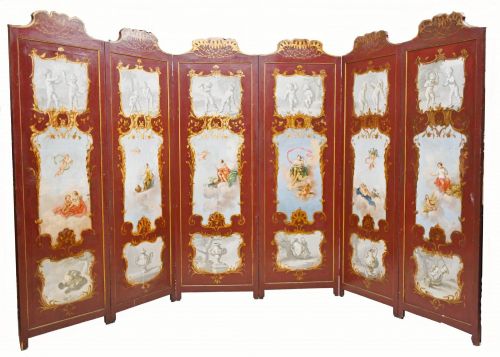
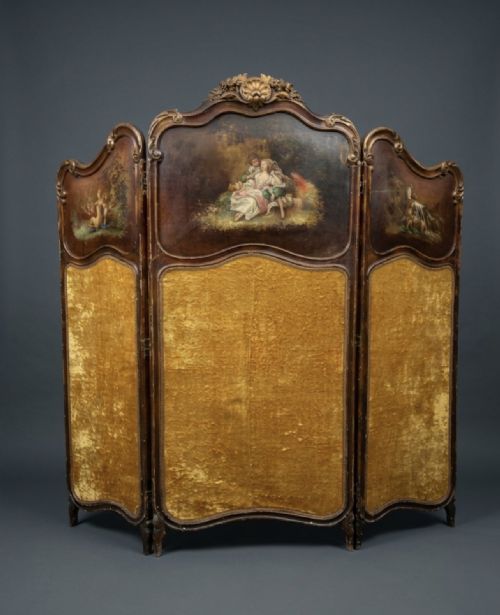
Makers utilised various regional styles, incorporating Anglo-Indian fretwork, French painted scenes, and Scandinavian painted finishes. Each piece functions as both a mobile partition and a decorative wall.
How they were made
Carpenters constructed the structural frames from timbers such as mahogany, oak, walnut, and hardwood. These frames are joined with hinges to allow multi-directional folding.
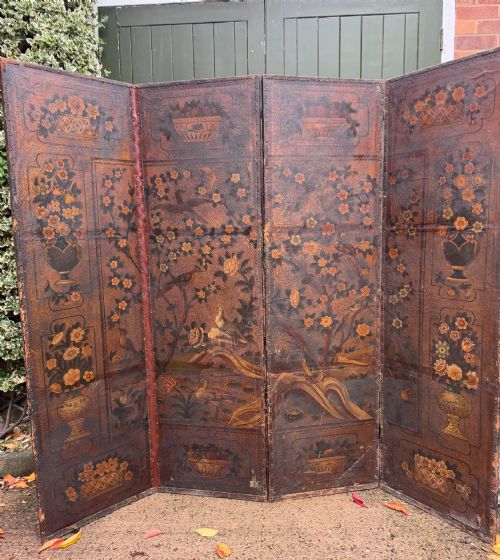
Panels incorporate diverse infills including hand-painted leather, needlepoint fabric, glass, and carved wood. Lacquered surfaces and inlaid details complete the decorative construction.
Vintage Folding Privacy Screen Retail Price Guide 2026
Typical asking prices for vintage folding privacy screen among the pieces listed under this phrase on Sellingantiques today, from the lower quarter to the upper quarter. They describe what is for sale here now, not the wider market.
Debating societies utilised them; one listed oak frame once sheltered the politicians and debaters of Eton College.
What varies in quality
The standard of carving and the complexity of painted or inlaid decoration distinguish the panels. Fretwork precision and the preservation of original fabric or lacquer dictate the visual weight.
Hardware integrity and the smoothness of the hinges affect how the panels move and stand. Timber selection, from plain pine frames to figured walnut or mahogany, marks the grade.
The Vintage Folding Privacy Screen Glossary
- Modesty screen
- A low folding screen originally used to shield a person while dressing or washing. These compact pieces typically feature painted or fabric panels.
- Chinoiserie
- European imitation or interpretation of Chinese and East Asian artistic traditions. This style appears frequently on lacquered and painted room dividers.
- Scrap work
- A decorative technique using pasted paper cutouts, engravings, or prints applied to a surface and varnished. Screens decorated this way capture Victorian domestic pastimes.
- Fretwork
- Ornamental perforated woodwork created by cutting patterns through the board. Indian and Anglo-Indian screens often utilise this technique for upper panels.
Vintage Folding Privacy Screen: Frequently Asked Questions
How were folding privacy screens used?
These screens divided large rooms into smaller zones, created dressing areas in bedrooms, and blocked drafts near doors or windows. They offered a flexible way to alter interior layouts without building permanent walls.
In the Victorian and Edwardian periods, smaller screens also served as vanity dividers in dressing rooms or shielded specific seating areas from the fireplace heat.
What materials are common on these screens?
Frames consist principally of hardwoods such as oak, mahogany, walnut, and ebonised timber. Panel inserts vary widely between wood, leather, glass, and fabric.
Asian examples frequently feature black lacquer and hardstone mounts, while European models often showcase painted pastoral scenes, needlepoint, or scrap work paper.
How can I tell the period of a screen?
Look to the decorative style and construction methods to date the piece. Arts and Crafts examples often display ebonised oak and William Morris fabrics, whereas Victorian pieces frequently use leather or heavy walnut.
Turn-of-the-century items incorporate specific regional aesthetics, from Chinese Republic era lacquer to French Rococo revival curves and Edwardian mahogany inlay.