




Vintage Folding Clock
A vintage folding clock is a portable timepiece designed to pack into its own protective case, offering compact utility and fine craftsmanship for travel or desk use.
Vintage Folding Clock
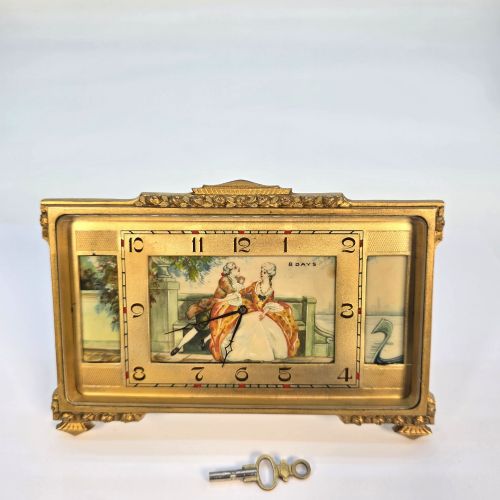
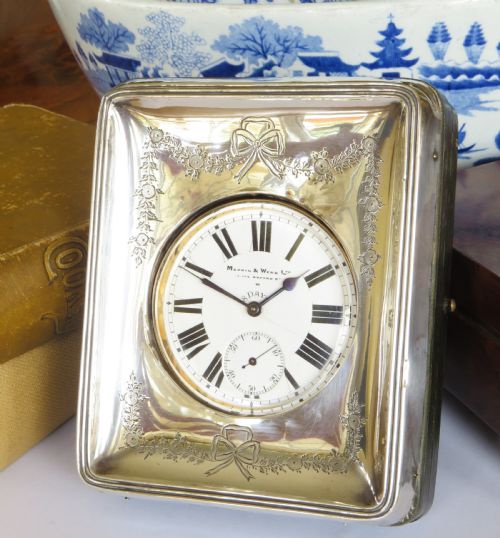
A vintage folding clock represents a range of portable timepieces and scientific instruments designed to pack away securely for travel or desk use. Buyers searching for a vintage folding clock will encounter diverse forms spanning several centuries, from pocket travel watches and silver cases to carriage clocks and novelties shaped like prayer books.
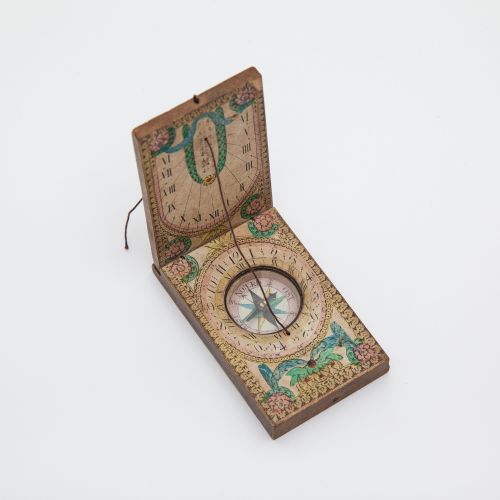
The selections available on this page run from eighteenth-century maritime sundials and nineteenth-century French gilt brass carriage clocks through to Art Deco chrome-plated travel pieces and mid-century Swiss designs. Forms also extend into metamorphic writing desks equipped with timekeeping elements, reflecting the intersection of portable utility and domestic refinement.
How they were made
Materials recorded across these pieces combine precious and industrial metals with protective outer layers, prominently featuring brass, silver, gilt brass, chrome plating, and glass alongside leather and paper finishes. Makers employed precision mechanics housed within folding or lidded enclosures to safeguard the delicate dials during transit.
Casing techniques range from fully engraved brass frames and hallmarked silver folding cases to specialised enclosures shaped as books, integrating travel mechanisms with decorative artistry suited to the period of production.
Vintage Folding Clock Retail Price Guide 2026
Typical asking prices for vintage folding clock among the pieces listed under this phrase on Sellingantiques today, from the lower quarter to the upper quarter. They describe what is for sale here now, not the wider market.
One exceptionally clever travel clock masquerades entirely as an innocent prayer book.
What varies in quality
Quality in these pieces rests upon the crispness of metalwork engraving, the precision of the inner movement, and the integrity of the folding mechanism. Superior examples display robust hinge construction, refined dial legibility, and high-grade materials such as solid silver or finely chased gilt brass.
Lesser variations show simpler housing structures and standard plated finishes, whereas top-tier pieces incorporate complex case designs, multi-jewel movements, and signed maker provenance that elevates their standing among collectors.
Mappin and Webb·J.C Vickery of London·Harrods of London·Vogel
The Vintage Folding Clock Glossary
- Carriage clock
- A small, spring-driven clock designed for travel, typically featuring a rectangular brass case with glazed sides and a carrying handle. These pieces often incorporate an eight-day movement.
- Gilt brass
- Brass that has been coated with a thin layer of gold, providing a rich, golden appearance while protecting the underlying metal from tarnishing. It appears frequently on nineteenth-century carriage cases.
- Fob purse watch
- A small timepiece designed to be carried within a fitted purse or attached to a fob, often combining fine watchmaking with leather or precious metal housing. The Swiss examples utilise multi-jewel movements.
- Diptych sundial
- A portable instrument featuring two small panels hinged together, containing a sundial and a magnetic compass for telling time while travelling. The eighteenth-century versions utilise brass and paper elements.
- Hallmarked silver
- Precious metal stamped with official marks indicating purity, maker, and assay office, commonly found on twentieth-century folding travel cases. This stamp confirms the quality of the silver housing.
Vintage Folding Clock: Frequently Asked Questions
What is a folding clock?
A folding clock is a portable timepiece housed in a protective case that collapses, folds, or closes to safeguard the dial during transit. These items were designed for travellers, desks, and bedside use.
Examples range from silver pocket travel watches to carriage clocks and leather-bound novelties, allowing owners to carry accurate time reliably.
How do I date a folding clock?
Dating relies on hallmarks, materials, architectural styles, and mechanical signatures visible on the case or dial. Art Deco pieces show geometric chrome styling, while eighteenth-century items utilise brass and paper sundials.
Maker signatures and presentation inscriptions also provide precise chronological anchors for specific pieces.
Were these clocks meant for travel?
Most pieces in this category were explicitly created for portability, featuring sturdy outer shells made of leather, silver, or brass to withstand movement. Travel clocks protected delicate internal gears from dust and impact.
They served carriage passengers, maritime navigators, and gentlemen on extended journeys who required dependable timekeeping away from home.
What materials were used?
Maker workshops utilised a mix of metals, glass, and protective coverings suited to each era. Brass, gilt brass, and hallmarked silver formed the structural cases, often paired with glass viewing panels.
Interior components relied on precision steel and jewelled movements, while exteriors featured leather, wood, and paper finishes.