
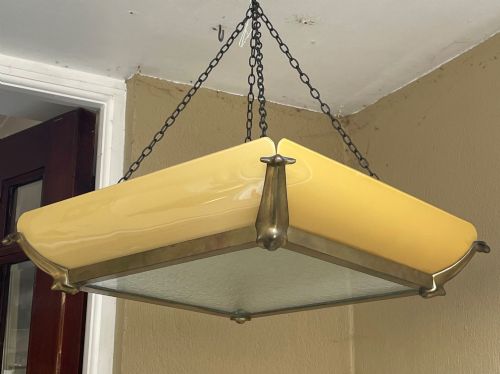
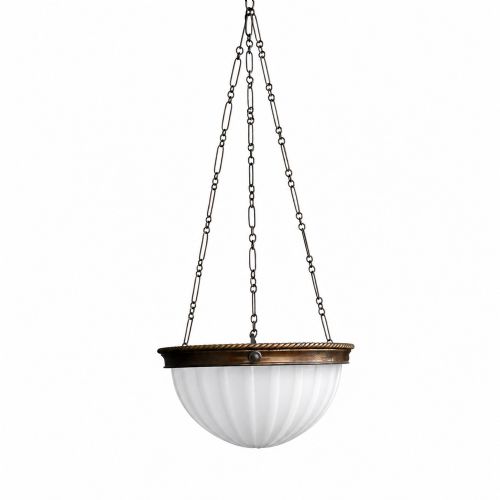
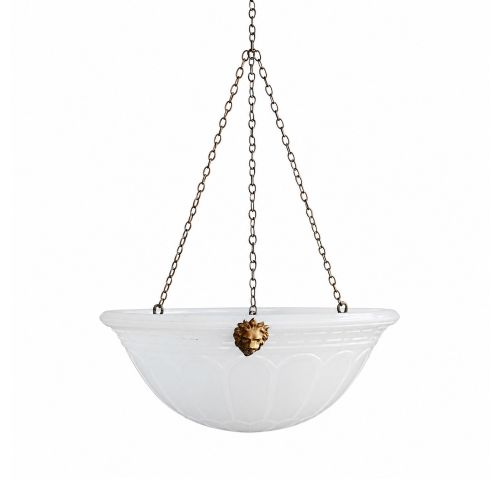
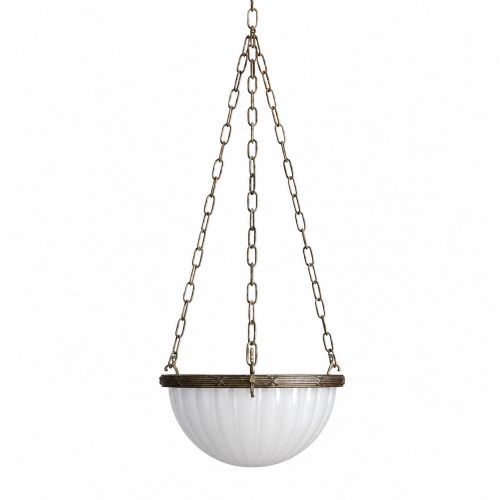


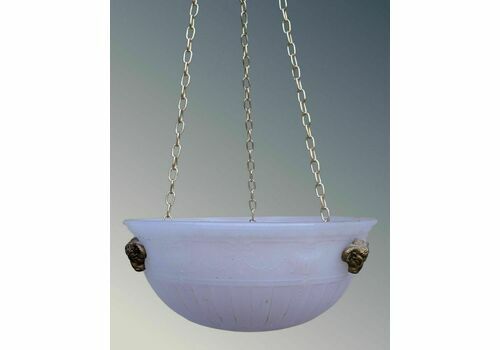


Vintage Flycatcher Light Shade
These vintage flycatcher light shades combine glass and brass to catch the eye overhead, bringing period character to any room.
Vintage Flycatcher Light Shade
A vintage flycatcher light shade hangs from the ceiling to diffuse illumination across a space, taking the form of bowls, dishes, and pendants. These ceiling fittings appear in periods such as the Edwardian era, the nineteenth century, and the nineteen-twenties and thirties.
Makers and designers worked within Neoclassical, Arts and Crafts, and Art Deco styles to shape these ceiling lights. Enamelled and painted glass plafonniers sit alongside carved alabaster dishes and clam shell chandeliers.
How they were made
Glassmakers blew and pressed milk, moonstone, opalescent, and frosted glass into bowl and dish shapes to soften the glare of early electric bulbs. Metalworkers fashioned brass, bronze, and patinated brass into suspension rings, rams head mounts, and chains.
Alabaster workers carved natural stone into thick hanging dishes that let the warm light glow through the grain. Fabric cords and metal hardware completed the assembly, securing the shades for ceiling suspension.
Rams head mounts peek out from antique bronze rings, keeping a watchful, classical eye on the room below.
What varies in quality
The depth of moulding in the glass and the weight of the metal determine the calibre of a piece. Thick moonstone and opalescent glass show a richer diffusion of light than thin pressed panes.
Hand-carved alabaster and cast bronze fittings indicate finer workshops than standard spun brass and plain frosted glass. The crispness of detail on motifs like rams heads separates standard items from superior examples.
The Vintage Flycatcher Light Shade Glossary
- Plafonnier
- A ceiling light fixture where the shade sits flush against the ceiling or hangs closely from a short suspension. This French term describes shallow bowl designs.
- Moonstone glass
- A type of glass with a milky, semi-translucent appearance that resembles the gemstone. It scatters soft light evenly across a room.
- Opalescent glass
- Glass containing ingredients that create a milky, pearlescent effect with shifting tones of colour. It is commonly found in Art Deco lighting.
- Alabaster
- A fine-grained mineral stone carved into thin bowls and shades. When illuminated, it reveals natural veining.
- Clam shell
- A fluted shade moulding that resembles the radiating ribs of a shell. This form is typical of Art Deco chandeliers and hanging lights.
Vintage Flycatcher Light Shade: Frequently Asked Questions
How do I hang a vintage flycatcher light shade?
These shades suspend from ceilings using chains, fabric cords, or metal rods attached to a central rose. An electrician should check the wiring and ceiling fixings to ensure safety.
Most fittings accommodate standard modern lamp holders while retaining their period hanging mechanisms and ceiling suspensions.
What rooms suit a vintage flycatcher light shade?
Pendant bowls and dish lights work well in hallways, dining rooms, and bedrooms where soft, downward illumination creates a welcoming atmosphere. Their shallow profiles suit rooms with standard ceiling heights.
Kitchens and studies also benefit from the focused yet diffused spread of light provided by opalescent and frosted glass bowls.
How do I date a vintage flycatcher light shade?
Dating relies on observing the materials, fixings, and stylistic motifs present in the piece. Edwardian examples often feature cut glass and enamelled suspensions, while nineteen-thirties pieces lean towards geometric Art Deco glass and alabaster.
Bronze mounts with Neoclassical details such as rams heads typically point towards the nineteenth century or Edwardian periods.
What is the difference between frosted glass and moonstone glass?
Frosted glass has an etched or acid-treated surface that diffuses light through a matte texture. Moonstone glass possesses an internal milky opalescence that glows from within when lit.
Both materials soften harsh bulb glare, but moonstone offers a deeper, more luminescent quality.