


1930s Ceiling Light Shade
A 1930s ceiling light shade brings authentic period geometry and diffused illumination into a room, offering an immediate focal point of architectural interest.
1930s Ceiling Light Shade
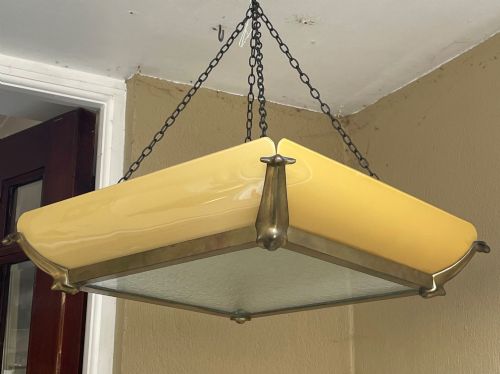
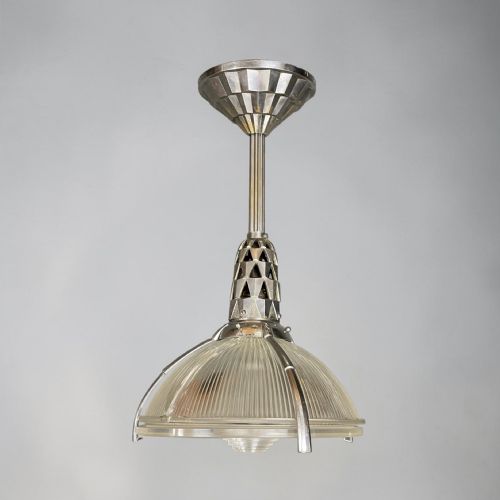
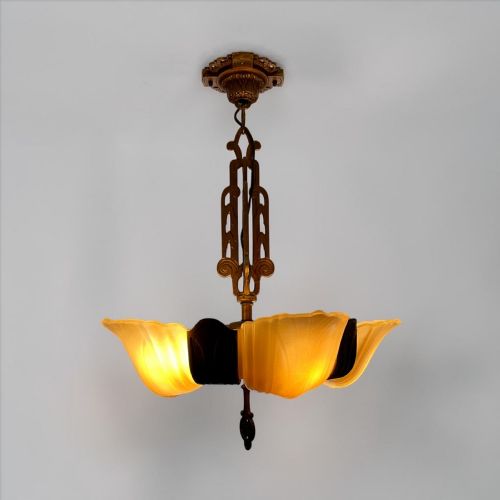
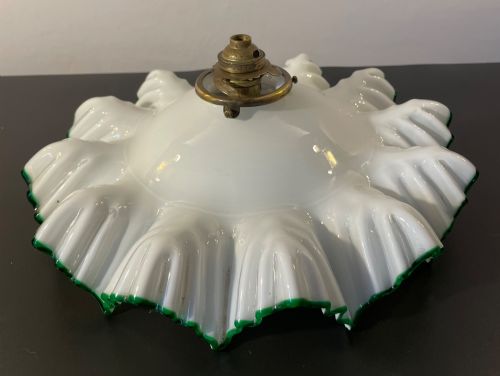
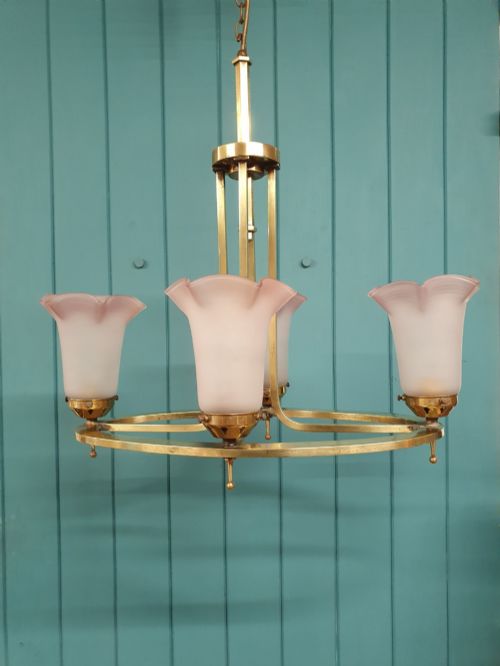
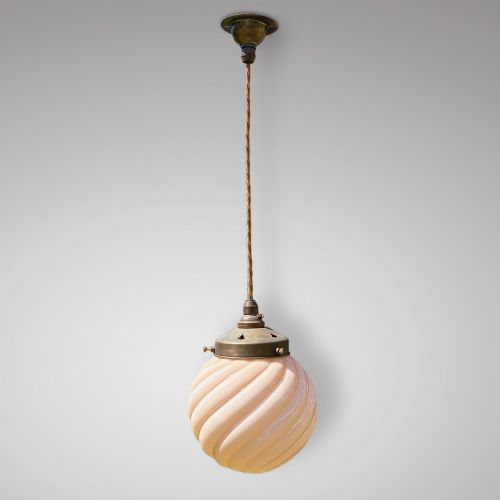
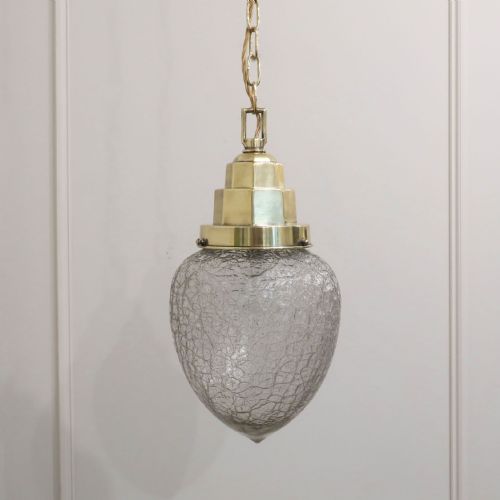
A 1930s ceiling light shade typically reflects the dominant Art Deco aesthetic of the period, translating clean lines and geometric motifs into domestic lighting. Buyers searching for a 1930s ceiling light shade will encounter diverse forms ranging from single pendants and flush ceiling lights to multi-bulb chandeliers, hall lanterns, and large domes.
The selections span the 1920s and 1930s, encompassing French country touches alongside industrial schoolhouse pendants and slip shade configurations. Most pieces combine glass shades with metal suspension elements, designed to hang centrally and cast a softened downward or ambient glow.
Materials and Construction
Glass forms the primary element of these shades, utilising frosted, opaline, crackle, opalescent, pressed satin, cut, and alabaster finishes to manipulate light output. Techniques varied from mould-pressed relief patterns to acid etching and specialist glass treatments like mercury coatings.
Metal components such as brass, chrome, copper, bronze, and cast or wrought iron provide the structural framework, galleries, and hanging chains. These metals were selected for durability and to complement the industrial or decorative tone of the glass body.
The selection includes French country lighting, industrial schoolhouse pendants, and classic Art Deco chandeliers.
Assessing Quality and Distinction
Quality in these lighting pieces rests upon the depth of moulding in the glass and the crispness of detail in metal mounts. Superior examples display substantial glass thickness, refined surface textures, and integrated metalwork specific to designated makers or named design styles.
The integrity of the shade suspension, the preservation of original surface finishes on the brass or chrome, and the complexity of multi-light configurations further separate standard utility pieces from high decorative examples.
Émile-Jacques Ruhlmann·Jean Gauthier
The 1930s Ceiling Light Shade Glossary
- Pendant light
- A hanging lighting fixture suspended from the ceiling by a cord, chain, or metal rod. It directs illumination downwards into a specific area of the room.
- Opaline glass
- A milky, semi-translucent glass that diffuses light evenly across its surface. It was widely utilised during the period for softening bulb glare.
- Slip shade
- A type of shade where individual glass panels slide or slip into a metal frame or basket. These are commonly found in multi-bulb American ceiling fixtures.
- Plafonnier
- A flush or semi-flush ceiling light where the glass bowl sits close to the ceiling rose. This form suits rooms with lower ceiling heights.
- Mercury glass
- A double-walled glass blown object coated on the inside with a silvering mixture to create a reflective mirror effect. It produces an industrial sheen.
1930s Ceiling Light Shade: Frequently Asked Questions
How do I hang a vintage shade?
Most of these fixtures suspend from a ceiling rose using a chain, cord, or metal rod connected to a gallery holding the shade. Standard electrical installation applies, though older wiring requires updating to meet current safety standards.
Professional installation is recommended to support the weight of heavier glass domes, brass lanterns, and multi-bulb chandeliers safely from the ceiling joists.
Are original glass shades fragile?
Period glass possesses solid thickness, but handling requires care during cleaning and installation. Frosted, opaline, and pressed glass surfaces benefit from gentle washing with warm soapy water rather than harsh abrasives.
Securing the shade within its brass, chrome, or copper gallery requires steady hands to avoid over-tightening retaining screws against the glass rim.
What rooms suit these ceiling lights?
Pendant lights and flush plafonniers fit hallways, kitchens, and bedrooms where direct yet softened illumination is required. Larger chandeliers and multi-light slip shade fixtures anchor larger reception spaces and dining rooms.
The distinct geometric forms and frosted textures complement period properties as well as modern interiors seeking architectural contrast.
How do I identify Art Deco lighting?
Art Deco lighting relies on symmetrical geometric patterns, stepped motifs, and stylized floral or industrial silhouettes. Materials typically pair pressed or frosted glass with polished chrome, brass, or dark bronze.
Shades often feature fan shapes, clam shell contours, or clean spherical geometry rather than elaborate Victorian ornamentation.