

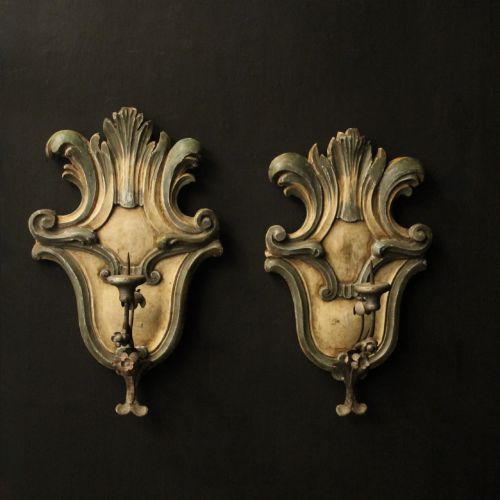
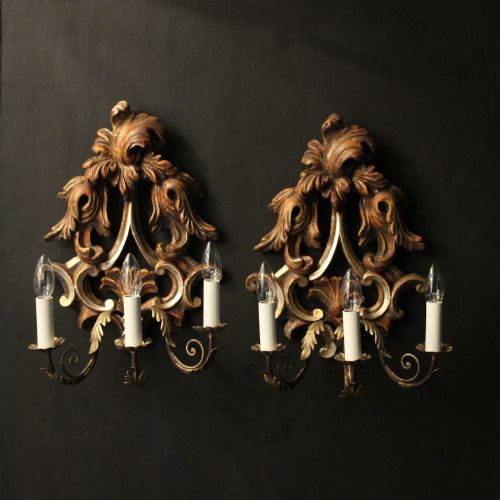


Vintage Florentine Sconces
Vintage florentine sconces bring Italian wall lighting into a room, offering carved wooden forms and gilded surfaces that catch the evening light.
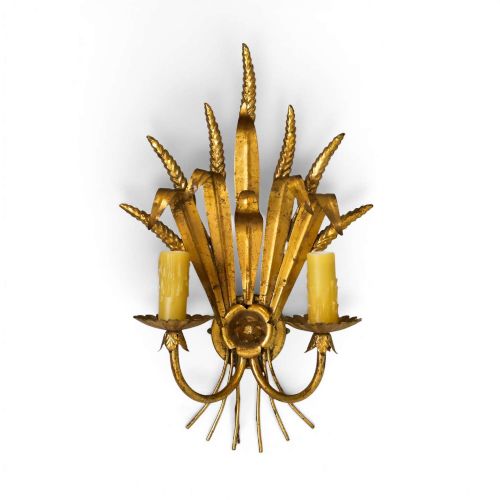
Vintage Florentine Sconces
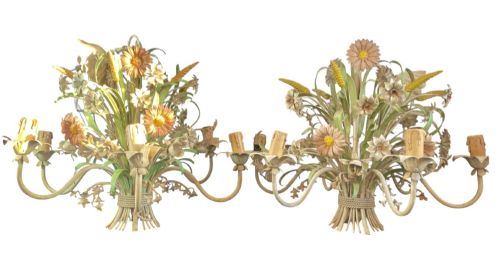
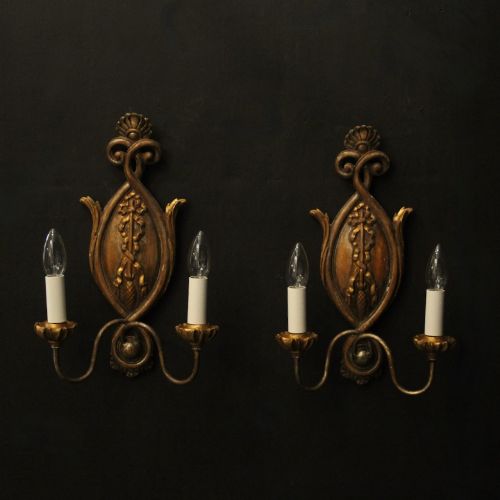
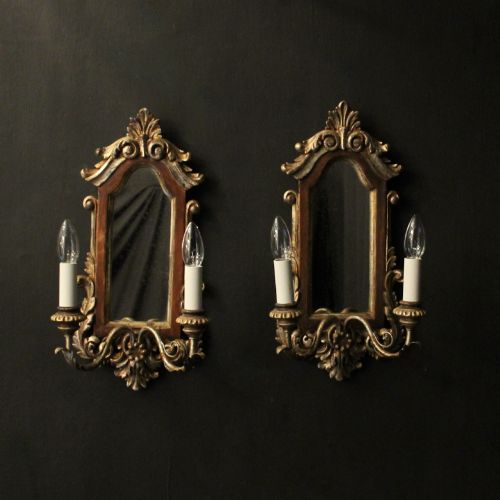
Vintage florentine sconces comprise wall lights, girandoles, and shelves originating mainly from the early twentieth century alongside nineteenth-century examples. The most common form on this page is the pair of giltwood twin arm wall lights, often dating to the nineteen-twenties and nineteen-thirties.
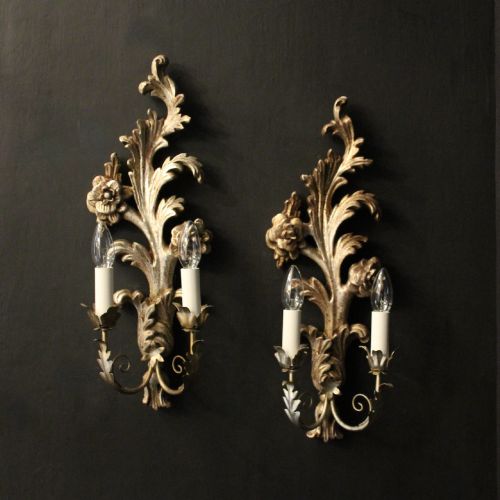
These pieces draw on Florentine Rococo, Baroque, and Rococo Revival styles, expressing ornate scrollwork and leaf motifs. Alongside carved wood, makers utilised metal and glass elements to create fixtures designed to mount directly onto interior walls.
The selection ranges from single candle holders to multi-armed configurations carrying three or four lights. Many items employ traditional candle setups, though specific examples incorporate electric wiring adapted for modern domestic use.
How vintage florentine sconces were made
Craftsmen shaped these fixtures from wood, carved wood, and wrought iron, building the underlying structure before applying surface decoration. Gesso was layered over the timber base to provide a smooth ground for subsequent gilding techniques.
Makers finished the surfaces using gold leaf or silver leaf to achieve a reflective metallic sheen, occasionally incorporating polychrome pigments for added colour. Beaded glass elements and metal components were then integrated into the structural design of the wall lights and girandoles.
Vintage Florentine Sconces Retail Price Guide 2026
Typical asking prices for vintage florentine sconces among the pieces listed under this phrase on Sellingantiques today, from the lower quarter to the upper quarter. They describe what is for sale here now, not the wider market.
Materials recorded across the selection include carved wood, gesso, silver leaf, gold leaf, glass, and wrought iron.
What varies in quality
The sophistication of the carved wood and gesso ornamentation determines the visual depth of the piece, separating standard production from finer artisan work. Crisp detail in the leaf motifs and scrollwork indicates greater skill during the initial shaping stage.
The application and preservation of the gold leaf or silver leaf finish dictates the overall brilliance of the surface. Richer metallic coverage and subtle polychrome detailing distinguish the more accomplished examples within this group.
The Vintage Florentine Sconces Glossary
- Giltwood
- Timber that has been coated with gold leaf or a gold-coloured finish. This material forms the primary visual body for the majority of these wall lights.
- Gesso
- A plaster-like mixture applied to wood surfaces to create a smooth base for gilding and painting. It allows intricate relief details to be carved before leafing.
- Girandole
- An ornamental wall light featuring a mirror or reflective backplate alongside candle arms. The glass element helps amplify the illumination within the room.
- Polychrome
- Decorated in multiple colours using paint or pigments applied over the base material. This technique appears on specific wooden wall lights alongside gilding.
- Pricket
- A sharp metal spike designed to hold a candle upright on a socket or tray. This form appears on older nineteenth-century candle sconces.
Vintage Florentine Sconces: Frequently Asked Questions
What are vintage florentine sconces?
These pieces are decorative wall-mounted light fixtures and shelves originating from Italy, defined by ornate carved wooden forms and gilded finishes. They include twin-armed and multi-armed configurations designed to hold candles or electric bulbs.
The aesthetic draws heavily on historic Italian design movements, bringing elaborate scrollwork and leaf motifs into domestic spaces. Most examples found here date from the early twentieth century down to the nineteenth century.
How were these wall lights used?
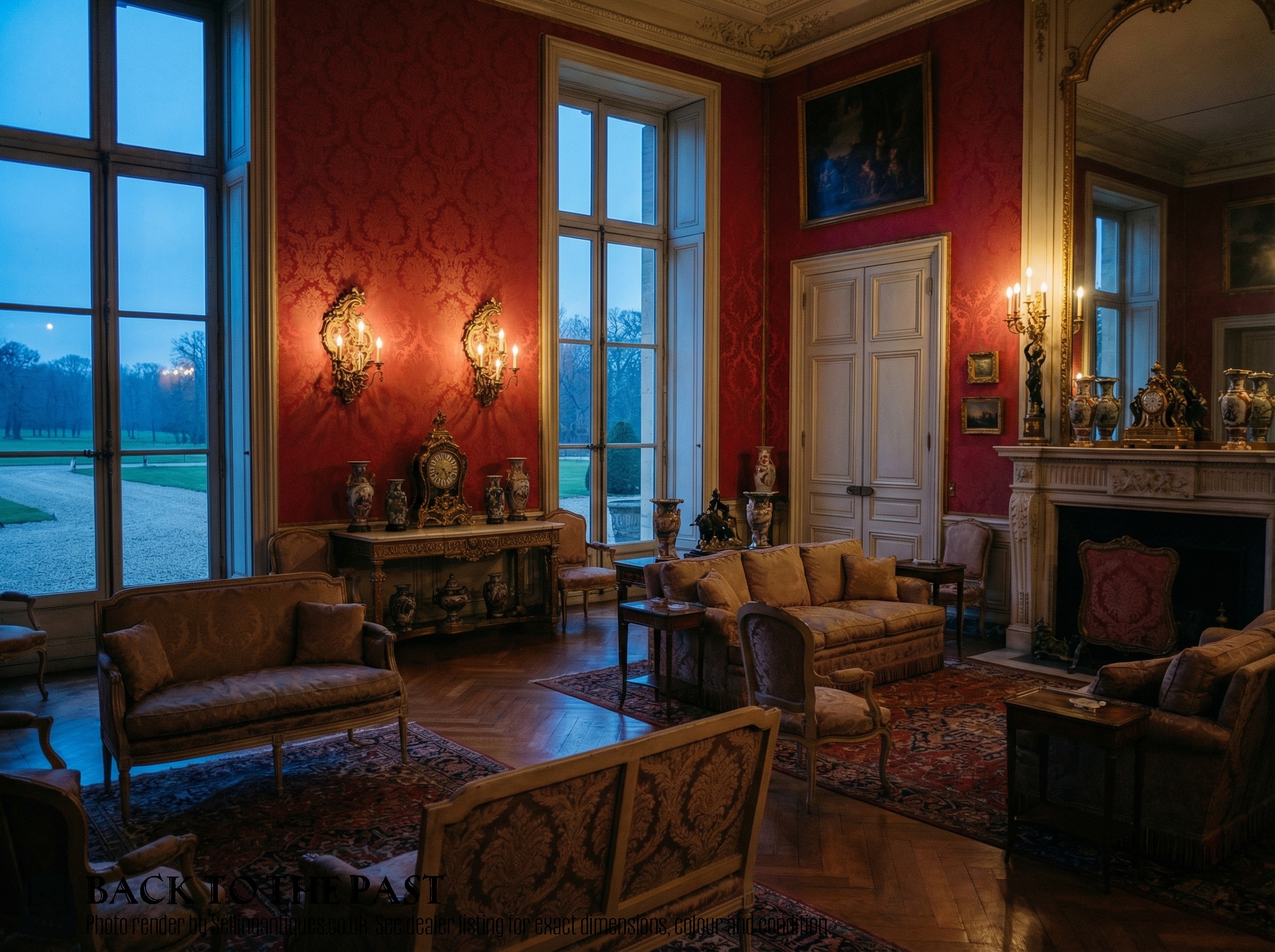
Historically, these fixtures mounted to the walls of reception rooms and hallways to provide ambient illumination via candles. The gilded wooden surfaces and mirrors on girandoles helped reflect and scatter the candlelight across the room.
In modern interiors, they function both as decorative wall art and supplementary lighting sources. Some pieces retain their original candle fittings while others have been adapted for electricity.
How do I live with these sconces?
Mounting these fixtures requires careful consideration of wall strength and wiring routes if the pieces are electrified. They work effectively in pairs flanking mirrors, doorways, or fireplaces to create balanced decorative symmetry.
Maintenance involves gentle dusting of the delicate giltwood and gesso surfaces without using harsh liquid cleaners. Keeping them away from excessive moisture preserves the integrity of the metallic leaf finishes.
How can I tell the periods apart?
Nineteenth-century examples often feature simpler pricket candle setups and heavier wrought iron elements or deep carved timber. Early twentieth-century pieces frequently display refined giltwood twin or triple arm configurations with intricate leaf carving.
Mid-century items introduce alternative materials such as gilt metal alongside electric wiring. Observing the construction materials and arm configurations helps distinguish the production era of each piece.