

Vintage Floor Standard Lamp
A vintage floor standard lamp brings tall presence and directed light to a room, drawing on decades of design from the nineteenth century to the mid-twentieth.
Vintage Floor Standard Lamp
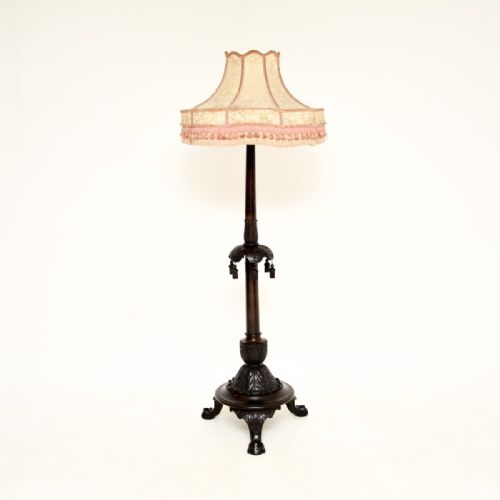
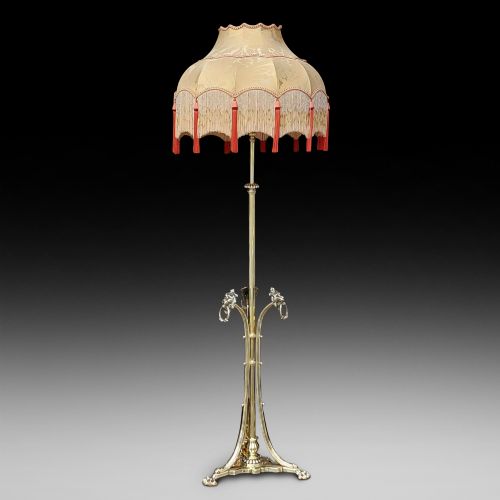
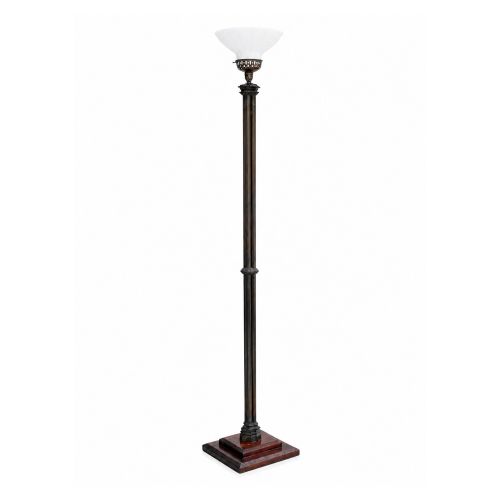
A vintage floor standard lamp is a tall lighting fixture designed to stand directly on the floor, providing illumination at height across living spaces and studies. The selection spans straightforward timber columns to elaborate cast-iron and telescopic brass engineering.
The most common examples on this page date from the Victorian, Edwardian, and Art Deco periods, alongside pieces attributed to the 1920s and 1930s. These pieces often incorporate adjustable height mechanisms, converting former oil lamps or serving as dedicated electric standards.
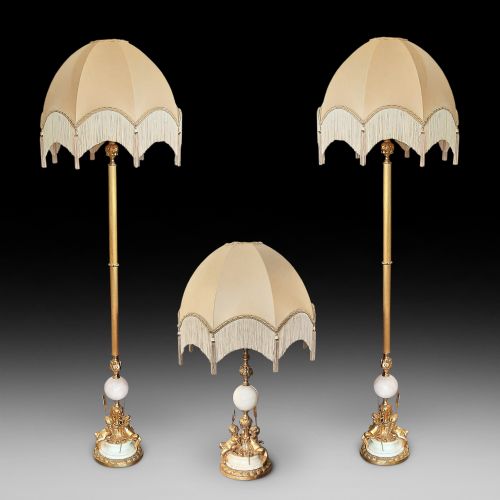
Regional and stylistic variations include English Arts and Crafts brass, French Empire styles, Anglo Indian work, and Middle Eastern Moorish Syrian designs. Formats range from simple turned oak posts to elaborate giltwood neoclassical columns and lacquered chinoiserie bodies.
Materials and Construction Techniques
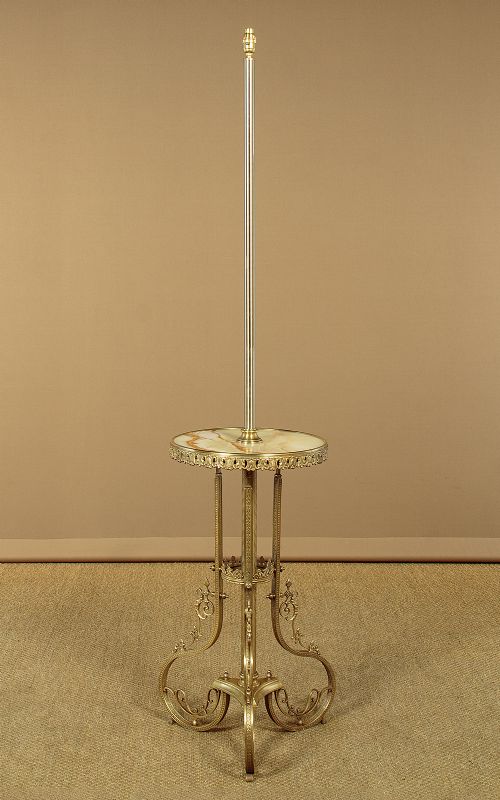
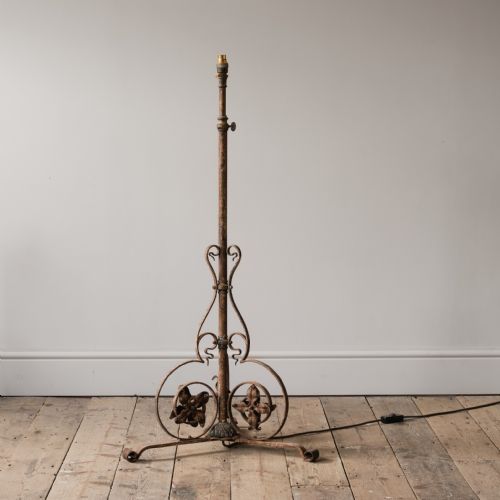
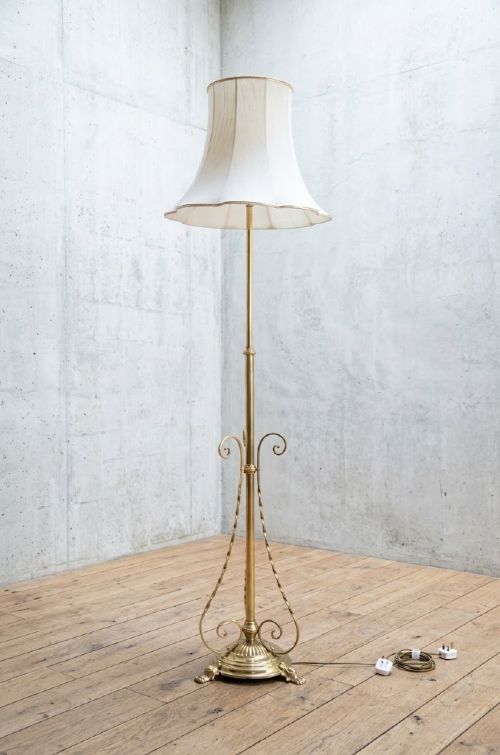
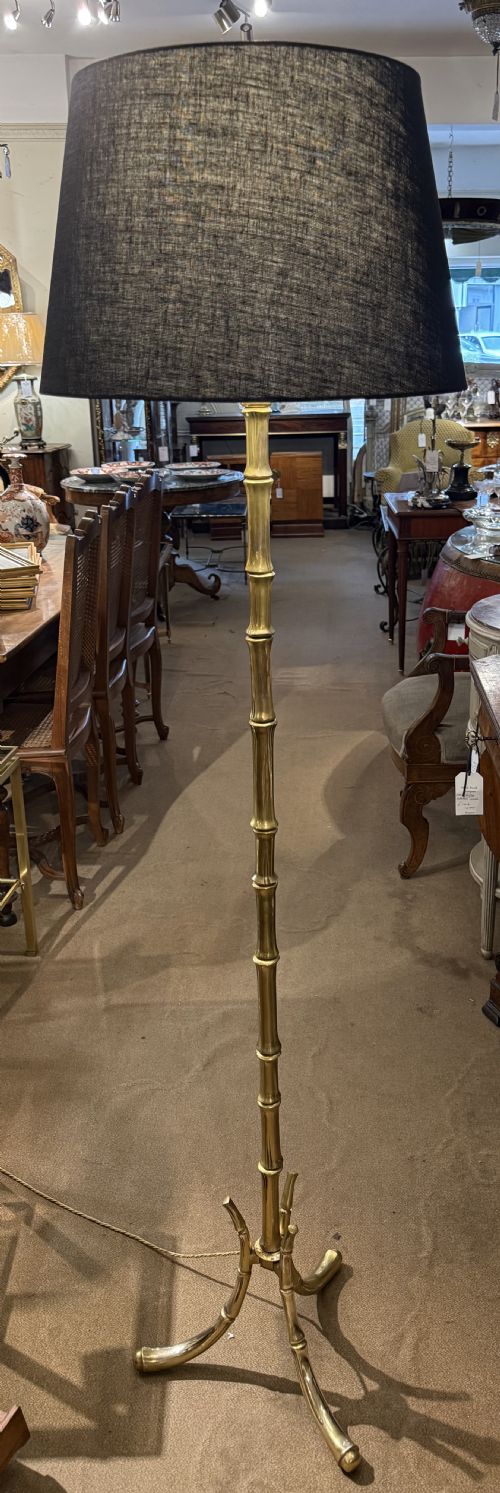
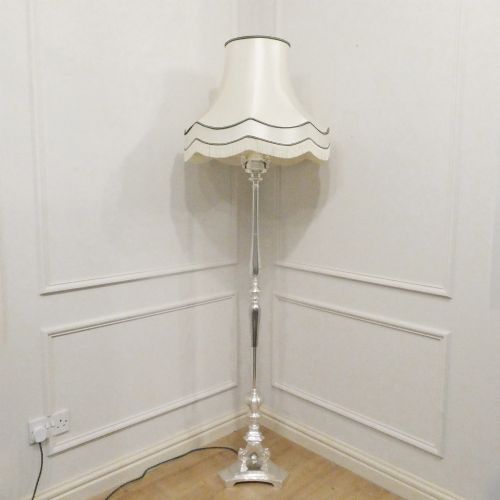
Metal fabrication dominates the construction, utilising brass, bronze patinated cast-iron, copper, and silver plating. Many pieces feature heavy cast bases for stability, paired with telescopic mechanisms that allow the overall height to be adjusted.
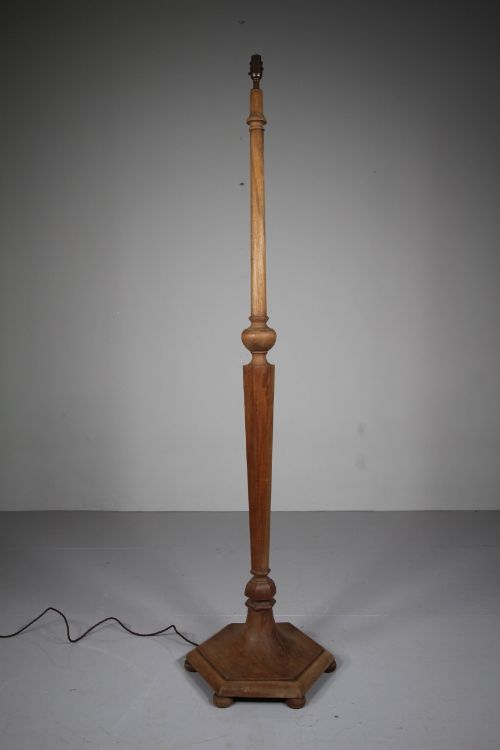
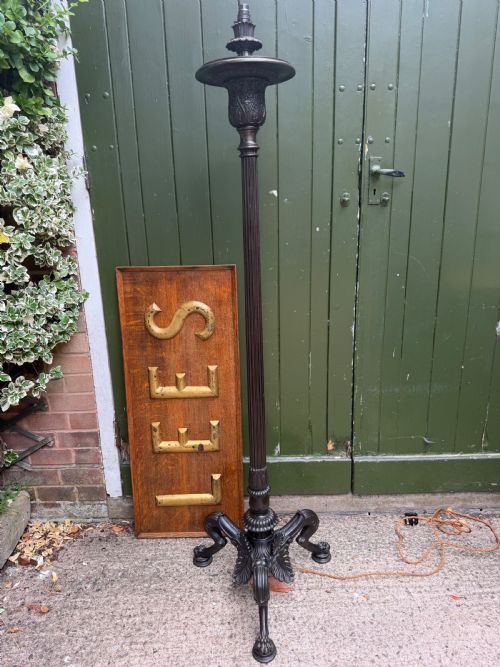
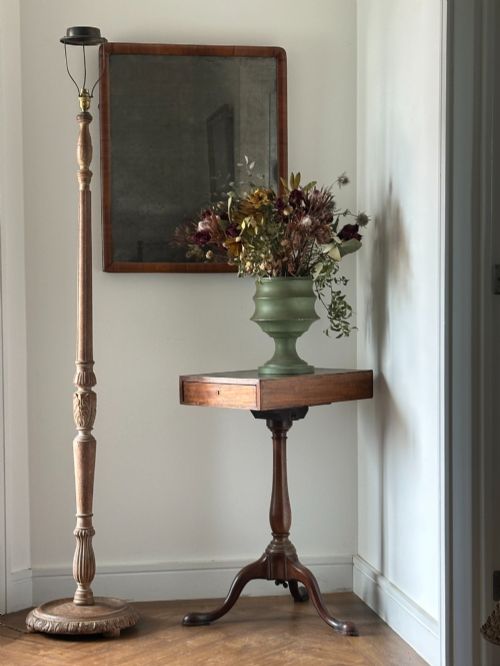
Woodworking traditions are equally prominent, employing walnut, oak, satinwood, and giltwood. These timber shafts are frequently carved, turned, or finished with painted lacquer and decorative chinoiserie motifs.
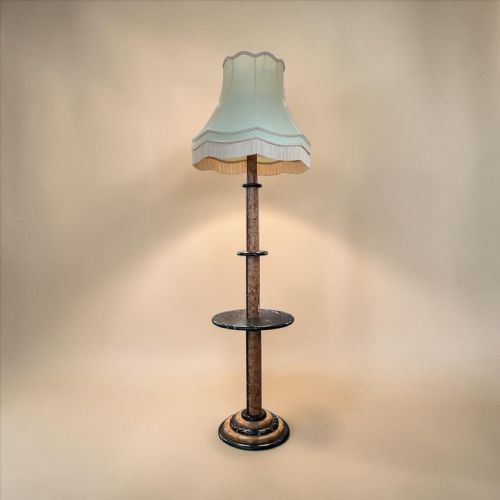
Shades and secondary materials complete the construction, incorporating fabric, vellum, glass, and solid marble elements. The integration of these diverse materials distinguishes the various regional revivals and modernist periods.
Some standards began life as nineteenth-century oil lamps before acquiring electrical wiring and vellum shades.
Distinctions in Build and Design
Quality in a vintage floor standard lamp rests on the substance of its materials and the precision of its mechanisms. Heavy solid brass, substantial cast bases, and smoothly operating telescopic adjustments separate robust examples from lighter alternatives.
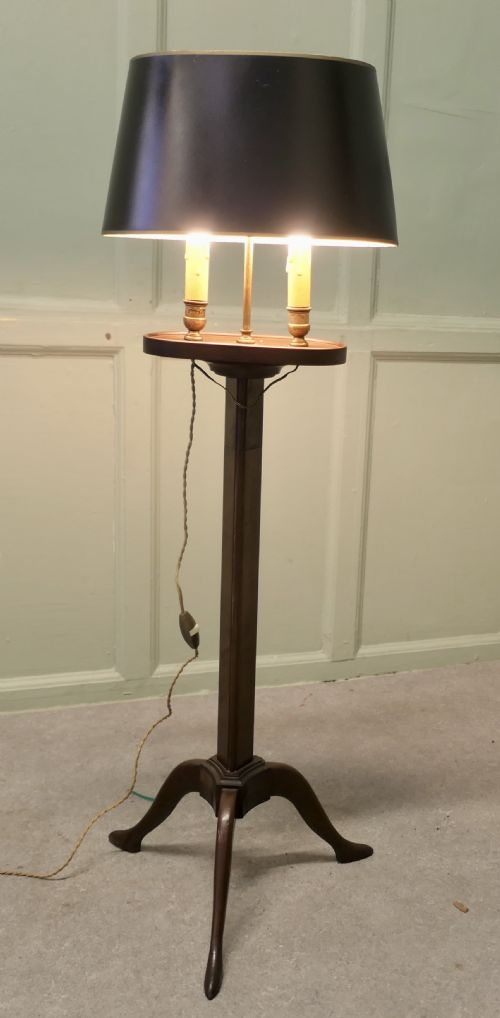
Artisanal execution marks the upper tier, seen in hand-carved oak, detailed bronze patination, and intricate hand-painted chinoiserie lacquer work. The integration of specialised fittings, such as twin candle arms or maker-stamped brass burners, further elevates an individual piece.
Maison Bagues·Hinks of B ham
The Vintage Floor Standard Lamp Glossary
- Telescopic
- A shaft design featuring nested tubes that allow the overall height of the lamp to be adjusted.
- Standard lamp
- A traditional British term for a tall floor-standing lamp.
- Chinoiserie
- European decorative style employing simulated Chinese motifs, frequently seen in painted lacquer finishes.
- Bouillotte
- A type of lamp featuring a central standard, often with multiple candle arms and an adjustable shade.
- Patination
- The surface appearance acquired by materials like brass, bronze, and wood through age and handling.
Vintage Floor Standard Lamp: Frequently Asked Questions
How do I identify the period of a standard lamp?
Dating relies on stylistic markers such as Victorian brass oil fittings, Edwardian chinoiserie lacquer, or streamlined 1930s Art Deco silhouettes. Examining the construction materials and assembly methods provides further clues.
Material choices like solid oak, heavy cast iron, or silver plate help narrow the decade of manufacture when combined with period design details.
Can standard lamps be adjusted for height?
Many examples incorporate telescopic brass or metal columns designed to raise or lower the light source. These mechanical adjustments were common in nineteenth-century oil standards and twentieth-century reading lights.
Heavier weighted bases typically support these adjustable shafts to maintain stability at extended heights.
Where were standard lamps placed in historical interiors?
These tall floor lights were positioned beside reading chairs, in dark corners of reception rooms, or paired symmetrically in grand spaces. Their height allowed them to cast ambient or task light over furniture groupings.
Heavier models with wide bases provided stable illumination in busy domestic environments.