





Vintage Floor Candle Holder
These vintage floor candle holder pieces bring architectural presence and ambient height to a room, offering both practical illumination and striking sculptural form.
Vintage Floor Candle Holder
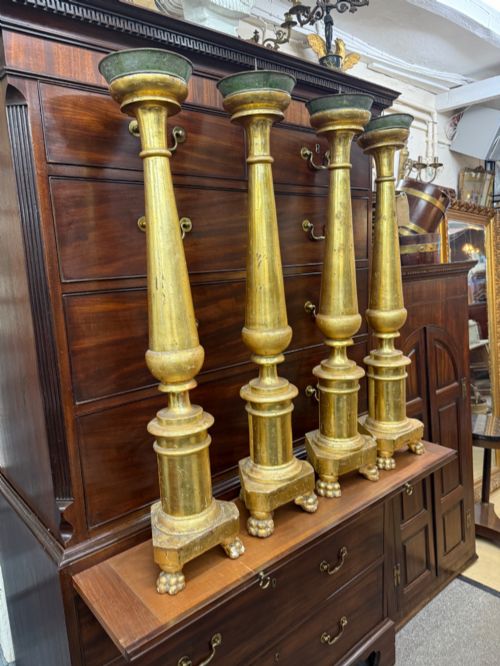
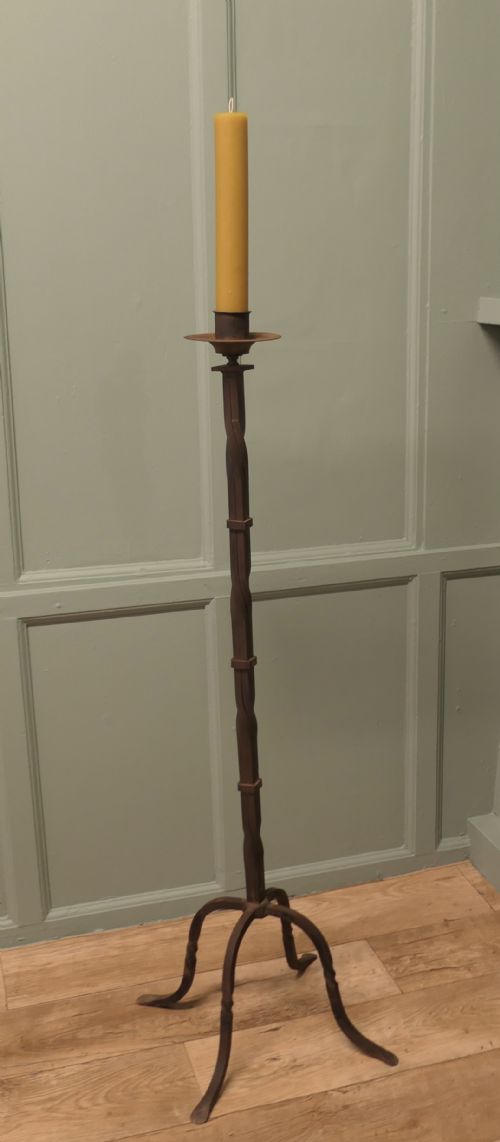
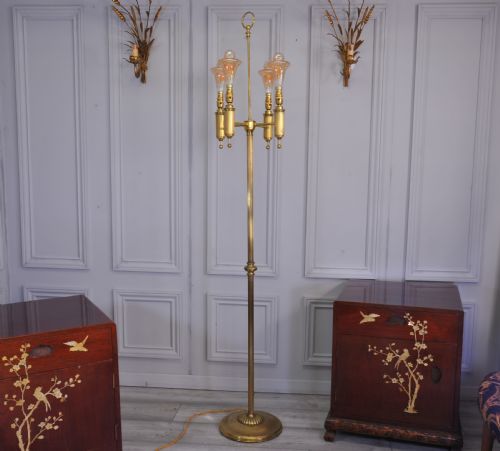
When you search for vintage floor candle holder items, you encounter tall stands designed to elevate light above table level using various historical designs. The selection ranges from robust nineteenth-century iron standards to carved wooden figures and classical brass columns.
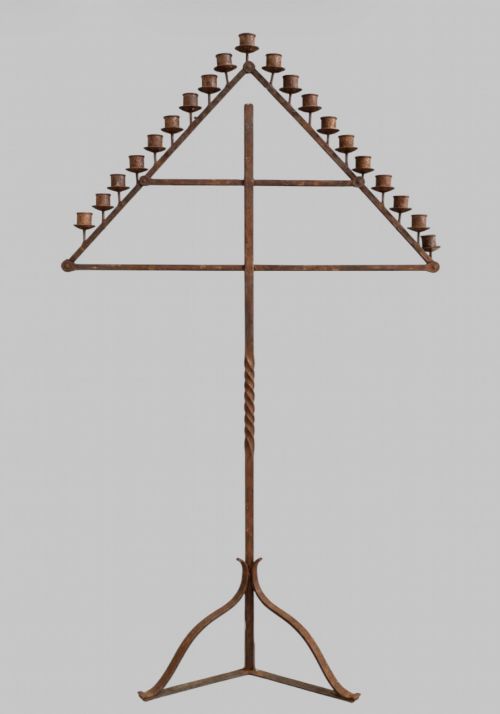
You are most likely to meet substantial wrought iron or carved wood examples dating from the nineteenth century up to the nineteen-thirties. These pieces take the form of single candlesticks, multi-branch floor candelabra, and architectural torchères.
Origins span British, French, and Italian workshops, reflecting styles from Gothic Revival and Victorian Neoclassical to Art Deco and Continental Baroque. The forms serve both domestic interiors and larger ecclesiastical spaces.
How they were made
Makers shaped these stands using hand-forged wrought iron, turned and carved wood such as oak and giltwood, and cast brass. Blacksmiths hammered iron into robust standards while woodcarvers produced ornate decorative forms and painted finishes.
Construction techniques include mortise and tenon joinery for wooden frames and riveted or welded joints for heavy metal standards. Brass components often feature cast columns and threaded assemblies, sometimes paired with glass elements or prickets.
Vintage Floor Candle Holder Retail Price Guide 2026
Typical asking prices for vintage floor candle holder among the pieces listed under this phrase on Sellingantiques today, from the lower quarter to the upper quarter. They describe what is for sale here now, not the wider market.
Masonic columns occasionally moonlight as candle stands, proving that even secret societies appreciate a well-lit ritual.
What varies in quality
Quality depends on the integrity of the materials and the depth of craftsmanship evident in the hand-finishing. A blacksmith-made iron standard shows distinct hammer marks and balanced proportions, whereas mass-produced metal lacks individual character.
Carved wooden examples reveal quality through the crispness of the detail and the weight of the timber. Finer pieces maintain structural stability despite their height, with well-balanced bases that securely support multiple heavy candles.
The Vintage Floor Candle Holder Glossary
- Torchère
- A tall ornamental stand designed to carry a single candle or lamp. These pieces often feature classical column designs or decorative wooden carvings.
- Pricket
- A sharp metal spike atop a candlestick that holds a candle in place. This form appears frequently on church and architectural candle holders.
- Candelabrum
- A multi-branched candle holder designed to support several candles simultaneously. Floor-standing versions create substantial visual weight in a room.
- Giltwood
- Wood that has been coated with a thin layer of gold leaf or gilt paint. This technique provides a reflective surface on decorative Italian and French stands.
- Corinthian column
- A classical architectural order featuring ornate capitals decorated with acanthus leaves. Brass and wooden floor stands frequently adopt this column style.
Vintage Floor Candle Holder: Frequently Asked Questions
Where were floor candle holders placed?
These tall stands traditionally stood in corners, beside fireplaces, or along church chancels to illuminate large spaces.
In domestic settings, they provided ambient vertical light before electric lamps became common.
How do I clean wrought iron stands?
Wrought iron benefits from gentle dusting with a soft, dry cloth to protect the aged metal surface.
Avoid harsh chemical cleaners that strip the historical patina developed over the centuries.
Are these stands stable enough for daily use?
Most floor candle holders feature weighted or wide bases designed to maintain balance at height.
However, heavy multi-branch candelabra require placement in low-traffic areas to prevent accidental tipping.
How do I identify a nineteenth-century piece?
Nineteenth-century stands display hand-forged ironwork, traditional joinery in wood, and characteristic patination on brass and painted surfaces.
Stylistic cues from Gothic Revival or Victorian Neoclassical periods also indicate the era of manufacture.