



Vintage Fitted Luggage
Vintage fitted luggage spans the late nineteenth and early twentieth centuries, bringing organised compartments, durable leather and brass hardware to modern travel and home storage.
Vintage Fitted Luggage
Vintage fitted luggage encompasses storage trunks, steamer trunks, cabin wardrobes, portmanteaus, vanity cases and suitcases designed for structured travel. These pieces include fitted interiors intended to hold specific items such as garments, hats or dressing table accessories securely during journeys.
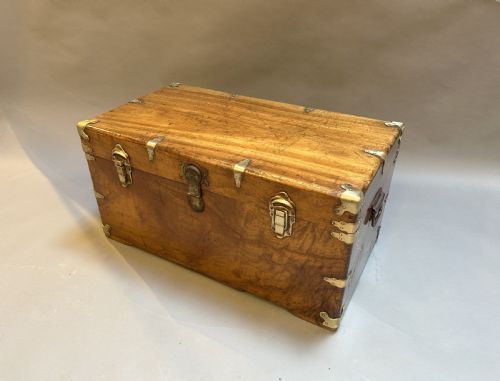
The pieces on this page originate from periods including the Victorian era, the Edwardian period, and the 1920s, with French, English, and American origins appearing frequently. Trunks and suitcases employ materials like leather, canvas, vellum, wood, metal, brass and vulcanised fibre to withstand transit.
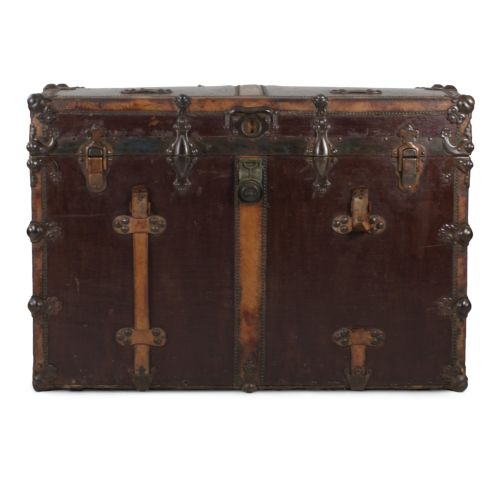
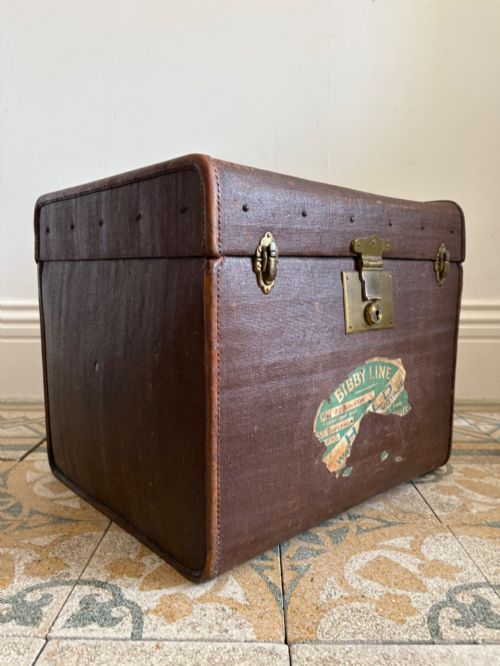
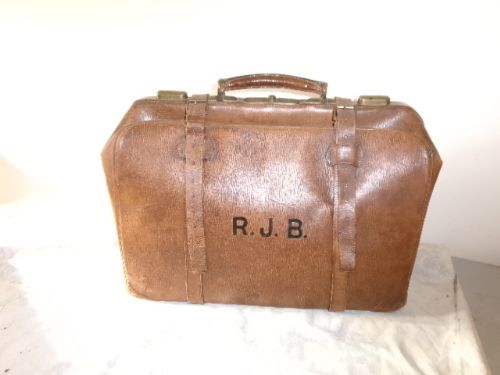
Forms range from large cabin trunks and steamer chests to gentleman's valet suitcases and Gladstone bags. Many examples incorporate original hardware, travel labels, or maker signatures reflecting their utilitarian and global heritage.
Materials and construction
Construction relies on robust structural cores of wood, pine, or camphor wood, often reinforced with exterior bands of leather, metal, iron, or brass to protect corners and edges during transit. Outer coverings utilise durable canvas, vellum leather, or vulcanised fibre.
Interiors are built to hold garments and accessories securely, integrating specialised trays, compartments, and textile linings. Fastenings, locks, and handles employ heavy-duty brass and iron hardware attached with secure rivets and stitching.
Listings feature pieces utilising camphor wood, pine, vulcanised fibre, brass, and leather across Victorian, Edwardian, and 1920s periods.
Variations in quality
Quality is distinguished by the integrity of the structural frame, the resilience of exterior materials such as thick leather or bound canvas, and the completeness of the fitted interior compartments. Superior examples retain their original brass locks, working keys, and maker stamps or signatures.
The refinement of internal fittings, such as silver dressing table items, silk or textile linings, and modular tray systems, marks the distinction between standard travel gear and luxury pieces produced by prominent makers.
Army and Navy·Seaward·Finnigan's Manchester·Harrods·Hartman Luggage Co·C. Antrobus·Finnegans of Bond Street London·Louis Vuitton
The Vintage Fitted Luggage Glossary
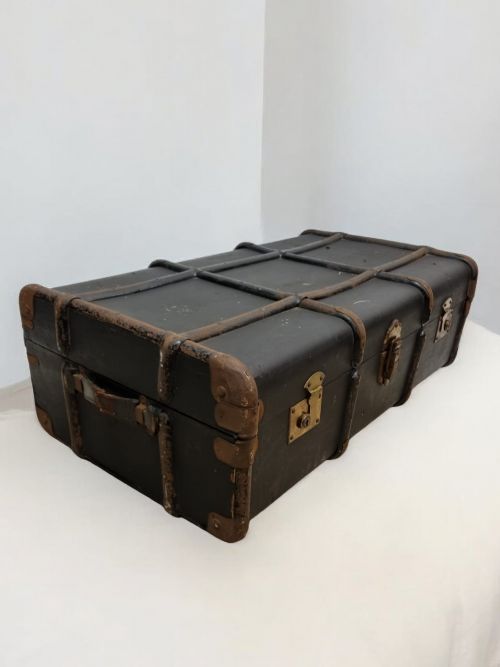
- Steamer trunk
- A lower-profile trunk designed to fit beneath a steamship cabin berth or in luggage holds. These pieces often feature reinforced corners and internal trays.
- Portmanteau
- A large travelling bag or suitcase that opens into two equal compartments. These items were traditionally used for carrying suits and coats.
- Gladstone bag
- A light, hinged travelling bag made of stiff leather, opening wide into two equal parts. It is named after the British statesman William Gladstone.
- Vulcanised fibre
- A laminated plastic material composed of wood cellulose, used to provide a lightweight yet tough exterior for luggage. It resists impacts and wear during travel.
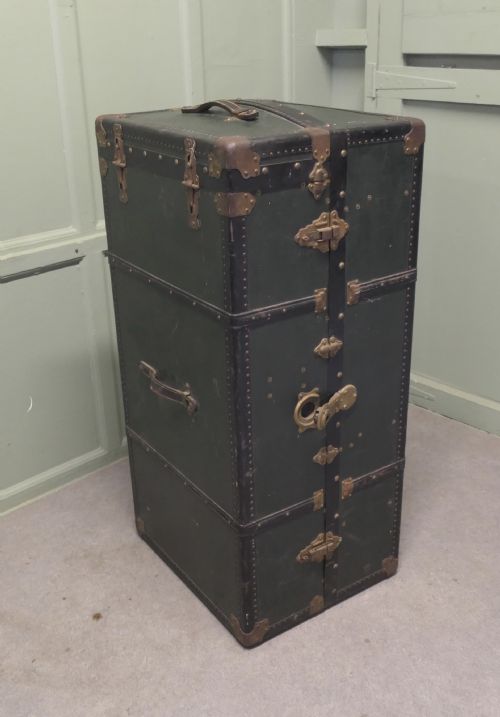
- Malle penderie
- A French vertical wardrobe trunk designed to hang garments upright during travel. These pieces open up like miniature closets with drawers and hanging space.
Vintage Fitted Luggage: Frequently Asked Questions
What is vintage fitted luggage?
Vintage fitted luggage refers to antique trunks, suitcases and travel cases featuring internal compartments designed to hold specific items like garments or grooming accessories.
These items date from the nineteenth and early twentieth centuries, constructed by makers in England, France and America using durable materials like leather, canvas and brass.
How were steamer trunks used?
Steamer trunks were built for long-distance sea voyages, specifically sized to slide underneath stateroom berths or fit into ship luggage holds.
Inside, their fitted trays and compartments kept clothing and personal belongings secure and organised despite the movement of the ship.
How do I date a vintage trunk?
Dating relies on construction materials, hardware styles, and maker signatures or labels attached to the piece. Victorian and Edwardian examples often feature heavy pine or camphor wood structures with brass bindings.
Later pieces from the 1920s frequently incorporate vulcanised fibre, art deco influences, or specific maker marks corresponding to known retail firms and luggage manufacturers.
Can I use antique luggage at home?
Antique luggage serves well for domestic storage, functioning as coffee tables, blanket chests or decorative bedroom storage. Their internal trays and compartments make them practical for organising accessories.
Placing them in living spaces preserves their history while keeping original exterior labels and hardware visible.