
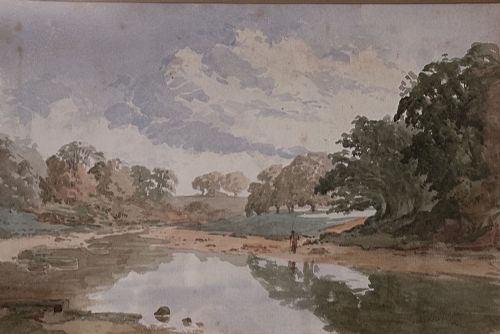
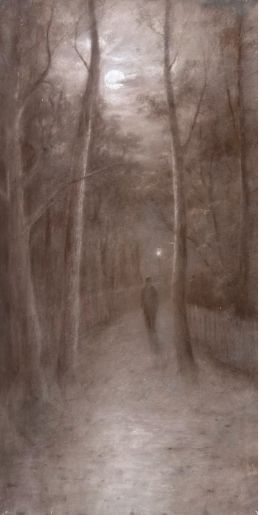


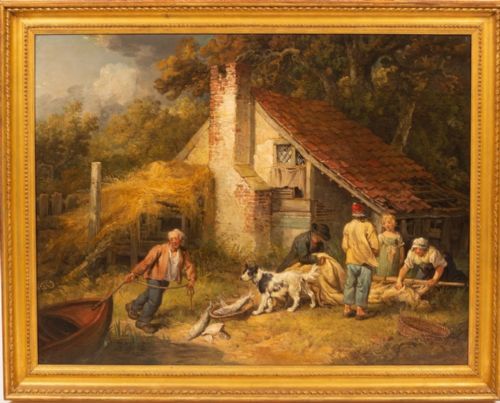


Vintage Fisherman Painting
These vintage fisherman painting examples capture coastal life and maritime toil, offering buyers enduring scenes of historic working communities.
Vintage Fisherman Painting
A vintage fisherman painting brings maritime scenes and coastal labour into domestic spaces, capturing the daily routines of coastal communities. These works record historic working vessels, shorelines, and figures against changing sea and river conditions.
Buyers on this page most frequently encounter works executed in oil or watercolour, spanning periods from the late nineteenth century through the mid twentieth century. Subjects range from solitary figures on riverbanks to larger marine compositions set along British and French coasts.
How these artworks were produced
The physical support of these pieces typically consists of stretched canvas, wooden boards, or heavy paper for watercolours and charcoal drawings. Artists applied oil paint and watercolour to build texture and atmospheric light across the coastal landscapes.
Framing often involves wood mouldings that complement the period of creation, while ceramic examples utilise moulded bisque figures on fishing boat forms.
Listings feature works spanning the nineteenth century, 1890, 1900, 1930, and 1940 periods, utilising canvas, wood, oil paint, paper, watercolour, and charcoal.
What distinguishes the quality of these paintings
Quality rests upon the artist's ability to render light, movement, and atmospheric conditions, separating routine topographical records from masterly observations of coastal life. Brushwork confidence and compositional balance define the stronger examples.
Condition of the canvas, paper, or wood support, alongside the stability of the pigment, influences the visual impact. Original framing and clear provenance further elevate particular works above standard decorative pieces.
George F Pennington·Gustave Vidal·Sadee·James George Bingley·James Ward·Sonia Mervyn·Fred Dade·George Marks·Søren Christian Bjulf
The Vintage Fisherman Painting Glossary
- Oil paint
- A slow-drying paint made by combining pigment particles with a drying oil such as linseed. This medium allows artists to build rich textures and deep tonal ranges.
- Watercolour
- A paint consisting of pigment suspended in a water-based solution, typically applied to paper. It yields translucent washes that capture changing light on water and skies.
- Canvas
- A heavy woven fabric used as a surface for oil paintings. It is typically stretched tightly over a wooden frame before application of the ground and pigment.
- Tonalism
- An artistic style focusing on shadow, atmosphere, and dark moods rather than sharp detail. Works in this vein emphasise shadow and unified colour harmonies.
- Bisque
- Unglazed ceramic fired once before any subsequent decoration or glazing takes place. It results in a matte, porous white surface ideal for figurative groupings.
Vintage Fisherman Painting: Frequently Asked Questions
How do I date a vintage fisherman painting?
Dating relies on stylistic markers, framing methods, and signatures or inscriptions left by the artist on the canvas or stretcher.
Material analysis of the canvas and pigments also assists in placing the work within nineteenth or twentieth century periods.
Where were most of these coastal scenes painted?
The locations span British coastal regions such as Cornwall, Devon, and Yorkshire, alongside French locations like the Côte d'Azur.
Artists frequently travelled to active fishing ports to record boats, harbours, and local workers on the shore.
What is the difference between oil and watercolour versions?
Oil paintings on canvas or board provide heavier texture and deeper colour saturation, suitable for dramatic marine weather.
Watercolour works on paper offer delicate transparency and lighter atmospheric effects, often capturing bright coastal light.
How should I display and care for these paintings?
Keep works out of direct sunlight to prevent fading of watercolours and yellowing of varnishes on oil paintings.
Maintain stable room humidity to protect wooden frames, stretched canvases, and paper supports from warping.