



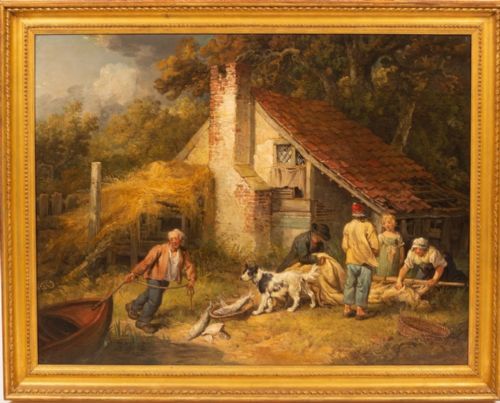


Vintage Fisherman Artwork
Vintage fisherman artwork captures coastal toil and riverbank quiet across watercolours, oils and drawings from the nineteenth century to the mid-twentieth century.
Vintage Fisherman Artwork
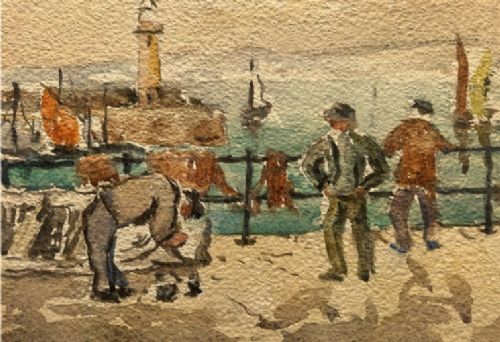
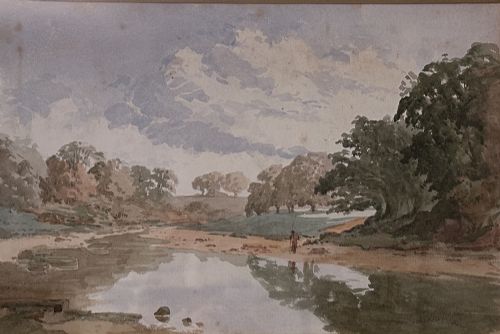
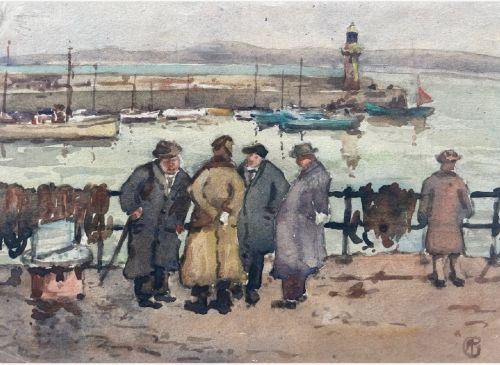
Vintage fisherman artwork brings together marine paintings, harbour scenes and riverbank watercolours depicting fishermen, boats and coastal life. The pieces on this page span from the nineteenth century through the 1930s and 1940s, capturing working figures at St Ives, Scarborough, and along various rivers.
The most common formats you encounter here are original watercolour paintings and oil paintings on canvas or board. These works range from intimate studies of men mending nets to broad landscape oil paintings recording the daily routines of coastal communities.
Stylistically, these pieces draw on Victorian traditions, Edwardian illustration, early twentieth-century impressionism, Post-Impressionism, and Tonalism. They record both British and French coastal subjects through the eyes of artists working across distinct regional schools.
How vintage fisherman artwork was made
Artists working on these subjects relied primarily on oil paint applied to canvas, panel, or board, alongside watercolour pigment worked onto paper. Oil painting allowed for textured, layered depictions of choppy seas and stormy skies, while watercolour offered a swift, transparent medium suited to capturing coastal light.
Support materials varied from stretched canvas and heavy wood panels to fine drawing paper and card. Many of these works retain their period framing, which often complements the maritime subjects with simple wood moulding.
Vintage Fisherman Artwork Retail Price Guide 2026
Typical asking prices for vintage fisherman artwork among the pieces listed under this phrase on Sellingantiques today, from the lower quarter to the upper quarter. They describe what is for sale here now, not the wider market.
Listings feature works from the 19th Century, 1900, 1930, and 1940, executed in oil, watercolour, and charcoal on canvas, wood, and paper.
What varies in quality in vintage fisherman artwork
Quality in these maritime works rests on the confidence of the brushwork and the artist's ability to render the weight of figures against open water or harbour walls. Stronger examples show deft handling of light on wet pebble beaches and convincing atmospheric depth in coastal skies.
The precision of the composition and the specific regional context also influence the standing of a piece. Works tied directly to recognised artist colonies like Newlyn or St Ives carry a stronger documentary interest in the history of British fishing communities.
George F Pennington·Gustave Vidal·James George Bingley·James Ward·Sonia Mervyn·Fred Dade·George Marks
The Vintage Fisherman Artwork Glossary
- Watercolour painting
- A work executed with water-soluble pigment on paper support. It relies on the white of the paper to show through translucent washes.
- Oil painting
- A work created using pigments bound in a drying oil, typically applied to canvas or wood board. This medium allows for rich texture and deep colour saturation.
- Post-Impressionism
- An art movement extending beyond impressionism that focused on abstract qualities or symbolic content. It appears in French and British coastal works of the early twentieth century.
- Tonalism
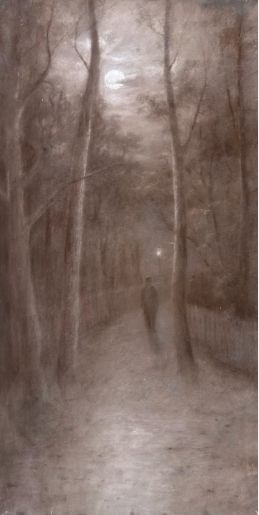
- An artistic style where artists painted landscapes and seascapes with an overall tone. Atmosphere and shadow take precedence over sharp detail in these compositions.
- Marine painting
- A genre of art dedicated to the sea, ships, and coastal life. These works focus specifically on maritime subjects, boats, and the people who worked the water.
Vintage Fisherman Artwork: Frequently Asked Questions
What periods do these artworks cover?
The pieces span the nineteenth century, 1900, the 1930s, and the 1940s. They record evolving artistic approaches to coastal subjects across several decades.
You will find Victorian academic approaches sitting alongside early twentieth-century impressionism and tonalist river scenes.
Where were these coastal scenes painted?
Locations range from Cornish harbours like St Ives and Newlyn to Scarborough, Boscombe, and French coastal spots such as the Côte d'Azur. Rivers and wooded riverbanks also feature alongside marine views.
Many works document specific regional fishing communities and their working environments.
What mediums were used by the artists?
Artists used oil paint, watercolour pigment, and charcoal drawing materials. Supports include canvas, wood board, and paper.
Some pieces combine charcoal drawing with canvas, while others rely purely on fluid watercolour washes.
How do I identify different painting styles here?
Styles include Victorian narrative work, early twentieth-century impressionism, Post-Impressionism, and Tonalism. Look at how light and atmosphere are handled across the water and sky.
Tonalist works emphasise shadow and mood, whereas impressionist pieces focus on broken colour and changing coastal light.
Are these works signed by the artists?
Several pieces feature artist signatures, monograms, or attribution to known painters of the period. Signatures help place the work within a specific maker's output.
Unsigned works rely on stylistic evidence, subject matter, and period materials to indicate their origin.