
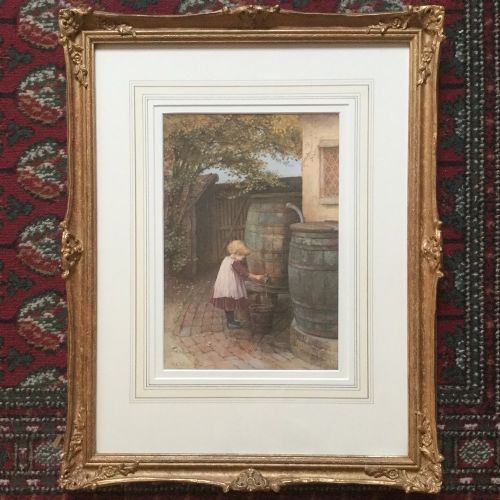


Vintage Figurative Wall Decor
These vintage figurative wall decor pieces bring people, animals, and narrative scenes into a room through oil, pastel, and print.
Vintage Figurative Wall Decor
Vintage figurative wall decor encompasses framed artworks, paintings, and prints that focus on human and animal subjects across various periods. You will encounter framed prints and oil paintings spanning from the Victorian era through the mid-century decades.
The selections range from academic realism and Victorian genre art to mid-century impressionism and folk art. Subjects vary from individual portraits and dogs to circus ballerinas and interior genre scenes.
Pieces originate from the nineteenth century, Edwardian era, and mid-century modern periods. These works serve to introduce narrative depth and character to interior wall spaces.
How they were made
Makers utilised traditional supports such as canvas, wood, and paper board for painted and drawn works. Oil paint, acrylic, pastel, and ink form the primary mediums applied across these surfaces.
Finishing techniques include gold leaf and gesso applied to frames, alongside lithography and oileograph reproduction methods for prints. Hand-signed details and embellished surfaces appear on select mid-century and earlier pieces.
A boxer dog named Dora gazes from an oil on board, proving that good portraiture is not strictly reserved for humans.
What varies in quality
Quality separates through the execution of the subject and the handling of the medium, whether in the precision of an oil painting or the fidelity of a signed print. The character of the framing materials, such as genuine gold leaf and gesso moulding, adds distinction.
The association with named artists or recognised artistic circles elevates certain pieces above standard decorative prints. Original hand-worked pastels and oil paintings demonstrate greater depth than mass-produced reproductions.
Charles Edward Wilson·William Adolph Bouguereau·Sutcliffe·Emil John Hess·William Russell Flint·Jan Steen
The Vintage Figurative Wall Decor Glossary
- Oileograph
- A mechanical reproduction printed on canvas to imitate an oil painting. This technique was frequently utilised for popular portraits during the mid-twentieth century.
- Lithograph
- A print made from a flat stone or metal plate on which an image is drawn with a greasy substance. It allows for the faithful reproduction of original artwork.
- Gesso
- A plaster-like mixture applied to wood or canvas as a base for painting or gilding. It is often moulded to create decorative relief on frames.
- Genre art
- A style of painting that depicts aspects of everyday life by portraying ordinary people engaged in common activities. These works tell a story about social life and customs.
- Pre-Raphaelite
- An artistic movement originating in the nineteenth century characterised by detailed observation, bright colours, and complex composition. It draws inspiration from Italian art prior to Raphael.
Vintage Figurative Wall Decor: Frequently Asked Questions
What periods do these pieces cover?
The selection spans from the nineteenth century and the Edwardian era through the nineteen-fifties and sixties. Mid-century and Victorian styles are both well represented.
Earlier items include academic realism and romantic prints, while later examples showcase mid-century impressionism and folk art.
How do I hang heavy oil paintings?
Oil paintings on wood or canvas require secure wall fixings rated for their weight. Utilise picture hooks screwed directly into wall studs or appropriate wall anchors.
Ensure the hanging wire and D-rings on the back of the frame are robust enough to support the piece safely.
Are these works original or prints?
The selection includes both original hand-painted works and vintage prints. You will find unique oil paintings on board and canvas alongside signed lithographs and embellished oileographs.
Check the listing details to confirm whether a piece is a one-of-a-kind painting or a printed edition.
How should I care for framed paper art?
Keep framed paper prints and pastels away from direct sunlight to prevent fading. Stable indoor humidity protects both the paper support and the wooden frame.
Displaying works behind glass shields them from dust and atmospheric moisture over time.