



Vintage Figural Candlesticks
Vintage figural candlesticks bring character and sculptural presence to a room, holding candles aloft through human, animal or heraldic forms.
Vintage Figural Candlesticks
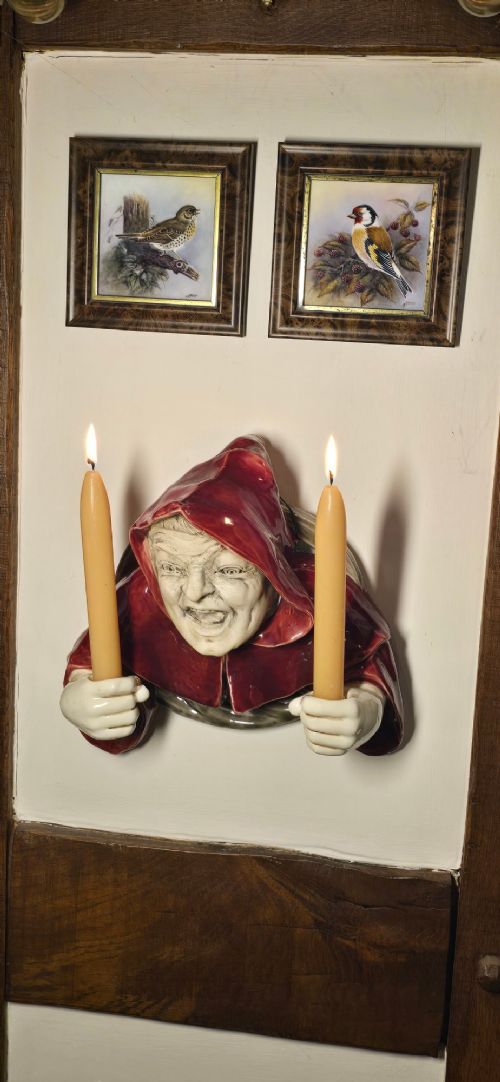
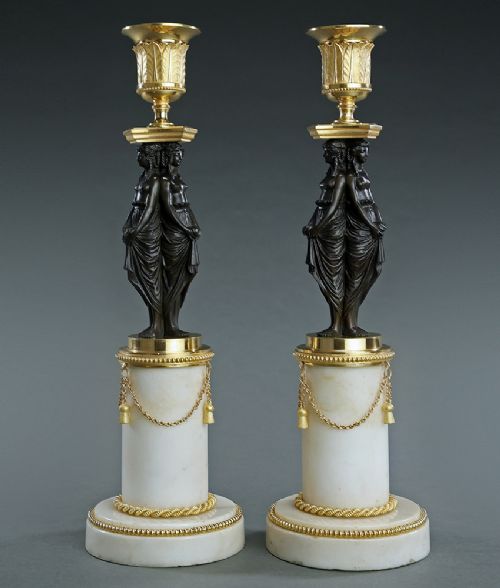
When you search for vintage figural candlesticks, you encounter sculpted forms ranging from classical caryatids and maidens to Art Deco figures, monks, and animals designed to support candles. These decorative objects serve both a practical lighting purpose and stand as ornamental sculptures in their own right.
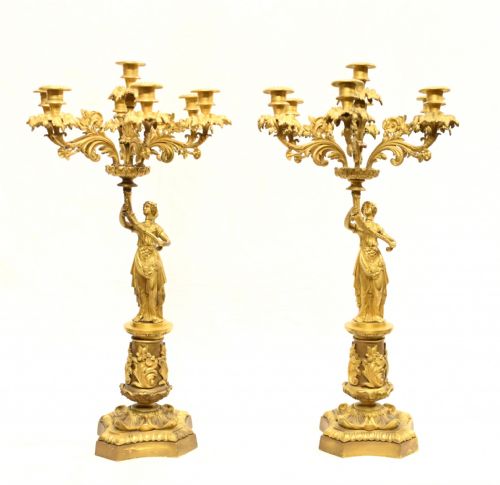
The pieces appearing on this page span several decades and stylistic revivals, including Rococo Revival, Louis XVI, Venetian, Victorian Gothic Revival, and Art Deco. Forms vary from single candlesticks to multi-armed candelabras and wall-hanging sconces.
Origins stretch across European traditions, with German porcelain factories and French metalwork featuring prominently alongside British and Venetian examples. Collectors find items dating from the nineteenth century through the early decades of the twentieth century.
How they were made
Porcelain and pottery pieces involve shaped ceramic bodies finished with detailed glazes, hand-painting, and sometimes applied floral elements. Makers utilised moulds for the figural elements before firing and decorating the surfaces.
Metal versions rely on casting techniques using brass, bronze, pewter, and spelter, often enhanced with gilding, silver plating, or ormolu finishes. These metal castings capture intricate drapery, facial expressions, and architectural motifs.
Construction frequently involves multiple assembled components, securing cast metal figures to weighted bases or joining porcelain branches to central shafts with threaded fittings.
Vintage Figural Candlesticks Retail Price Guide 2026
Typical asking prices for vintage figural candlesticks among the pieces listed under this phrase on Sellingantiques today, from the lower quarter to the upper quarter. They describe what is for sale here now, not the wider market.
Listings feature items from the nineteenth century up to the 1930s, incorporating materials such as porcelain, cast brass, spelter, and pewter.
What varies in quality
The integrity of the materials and finish determines durability and visual depth, distinguishing solid chased bronzes or hand-finished porcelains from simpler plated metals or basic moulded earthenware. Original surface patination and intact gilt or polychrome layers hold greater appeal than later overpainting.
Balance and stability dictate the functional success of a candlestick, ensuring the weighted base properly supports the upright figural stem and any branching sconces without leaning.
Sitzendorf·Meissen·Alexandre Clerget
The Vintage Figural Candlesticks Glossary
- Caryatid
- A sculpted female figure serving as an architectural support or stem. They frequently appear on classical revival candlesticks holding the socket.
- Ormolu
- Gilded bronze, usually mercury-gilded, applied to decorative metalwork to create a rich golden finish. This technique was widely utilised in French decorative arts.
- Spelter
- An alloy of zinc and lead used as a cheaper alternative to bronze for casting decorative figures. It is common in Art Deco figural pieces and takes various metal finishes.
- Blanc de Chine
- A type of white porcelain made in China and later emulated by European factories such as Sitzendorf. The smooth, unpainted white glaze highlights the modelled contours of figures.
- Sconces
- Wall-mounted brackets designed to hold candles or lights. Several examples integrate figural sculpture into the wall-hanging backplate.
Vintage Figural Candlesticks: Frequently Asked Questions
How do I clean vintage candlesticks?
Dust porcelain and metal surfaces gently with a soft brush to avoid disturbing fragile paintwork or gilding. Avoid harsh chemical polishes that can strip original finishes from brass, bronze, or silver-plated items.
Keep ceramic pieces away from soaking water, wiping them carefully with a barely damp cloth if necessary. Ensure all parts are completely dry before placing candles in the sockets.
How do I date a figural candlestick?
Examine the materials, casting style, and factory marks on the underside of porcelain or ceramic pieces. Stylistic indicators like Rococo Revival scrolls or Art Deco geometric lines point to specific manufacturing decades.
Wear patterns, construction methods like hand-cut screws versus modern machine fasteners, and material types help narrow down the period of production.
Where should I display figural candlesticks?
Place them on mantelpieces, sideboards, or dining tables where their sculptural forms can be viewed from multiple angles. Wall sconces require secure mounting to wall studs or appropriate plaster anchors.
Keep them away from direct heat sources and strong sunlight to protect delicate glazes, coloured enamels, and metal patinas over time.