




Vintage Female Nude Portrait
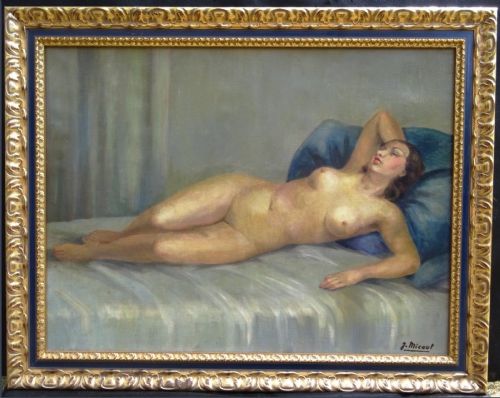
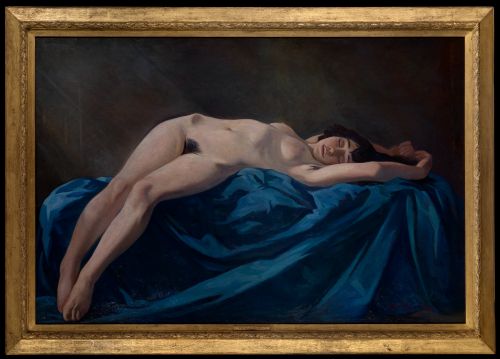
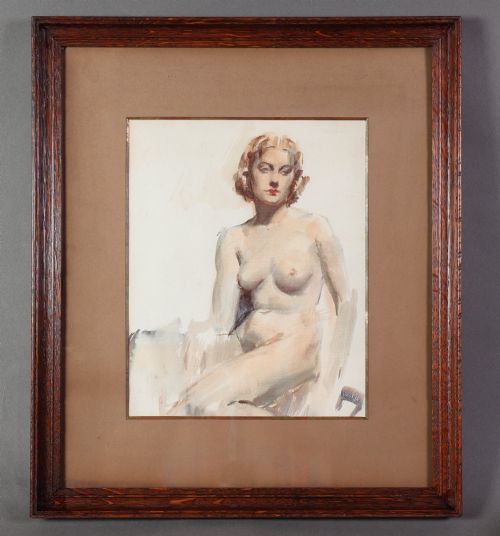
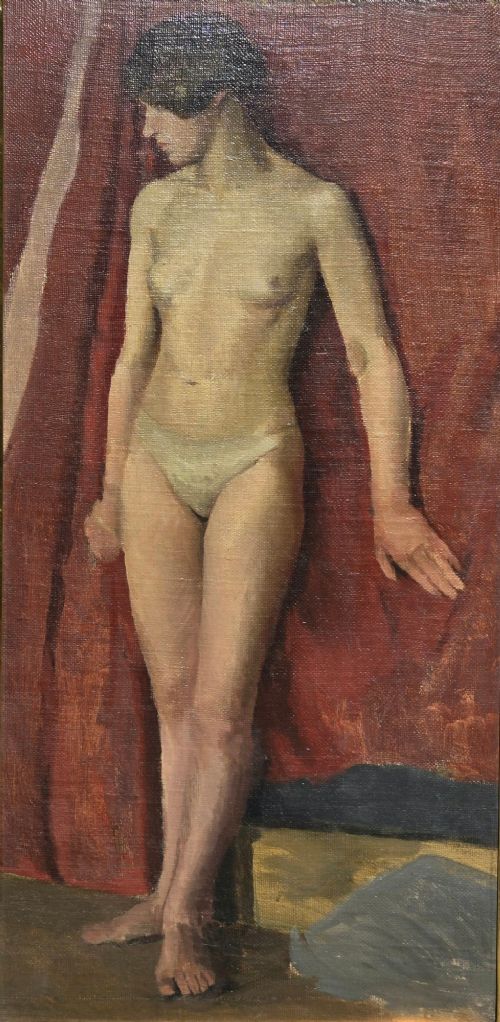
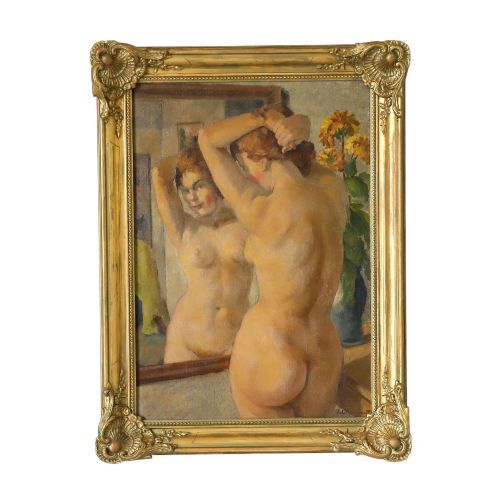
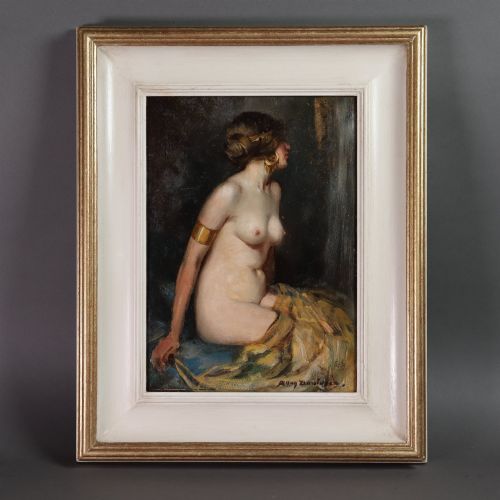
When you search for a vintage female nude portrait, you are looking at oil paintings, drawings, and photographs capturing the human form across the twentieth century.
Vintage Female Nude Portrait
A vintage female nude portrait captures the human form through oil paints, charcoal, or photography, predominantly created across the early to mid-twentieth century. These works range from academic life studies to avant-garde compositions reflecting movements such as Art Deco, Modern British, and French Post-Impressionism.
The most common examples encountered in this selection include oil paintings on canvas and board, alongside intimate hand-painted miniatures and charcoal drawings. Originating from British and continental European studios, these pieces record the changing artistic attitudes towards the body from the Victorian era through the 1960s.
Materials and Techniques
Artists primarily employed oil paint applied to canvas, wood panels, or paper support, allowing for rich texture and tonal depth in flesh rendering. Charcoal and pastel were frequently utilised for rapid life studies and preparatory sketches, capturing immediate gesture and contour.
Framed photography on glass and specialised printing methods also appear alongside traditional painting techniques. Supports range from stretched canvas to board and copper plates, reflecting the diverse technical approaches of the period.
Listings feature works spanning the Victorian era through the 1960s, executed in oil paint, charcoal, watercolour, and photography.
Judging Quality
Quality rests upon the artist's command of anatomy, light, and proportion within the composition, distinguishing a confident life study from a rigid exercise. The handling of paint or medium demonstrates the creator's skill in conveying volume, posture, and shadow.
Provenance and attribution elevate certain pieces, particularly those bearing signatures of recognised academic or modernist practitioners. The preservation of the original surface, canvas tension, and period framing also contribute significantly to the standing of an individual work.
Eric Robertson·Winifred Rymer·Philippe de Rougemont·Julian Mandel·Augustus John·Raymond Moritz·Tony Giles·Henri Vincent-Anglade·Gaetan Dumas·Allan Douglas Davidson·Jean Hippolyte Marchand·Pinchus Krémègne·Winifred Eugene Ballard·Mariette Lydis·Yetta Kane·Raymond Arthur Roadnight·Montagu Barstow·Louis Georges Bouché
The Vintage Female Nude Portrait Glossary
- Academic Realism
- A style of painting and sculpture produced under the influence of European academies of art, emphasising precise anatomical accuracy and traditional finish. It represents the formal training underpinning many early twentieth-century figure studies.
- Oil on Canvas
- Pigments bound in a drying oil medium applied to a woven fabric stretched across a wooden frame. This surface provides the primary support for the majority of the painted works in this category.
- Charcoal
- A form of dry art medium made of finely ground organic material held together by a gum or wax binder. It is frequently seen in quick life studies and preparatory drawings.
- Gouache
- An opaque water-based paint consisting of pigment, a binder, and added inert white pigment. It results in a flat, matte colour surface often combined with watercolour in works on paper.
- Provenance
- The chronological documentation showing the custody, control, and ownership of a historical item. A verified lineage connects the artwork directly to the artist's studio or notable exhibitions.
Vintage Female Nude Portrait: Frequently Asked Questions
What defines a vintage female nude portrait?
These works are artistic representations of the unclad female form produced during the twentieth century, encompassing paintings, drawings, and photographs. They reflect the aesthetic movements of their respective decades, from traditional academic studies to modernist interpretations.
Created across Britain and continental Europe, the pieces serve as both formal artistic exercises and expressive portraits capturing the individuality of the model.
How were these portraits used historically?
Artists produced these studies primarily within private studios, art schools, and bohemian artistic quarters such as Montparnasse for exhibition, instruction, or private collection. They functioned as rigorous exercises in anatomical drawing and tonal painting.
Many pieces were created as finished gallery works, while others served as intimate records of the relationship between the artist and the model during the interwar and mid-century periods.
How should I care for an oil painting on canvas?
Keep the artwork away from direct sunlight and significant fluctuations in temperature and humidity to prevent the canvas from sagging or cracking. Maintain a stable indoor environment and avoid using water or chemical cleaners on the painted surface.
Dust the frame and canvas gently with a soft, dry brush as needed, and consult a professional conservator if the paint layer requires cleaning or structural repair.
How can I tell the period of a portrait?
Dating relies upon stylistic markers, such as the brushwork and colour palette associated with Art Deco, Fauvism, or Mid-Century Modernism. The framing, stretcher construction, and materials like aged paper or canvas also provide physical clues to the era of creation.
Signatures, dates inscribed on the reverse, and artist biographies help narrow the window of production to specific decades within the nineteenth and twentieth centuries.