


Vintage Feline Art
Vintage feline art gathers painted portraits, bronze panthers, and carved netsuke celebrating cats across multiple periods.
Vintage Feline Art
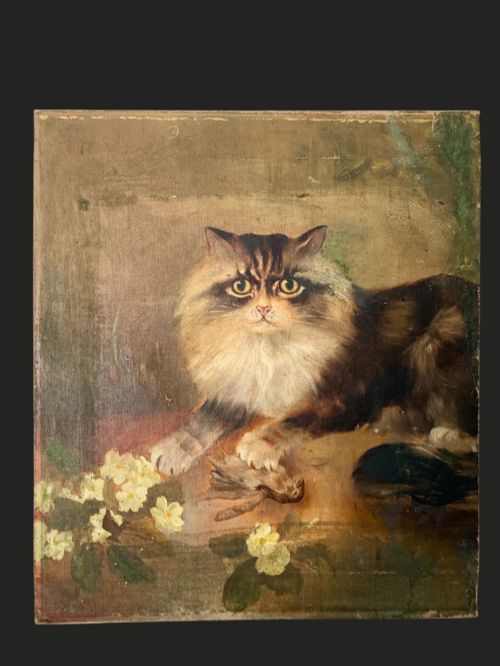
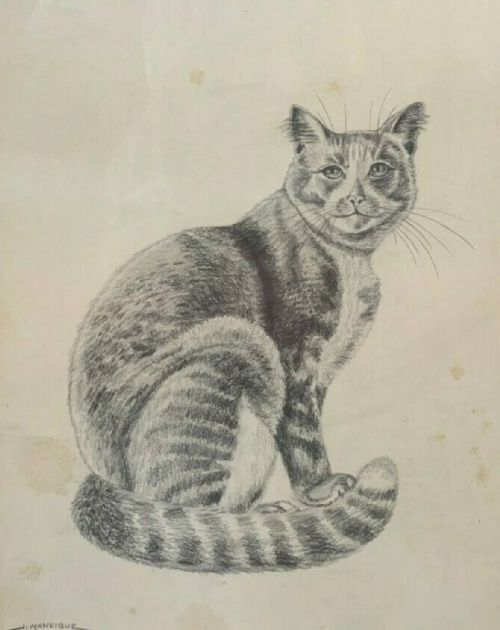
Vintage feline art encompasses paintings, prints, sculptures, and small carvings dedicated to cats, panthers, and leopards. These works capture domestic kittens, stylish felines, and powerful big cats through diverse artistic expressions.
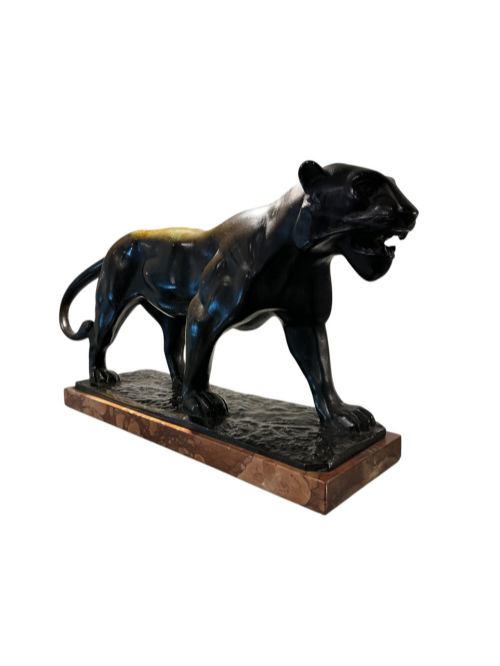
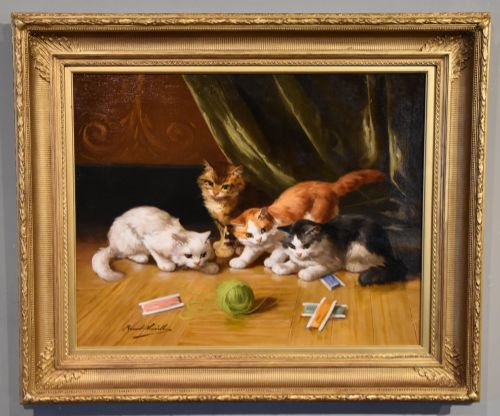
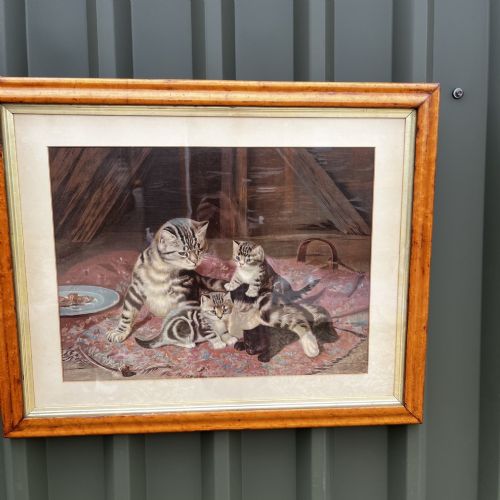
Buyers on this page most frequently encounter nineteenth-century oil paintings of kittens and Art Deco animalier sculptures. Framed prints and drawings also appear alongside carved wooden and amber figures spanning the Victorian era to the mid-twentieth century.
Materials and Techniques
Artists utilised oil paint on canvas, panel, and board, alongside pastel, pencil, and chromolithography on paper. These mediums deliver the textured fur and expressive postures seen in traditional and naive portrayals.
Sculptors shaped bronze, spelter, terracotta, wood, alabaster, and cherry amber, often mounting figures on marble bases. Glass eyes and gilt wood further enhance selected pieces.
Materials range from bronze and marble to paper and oil paint.
Assessing Quality
Quality rests upon the anatomical precision of the animal and the handling of texture, particularly in rendering fur, muscle, and posture. Masterful brushwork in oil paintings and crisp detailing in bronze or wood carvings distinguish superior examples.
The integration of materials also influences the piece, such as the balanced contrast between a metal or wooden feline figure and its marble base.
Alfred Arthur Brunel de Neuville·Horatio Henry Couldrey·Louis Wain·Eugene Emile Borga·Bessie Bamber
The Vintage Feline Art Glossary
- Chromolithography
- A planographic printing technique used to produce multi-coloured pictorial works. This process allowed Victorian publishers to recreate the rich tones of original animal paintings.
- Netsuke
- A small Japanese carved toggle fastened to the end of a cord. These miniature sculptures often depict animals like a curled cat.
- Animalier
- A nineteenth-century artistic genre focusing on the realistic portrayal of animals. Sculptors in this tradition worked extensively in bronze and spelter.
- Spelter
- A zinc alloy frequently utilised as a substitute for bronze in decorative figures. It often received patination to resemble bronze or other metals.
Vintage Feline Art: Frequently Asked Questions
What periods do these pieces cover?
The selection spans from the nineteenth century through the Edwardian era and the Art Deco period of the 1920s and 1930s. Mid-century works up to the 1960s also feature.
This timeline demonstrates how feline representation shifted from academic realism and naive studies to stylised modernist sculptures.
How were these artworks displayed originally?
Paintings and prints were framed for domestic wall display in parlours and living rooms. Sculptures and figures stood upon mantelpieces, desks, or specialised marble plinths.
Such placement reflected the Victorian and twentieth-century affection for domestic pets and exotic wildlife.
Are bronze and spelter sculptures different?
Bronze is a heavy, durable copper alloy valued for fine casting and lasting patination. Spelter is a lighter zinc-based metal used to produce accessible decorative figures.
Both materials formed the basis for Art Deco panther and lioness figures mounted on marble.