





Vintage Fashion Illustration
Vintage fashion illustration captures couture and style across decades, offering buyers elegant historical artwork for domestic spaces.
Vintage Fashion Illustration
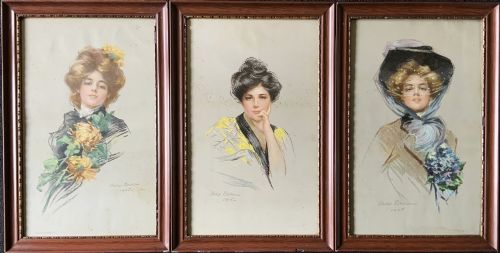
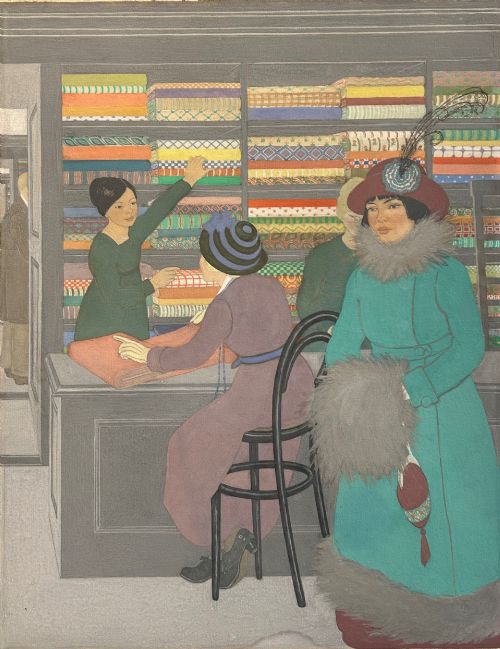
Vintage fashion illustration spans the nineteenth century through the mid twentieth century, encompassing original works on paper and canvas alongside period prints. When you search for vintage fashion illustration, you encounter everything from delicate portrait drawings to commercial advertising art created for major department stores.
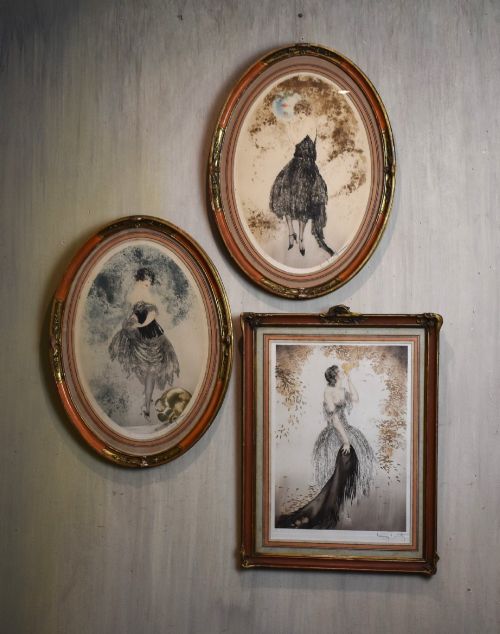
You are most likely to meet framed prints, watercolour paintings, and lithographs housed in wood frames with glass and gilt accents. These diverse objects reflect the changing aesthetics of fashion and society across successive decades.
How they were made
Artists utilised ink and watercolour on paper to capture delicate details of period attire, often producing works specifically for commercial reproduction or advertising campaigns. These works on paper require careful framing behind glass to protect the delicate media from environmental damage.
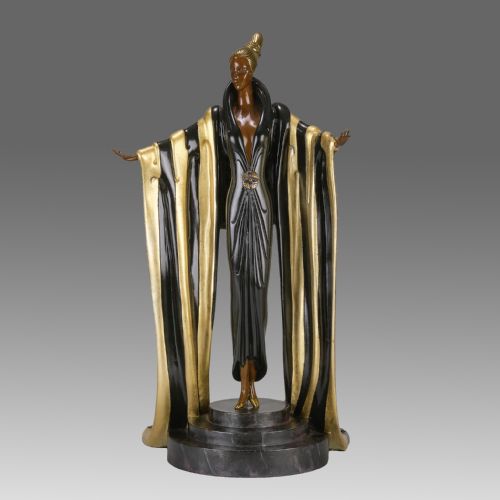
Painters applied oil paint to canvas to create larger portraits and scenes, while sculptors worked with bronze to produce cold-painted three-dimensional figures. Wood frames provide structural support and aesthetic enhancement to the paintings and prints.
Vintage Fashion Illustration Retail Price Guide 2026
Typical asking prices for vintage fashion illustration among the pieces listed under this phrase on Sellingantiques today, from the lower quarter to the upper quarter. They describe what is for sale here now, not the wider market.
Listings incorporate items produced across the 1900s, 1920s, 1930s, 1940s, and 1950s using paper, canvas, and bronze.
What varies in quality
The distinction between standard examples and the finest works rests upon the mastery of line, the handling of medium, and the hand of the artist. Original watercolours and oil paintings by named hands command greater attention than mass-produced prints.
The integrity of the framing materials and the preservation of the paper or canvas influence the overall standing of a piece. Works retaining their original gilt or wood frames demonstrate a higher degree of historical completeness.
Louis Icart·Georges Goursat Sem·Raoul Millais·Jean Hardy·Albert Guillaume·Erté·Andrè Maurice·Leo Klin
The Vintage Fashion Illustration Glossary
- Lithograph
- A printmaking process where an image is drawn onto limestone or a metal plate with a greasy medium and inked for transfer. This technique allowed artists to produce multiple vibrant copies of fashion plates and promotional posters.
- Watercolour
- A paint consisting of pigment suspended in a water-based solution, typically applied to paper surfaces. It yields translucent washes of colour well suited for delicate fashion studies and preparatory sketches.
- Gilt
- A thin layer of gold applied to wood or other surfaces to provide a decorative metallic finish. It frequently appears on the frames surrounding period artworks.
- Cold-Painted Bronze
- A bronze sculpture painted with oil or similar paints after casting, rather than firing in a kiln. This method allows for intricate surface detail on small decorative figures.
Vintage Fashion Illustration: Frequently Asked Questions
How do I date a vintage fashion illustration?
Dating relies upon stylistic markers in the clothing, hair, and typography present within the artwork, alongside any artist signatures or gallery labels on the reverse.
Comparing the materials, such as the type of paper or the construction of the wood frame, also helps establish the correct historical period.
Are these illustrations original works or prints?
The category includes both original one-of-a-kind watercolours and oil paintings alongside period lithographs and printed plates.
Checking the listing details confirms whether a piece is a hand-drawn creation or a contemporary reproduction print.
How should I frame and hang these pieces?
Works on paper require UV-protective glass and acid-free backing boards to prevent fading and deterioration from direct sunlight and humidity.
Display them on interior walls away from direct heat sources to preserve the integrity of the paper, ink, and wood frame.
What distinguishes Art Deco fashion illustrations?
Art Deco fashion illustrations from the 1920s and 1930s feature stylised geometries, bold outlines, and sophisticated depictions of modern elegance.
These pieces often reflect the avant-garde aesthetic of Parisian couturiers and contemporary advertising design.