



Vintage Farmyard Painting
A vintage farmyard painting captures rural life through oil and watercolour, bringing historical domestic animals and rustic buildings into your home.
Vintage Farmyard Painting
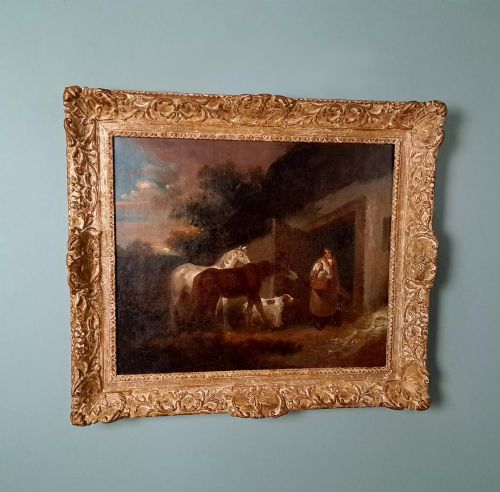
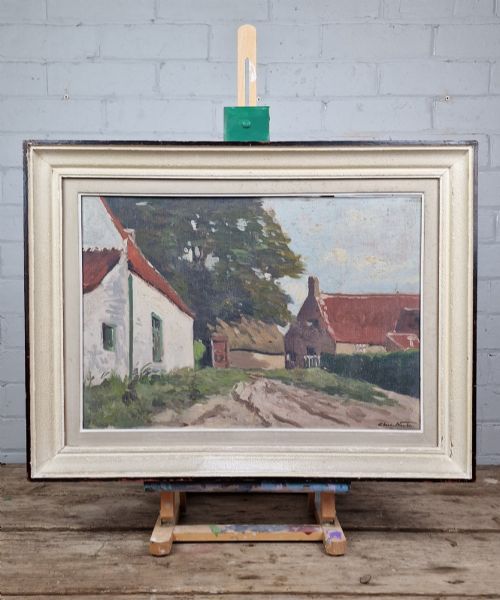
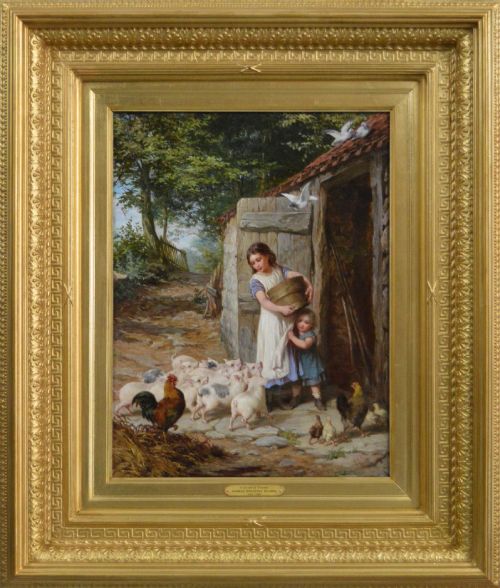
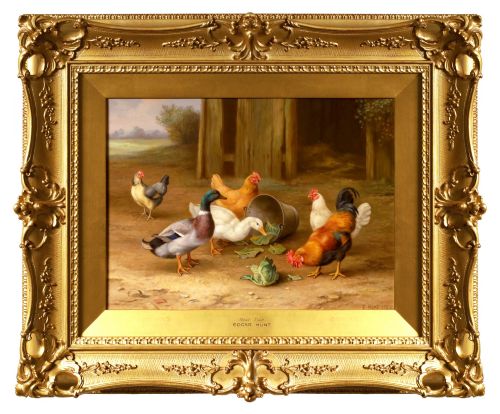
When you examine a vintage farmyard painting, you encounter depictions of rural life spanning the nineteenth and twentieth centuries. These works record everyday agricultural subjects, including horses, poultry, barns, and working figures in pastoral settings.
The selection on this page relies heavily on British and European pastoral traditions, taking form primarily as oil paintings on canvas or board alongside watercolours on paper. Artists from Victorian, Edwardian, and later decades approach the subject through realism, impressionism, and folk art interpretations.
How they were made
Makers utilise oil paint on canvas, wood, or board to build textured surfaces, while watercolourists apply pigment to paper to achieve lighter, transparent effects. Giltwood frames frequently house these works, complementing the traditional palettes.
Techniques range from detailed academic brushwork capturing poultry feathers and livestock anatomy to looser impressionistic strokes defining Yorkshire and European landscapes.
Materials documented across pieces include oil paint, canvas, wood, paper, giltwood, and watercolour.
What varies in quality
Quality rests in the artist's command of light, composition, and anatomical accuracy of the animals rather than the subject matter alone. Works showing distinct handling of atmosphere and texture stand apart from more rigid studio productions.
Provenance and a documented artist attribution elevate a piece, distinguishing signed archival works from unsigned or provincial folk art items.
William Joseph Shayer Senior·Charles Houben·George Augustus Holmes·Edgar Hunt·Herbert Royle·John Frederick Herring Jnr·John Atkinson·Frederick W. Jackson·Claude Cardon·Robert Russell MacNee·Owen Bowen·J L VAN Leemputten·John R. K. DUFF·JOHN PERCY COOKE·Jack R Mould·Ernest Higgins Rigg·Fred C. Jones·Thomas Blinks·Fred Lawson·James William Booth·Kershaw Schofield·Fred Cecil Jones
The Vintage Farmyard Painting Glossary
- Oil on Canvas
- Pigment mixed with drying oil applied to stretched fabric. This medium allows for rich colour blending and textured brushwork.
- Watercolour
- Paint consisting of water-soluble pigments applied to paper. It creates luminous washes and delicate atmospheric effects.
- Giltwood
- Wood carved and covered with a thin layer of gold leaf. Frames of this material are typical for finished fine art pieces.
- British Impressionism
- A painting style focusing on light and everyday subjects through visible brushstrokes. Practitioners sought to capture transient outdoor moments.
- Folk Art
- Artistic work created within a traditional culture by self-taught makers. These pieces prioritize expressive storytelling over academic conventions.
Vintage Farmyard Painting: Frequently Asked Questions
What periods do these paintings cover?
The works span from the nineteenth century through the Edwardian era and into the 1930s. They reflect changing artistic movements such as realism and impressionism.
Victorian and Edwardian examples dominate the selection, showing traditional agricultural scenes across Britain and Europe.
How do I care for an oil painting?
Keep the artwork away from direct sunlight and severe temperature fluctuations to protect the canvas and paint layers. Dust the surface gently with a soft, dry brush.
Avoid using water or chemical cleaners on the paint or the giltwood frame.
What is the difference between oil and watercolour?
Oil paint utilises a drying oil binder to create thick, opaque layers that can be reworked over time. Watercolour employs water-soluble pigment on paper for translucent washes.
Oils are typically stretched on canvas or mounted on board, whereas watercolours require protective glass framing.
Are all the works signed by artists?
Many pieces feature artist signatures, studio sale provenances, or attribution to known painters of the British and European schools. Other items originate from anonymous makers within the folk art tradition.
Signatures provide clear historical context, though unsigned works still demonstrate period techniques and subjects.