



Vintage Farming Painting
A vintage farming painting brings the quiet rhythm of the countryside and the labour of the land directly onto the wall.
Vintage Farming Painting
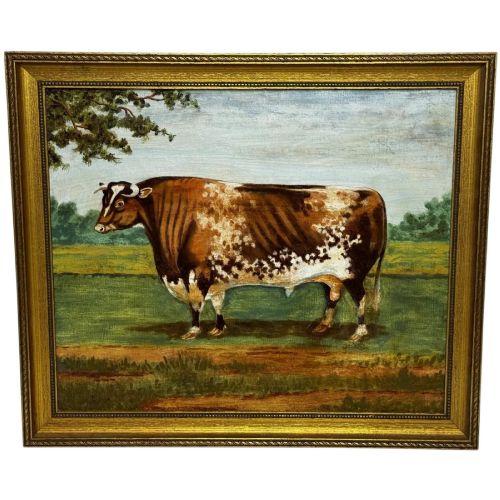
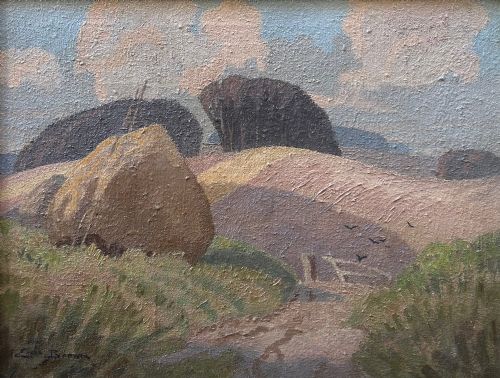
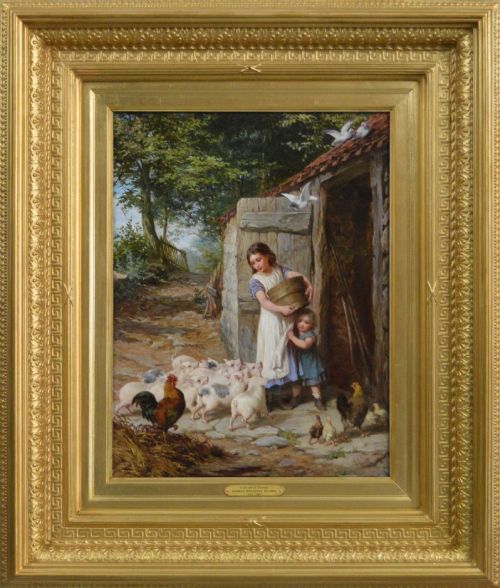
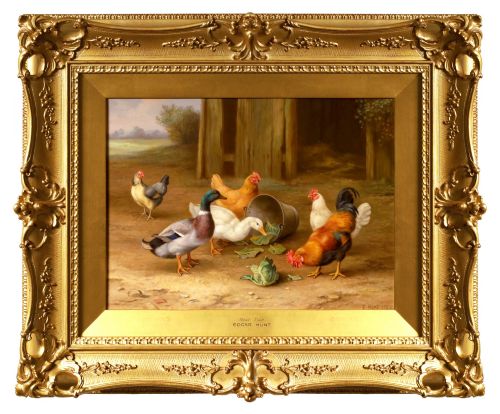
A vintage farming painting captures rural life, livestock, and agricultural scenes across the nineteenth and twentieth centuries. These works range from detailed depictions of prize bulls and poultry yards to expansive landscapes of haystacks and harvest time.
The most frequent version encountered on this page is the oil painting on canvas or board, created by British artists working in realist, impressionist, or pastoral traditions. Watercolour paintings also appear, recording farmsteads and rural workers with lighter, fluid washes.
Subjects often focus on the daily interactions between farm workers, horses, cattle, and poultry within specific regional landscapes. The span covers early Victorian depictions through to mid-century interpretations of the countryside.
How these pieces were made
Artists painted primarily with oil paint on canvas or prepared wooden boards, building up rich textures to render farm animals, foliage, and weathered wooden structures. Watercolours on paper offered a quicker medium for capturing atmospheric light over fields and farmyards.
Supports varied according to the period, with traditional stretched canvas sitting alongside sturdy wooden panels and heavyweight paper. Frames were selected to complement the composition, occasionally finished in ebonised wood to contrast with the tones of the pastoral scene.
Vintage Farming Painting Retail Price Guide 2026
Typical asking prices for vintage farming painting among the pieces listed under this phrase on Sellingantiques today, from the lower quarter to the upper quarter. They describe what is for sale here now, not the wider market.
Regional Yorkshire landscapes and depictions of farmyard animals dominate the selection, attributed to various British school artists.
What separates the finest works
Quality rests upon the artist's command of light, anatomical precision in depicting animals, and the atmospheric depth of the landscape. Masterful brushwork brings movement to a team of farm horses or texture to a harvested field, whereas lesser pieces rely on stiff composition and flat colour.
Provenance and signature add substance to a work, linking specific regional landscapes to documented artists of the British school or recognised regional painters. The preservation of the original paint surface, free from heavy restoration, maintains the visual integrity of the scene.
George Augustus Holmes·Edgar Hunt·Herbert Royle·William JB Jenkins·James William Booth·John Frederick Herring Jnr·Ernest Pile Bucknall·John Atkinson·Charles Vickers·Frederick W Jackson·Claude Cardon·J C Grey·George Soper·Florence Hess·Arthur Winter Shaw·Owen Bowen·John Frederic Greenwood·Robert Russell MacNee·B Kaufmann·Rowland Henry Hill·Frederick J Knowles
The Vintage Farming Painting Glossary
- Oil on canvas
- Pigment suspended in drying oil applied to a woven fabric support. This combination allows for deep blending of colour and rich surface texture.
- Watercolour
- Pigments suspended in a water-soluble vehicle applied to paper. It relies on the white of the paper to provide luminosity through translucent washes.
- British Impressionism
- A painting style adopting loose brushwork and an interest in natural light. Practitioners applied these techniques to rural and agricultural subjects.
- Pastoral
- A genre of art depicting the idealized life of shepherds, farmers, and rural labourers. These scenes emphasise the peaceful harmony between humans and the land.
- Provenance
- The documented history of a work of art, including previous owners and exhibition records. It helps establish authenticity and attribution.
Vintage Farming Painting: Frequently Asked Questions
What subjects appear in these paintings?
The works depict agricultural scenes, including harvest landscapes, farmyards, ploughing teams, and detailed studies of livestock such as shorthorn bulls, horses, and poultry.
Human figures also feature prominently, showing farm hands, milkmaids, and children engaged in rural labour or tending to animals.
How do I date a farming painting?
Dating relies on stylistic clues, clothing styles of the figures, agricultural methods shown, and artist signatures or exhibition records. Victorian works tend to show detailed realism, while twentieth-century pieces often display freer impressionist brushwork.
Framing materials and stretcher construction can also provide secondary evidence for the age of the piece.
Where were these artists active?
Many painters worked within distinct regional traditions across Britain, recording the Yorkshire Dales, Wharfedale, and northern coastal settlements like Hinderwell. Others belonged to established artistic schools focusing on rural and animal subjects.
Artists frequently set up studios locally or travelled to agricultural communities to observe farm life directly.
How should I care for an oil painting?
Keep paintings away from direct sunlight and sources of extreme heat or humidity to prevent the canvas from warping and the oil paint from cracking. Dust the surface gently with a soft, dry brush without applying pressure.
Avoid using water or cleaning solutions on the paint layer, as moisture damages aged varnishes and pigments.